
Iran war has made case for renewables impossible to ignore, says UN climate chief

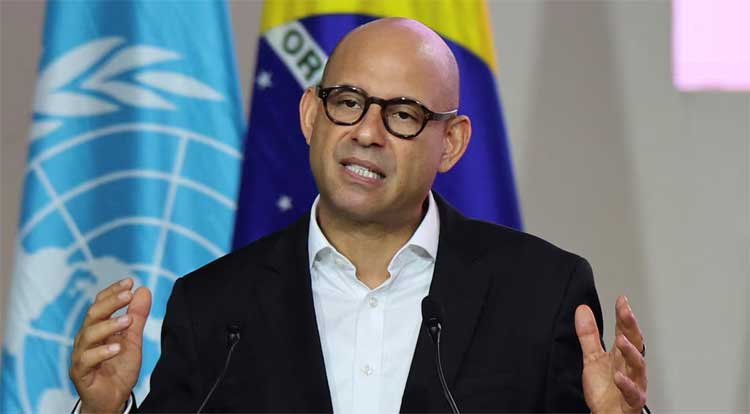
The global energy crisis triggered by the Iran war has sharply reinforced the economic case for renewable energy, top UN climate official Simon Stiell said on Thursday, arguing that the turmoil has exposed the vulnerabilities of continued dependence on fossil fuels.
Addressing leading figures in international climate negotiations at the International Energy Agency’s headquarters in Paris, Stiell said the crisis had made “the economic logic of renewables impossible to ignore.”
“Renewables offer safer, cheaper, cleaner energy that can’t be held captive by narrow shipping straits or global conflicts,” he said.
Stiell warned that the current fossil fuel cost shock is placing immense strain on the global economy.
“The fossil fuel cost crisis has its foot on the throat of the global economy,” he said.
He also pointed to what he described as an “immense irony” — that countries resisting efforts to move away from fossil fuels may be inadvertently accelerating the global clean energy transition.
The remarks appeared to be aimed at the United States under President Donald Trump, whose administration has openly opposed measures designed to curb fossil fuel dependence.
According to Stiell, several governments are now moving decisively to strengthen energy security through green investments.
He cited national efforts to make clean energy central to energy strategies, including France’s decision to significantly increase spending on electrification.
“That momentum is real,” he said, adding that the challenge now is to ensure developing nations can also benefit from the transition through greater climate finance.
Focus shifts to COP31
The meeting also featured Turkish Environment Minister Murat Kurum, who outlined priorities for the upcoming COP31 climate summit in Antalya this November.
Among Turkey’s key focus areas:
- Accelerating the clean energy transition
- Green industrialisation
- Expanding access to clean cooking solutions in developing nations
- Securing critical minerals
- Building climate-resilient cities
On climate finance — one of the most contentious issues in global climate talks — Kurum said efforts are underway to create a new mechanism to connect viable green projects with appropriate funding.
The goal is to simplify access to financing as wealthy nations work toward a target of mobilising $1.3 trillion annually for poorer countries by 2035.
Fossil fuel transition remains contested
Stephen Jones, Australia’s ambassador to the OECD, acknowledged that negotiations over phasing out fossil fuels will remain politically difficult as Australia prepares to help steer COP31 discussions.
“Maintaining traditional energy supplies is critical during the transition, but there should be no doubt about where the destination lies,” he said.
Jones noted that global climate negotiations have already significantly reduced projected warming trajectories — from around 4°C to 2.5°C.
“We are now witnessing an irreversible trend in the clean energy transition,” he said.
“Technologies are maturing, and investment flows into clean energy are now outpacing fossil fuels.”
Comments are closed.