
Iran’s $300 Billion Reconstruction Challenge: Where Will the Money Come From?

Gulf States, Private Investors or the US? Decoding Iran’s Proposed $300 Billion Reconstruction Fund
A proposed $300 billion reconstruction package for Iran has emerged as one of the most eye-catching elements of the preliminary US-Iran agreement. While the figure itself is staggering, the bigger mystery is who will actually provide the money.
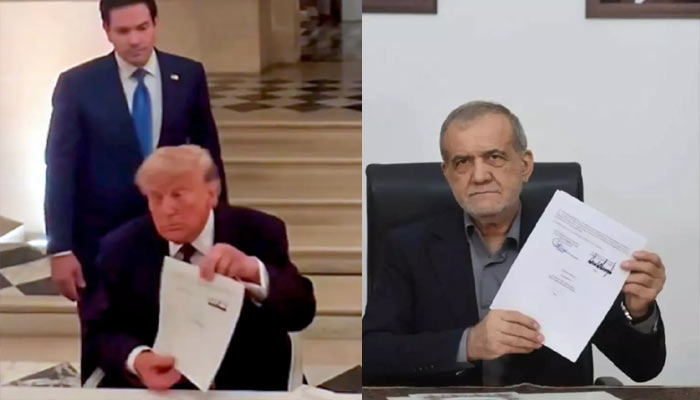
The memorandum signed by the two sides promises a plan worth at least $300 billion for Iran’s reconstruction and economic development. However, both Washington and Tehran acknowledge that the funding structure has yet to be worked out, with negotiators given 60 days to finalise the details.
What Does the Agreement Promise?
The MoU states that the United States will work with regional partners to develop a reconstruction and development plan for Iran worth at least $300 billion.
It also pledges that Washington will provide the necessary licences, waivers and permissions to facilitate financial transactions linked to the initiative.
However, the economic package is contingent on Iran meeting its commitments under the agreement. US officials have stressed that the benefits will be available only if Tehran complies with the terms negotiated over the coming weeks.
Is Washington Writing a $300 Billion Cheque?
The short answer is no.
President Donald Trump has dismissed reports suggesting the United States would directly pay Iran hundreds of billions of dollars, while Vice President JD Vance has repeatedly said that American taxpayers will not finance the programme.
According to US officials, Washington’s role is expected to be that of a facilitator rather than a financier. The administration would help remove legal and regulatory barriers while encouraging outside investment into Iran.
Former US National Security Adviser Jake Sullivan described the approach as unprecedented, noting that previous agreements focused on sanctions relief rather than actively helping attract large-scale investment into Iran.
How Could the Fund Be Financed?
Reports indicate that the proposal is being structured as a privately funded investment vehicle rather than a traditional aid package. Instead of governments transferring money directly to Tehran, the plan could involve investments in infrastructure, energy, transport, manufacturing and other sectors critical to Iran’s recovery.
According to reports, private-sector participants have already expressed interest in contributing substantial amounts, although the identities of potential investors remain unclear. The fund is also expected to remain separate from sanctions relief measures and Iran’s frozen overseas assets.
Why Are Gulf Countries Being Watched Closely?
Although the agreement does not identify specific contributors, attention has quickly turned to Iran’s wealthy Gulf neighbours. Countries such as Saudi Arabia, the United Arab Emirates and Qatar possess the financial firepower needed to support a project of this scale.
Yet politics may prove a major hurdle.
Several Gulf nations were directly targeted during the conflict and remain wary of Iran’s regional ambitions. Saudi Foreign Minister Prince Faisal bin Farhan recently suggested that rebuilding trust would be a prerequisite before discussing major economic cooperation.
The UAE faces a similar dilemma. While it has historically been one of Iran’s largest trading partners, it also suffered from regional instability linked to the conflict.
Why Might Gulf States Still Participate?
Despite the tensions, Gulf capitals may see economic engagement as a tool for maintaining regional stability. A financially stable Iran integrated into regional trade networks could reduce the risk of future conflicts, encourage investment and support broader economic growth across the Middle East.
Analysts believe the reconstruction package is intended to provide Tehran with a powerful incentive to remain committed to the agreement and pursue a less confrontational path.
What About Iran’s Frozen Assets?
The reconstruction fund is separate from the issue of frozen Iranian assets and sanctions relief. Under the agreement, the United States has signalled its willingness to lift sanctions and facilitate access to Iran’s overseas funds once a final deal is reached.
Vice President Vance has indicated that any released assets would be subject to oversight mechanisms and used for approved economic purposes rather than military activities.
Why Is the Proposal Facing Criticism?
The scale of the proposed package has already triggered political debate in Washington. Critics argue that helping facilitate such a large economic windfall for Iran could prove controversial, particularly if questions remain about Tehran’s future conduct.
Others contend that the plan could become an important diplomatic tool if it encourages long-term stability and reduces the likelihood of renewed conflict.
The $300 Billion Question
For now, the reconstruction fund remains more of a blueprint than a fully financed programme. While the agreement outlines an ambitious vision for rebuilding Iran’s economy, the identities of the investors, the structure of the fund and the exact role of Gulf countries remain unresolved.
Over the next two months, negotiators will attempt to answer the question that has become central to the entire proposal: if Iran is to receive $300 billion for reconstruction, who is ultimately willing to pay for it?
Comments are closed.