

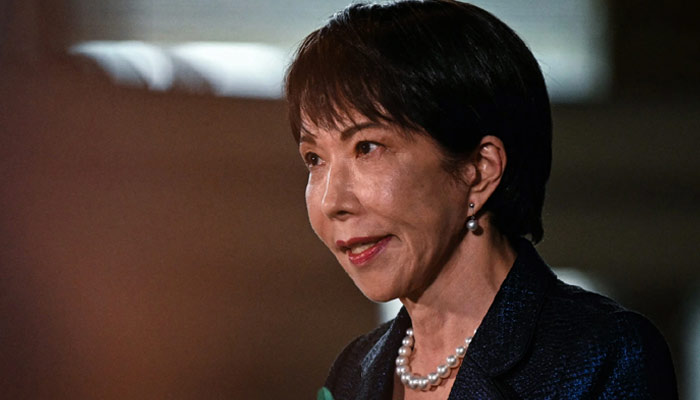
In a historic policy pivot, Japan has moved away from the pacifist doctrine that shaped its identity after World War II, opening the door to the export of lethal weapons for the first time in decades.
The decision marks a fundamental shift for a nation that long defined itself by restraint following the devastation of war and the atomic bombings of Hiroshima and Nagasaki. By allowing the overseas sale of missiles, fighter jets, and other advanced military systems, Tokyo is recalibrating both its defence policy and its role in global security.
The new framework, approved under Prime Minister Sanae Takaichi, introduces a clear classification of defence equipment into “weapons” — lethal systems such as warships, tanks, and missiles — and “non-weapons,” including radar systems and protective gear. While nonlethal exports were already permitted in limited cases, the revised rules now allow lethal weapons to be sold abroad under strict government oversight tied to national security, alliances, and international norms.
What is Japan’s new policy?
Japan has replaced its near-total ban on arms exports with a tightly regulated, case-by-case approval system. Under the revised guidelines, lethal military equipment can be exported if it meets stringent criteria related to security interests, human rights standards, and alignment with partner nations.
This goes well beyond earlier relaxations, which largely restricted Japan to supplying nonlethal equipment. The new policy also enables Tokyo to fully participate in joint defence projects with allies, including next-generation fighter programmes, without being limited to peripheral contributions.
Takaichi has described the shift as a strategic necessity rather than a departure from Japan’s commitment to peace, arguing that it strengthens deterrence while enhancing the country’s contribution to regional and global stability.
What defined Japan’s post-war stance?
Japan’s post-war identity was deeply shaped by the trauma of defeat. Central to this was Article 9 of its 1947 Constitution, which renounced war and restricted the country’s military role. Although Japan established Self-Defence Forces, their mandate remained narrowly focused on defence. Security was largely guaranteed through the US-Japan Security Treaty, under which the United States provided extended protection.
A strict arms export ban, formalised in 1976, further reinforced this pacifist approach by limiting military sales to conflict-free and approved partners. Over time, this evolved into an almost complete prohibition on exporting lethal weapons.
This framework underpinned Japan’s “peace state” model—prioritising economic growth, diplomacy, and stability over military expansion—and helped it emerge as one of the world’s leading economies.
Why is Japan changing course now?
The shift reflects a rapidly evolving and increasingly volatile security environment. Rising military assertiveness by China in the Indo-Pacific and advancing nuclear and missile capabilities of North Korea have heightened concerns in Tokyo.
At the same time, the Russia-Ukraine War has underscored the importance of robust defence supply chains among allies, highlighting the risks of overdependence and limited industrial capacity.
There is also a growing recognition that the United States—Japan’s primary security guarantor—faces multiple global commitments, from Europe to West Asia, making burden-sharing increasingly important.
Economic factors are equally significant. Japan’s defence industry has struggled with high costs and limited domestic demand. Opening export markets is seen as essential to sustaining production, driving innovation, and maintaining technological competitiveness.
A strategic redefinition
Taken together, these factors signal a broader transformation: Japan is repositioning itself from a largely passive, US-reliant security actor to a more proactive contributor to regional and global defence. Takaichi has linked the policy shift to both deterrence and industrial survival, emphasising that Japan must be able to share advanced systems with allies while keeping its defence manufacturing base viable.
Though the government insists that strict controls will remain in place, the decision represents a clear break from decades of restraint—marking the emergence of a more assertive Japan in an increasingly uncertain world.
Comments are closed.