
Kamikaze Drones, Guided Missiles Part of Rs 52,000-Crore Defence Clearance

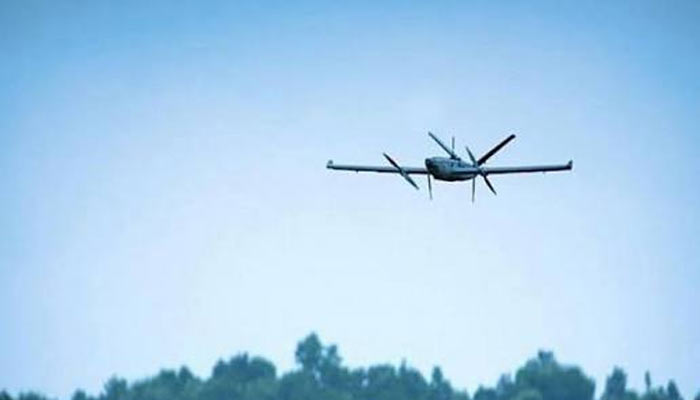
Govt clears Rs 52,000-crore defence acquisitions, approves drones, missiles and air defence systems
In a major boost to the armed forces’ modernisation drive, the Defence Acquisition Council (DAC), chaired by Defence Minister Rajnath Singh, on Friday accorded Acceptance of Necessity (AoN) for defence procurement proposals worth around Rs 52,000 crore.
The approvals cover a broad range of advanced military hardware for the Army, Navy and Air Force, including anti-drone systems, guided missiles, kamikaze drones, air defence platforms, naval unmanned systems and high-altitude surveillance assets. The AoN marks the first stage in the procurement process before contracts are finalised.
Army to get anti-drone systems, missiles and kamikaze drones
The Indian Army’s approved acquisitions include the Akash Tarang Anti-Unmanned Aerial Vehicle (UAV) Electronic Warfare System, Man-Portable Anti-Tank Guided Missiles (MPATGM), Medium-Range Surface-to-Air Missile (MRSAM) systems, Very Short-Range Air Defence Systems (V-SHORADS), Active Protection Systems (APS) for tanks and jet-powered kamikaze drones.
According to the Defence Ministry, the Akash Tarang system will strengthen the Army’s ability to detect and neutralise hostile drones, an increasingly critical capability in modern warfare.
The indigenous MPATGM is expected to enhance infantry firepower against enemy armoured vehicles, while the MRSAM system will reinforce India’s layered air defence shield against aircraft, missiles and stand-off weapons.
The V-SHORADS platform, equipped with multi-spectral sensors, is designed to counter low-flying aerial threats more effectively, even in environments with electronic countermeasures.
The approved Active Protection Systems will improve the survivability of tanks by detecting and intercepting incoming anti-tank weapons before impact. The Army will also induct jet-powered kamikaze drones capable of carrying out long-range precision strikes with enhanced speed, survivability and electronic warfare capabilities.
Navy gets surveillance drones, sea mines and propulsion test facility
For the Indian Navy, the DAC approved the procurement of Multi-Influence Ground Mines (MIGM), Naval Shipborne Unmanned Aerial Systems (NSUAS) and a Land-Based Testing Facility (LBTF) for electric propulsion technologies.
The MIGM will strengthen India’s mine warfare capabilities by restricting the movement of hostile naval vessels in strategic waters.
The NSUAS platforms will enhance maritime surveillance and domain awareness through advanced sensors, improving the Navy’s ability to monitor critical sea lanes and maritime activity.
Meanwhile, the proposed testing facility will support the development and validation of next-generation electric propulsion systems for future naval platforms.
Air Force to receive high-altitude surveillance platforms
The Indian Air Force has been cleared to procure Fixed-Wing High-Altitude Pseudo Satellites (FW-HAPS) and associated systems.
Designed to remain airborne for extended periods at high altitudes, FW-HAPS platforms will provide persistent intelligence, surveillance and reconnaissance (ISR) capabilities. They can also support telecommunications and remote sensing, enabling continuous monitoring over large operational areas.
Boost to modernisation and indigenous capability
The latest approvals form part of India’s broader military modernisation programme, which places greater emphasis on drones, autonomous systems, electronic warfare and advanced air defence technologies.
The Defence Ministry said the acquisitions are intended to improve the armed forces’ operational readiness, precision strike capability and battlefield survivability while advancing the government’s push for greater self-reliance in defence manufacturing under the Atmanirbhar Bharat initiative.
Following the DAC’s approval, the proposals will move to the next stages of the procurement process before commercial negotiations and contract signing.
Comments are closed.