
Le Pen and Macron Clash Over EU Budget as Political Tensions Escalate in France

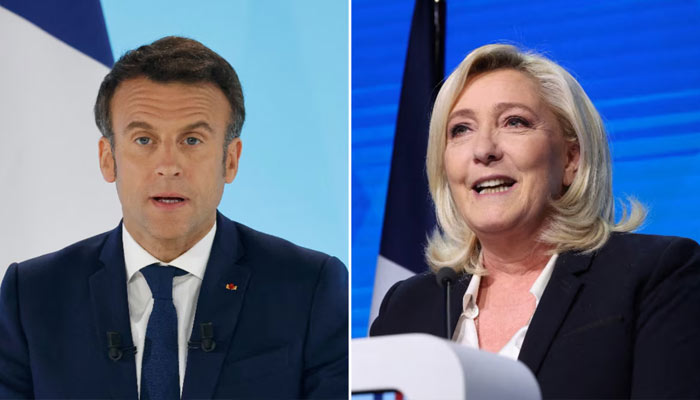
Macron and Marine Le Pen Trade Barbs Over EU Budget Ahead of France’s 2027 Presidential Election
French President Emmanuel Macron and far-right leader Marine Le Pen have clashed over efforts to finalise the European Union’s next seven-year budget before France’s 2027 presidential election. Macron accused Le Pen of displaying political arrogance after she questioned the push to conclude negotiations ahead of the French vote.
The confrontation followed a lengthy European Council summit in Brussels on Thursday, where leaders failed to resolve major differences over the bloc’s 2028-2034 financial framework despite more than 12 hours of discussions.
German Chancellor Friedrich Merz acknowledged that negotiations remained difficult but said he still hoped for progress when European leaders meet again on December 17.
The delay could push the budget negotiations into an election year for several European countries, particularly France. Macron has raised the possibility of withdrawing from the process if an agreement is not reached within the expected timeframe.
Macron Responds to Le Pen’s Criticism
Le Pen, who is among the leading contenders in the race to succeed Macron next year, criticised the attempt to secure a budget agreement before French voters elect their next president.
In a post on social media, she described the move as political manoeuvring intended to prevent the French electorate from exercising its democratic choice.
Macron responded by questioning her remarks, saying Le Pen was acting as though she had already been entrusted with France’s leadership despite not having won an election for the presidency.
The two political rivals have previously disagreed over European funding and France’s financial commitments. Last month, Macron told Le Pen to remain humble after she proposed reducing French assistance to Ukraine and cutting the country’s contribution to the EU budget.
Member States Remain Split Over EU Spending
The proposed 2028-2034 budget has generated disagreements among EU members throughout 2026. The European Commission initially suggested a spending package worth two trillion euros, but several governments opposed the scale of the proposed expenditure.
European Council President Antonio Costa attempted to narrow the differences by proposing a reduction of 204 billion euros, approximately $224 billion, along with a potential tax on digital companies. The revised proposal, however, failed to secure sufficient support.
Germany and the Netherlands are leading a group of seven countries, known as the ‘Sensible Seven’, that favour a smaller budget and stricter control over expenditure.
In contrast, 17 countries from southern, central and eastern Europe, organised under the ‘Friends of Cohesion’ grouping, are seeking greater financial allocations for agriculture and regional development. Farmers also staged demonstrations outside the Brussels summit to demand continued support.
After the meeting, Merz reaffirmed Germany’s position on spending reductions, while several countries supporting his approach skipped the final summit discussions.
Costa described the gathering as a necessary part of the negotiation process, although no major agreement was reached.
France Opposes Major Budget Cuts
Macron has argued that reducing the EU’s long-term budget would undermine Europe’s ability to respond to economic and geopolitical challenges.
The French president warned that substantial spending cuts would be a strategic mistake at a time when Europe needs to strengthen its investments to compete with China and the United States.
France is particularly interested in maintaining financial support for farmers and regional development, making the budget dispute an important issue for Paris.
The possibility of a political change in France has also influenced discussions among European leaders. An EU diplomat acknowledged that the prospect of a Le Pen presidency and its potential consequences remained part of the broader calculations.
However, Austrian Chancellor Christian Stocker said he was not concerned about the upcoming French election, while Italian Prime Minister Giorgia Meloni maintained that there was no strict deadline for concluding the negotiations.
Disagreement Over Ukraine Loan Deepens Budget Row
The dispute has been further complicated by disagreements over additional financial assistance for Ukraine. Merz has insisted that all 27 EU member states should share responsibility for supporting Kyiv.
The proposed arrangement includes an additional 45-billion-euro loan, worth approximately $49 billion, intended to help Ukraine meet its financial requirements through 2027.
The Czech Republic, Hungary and Slovakia have sought exemptions from the arrangement, having opted out of a similar funding initiative last year.
Merz maintained that Ukraine assistance should be a collective European responsibility and rejected the prospect of individual countries avoiding their obligations.
With disagreements continuing over the size of the budget, agricultural funding, Ukraine assistance and national contributions, the December 17 meeting is expected to be another important stage in the negotiations. Macron and Le Pen’s latest exchange has also highlighted how France’s approaching presidential election is becoming intertwined with major decisions concerning Europe’s financial future.
Comments are closed.