
Min Aung Hlaing in Malaysia as Repatriation of Myanmar Nationals Draws Criticism

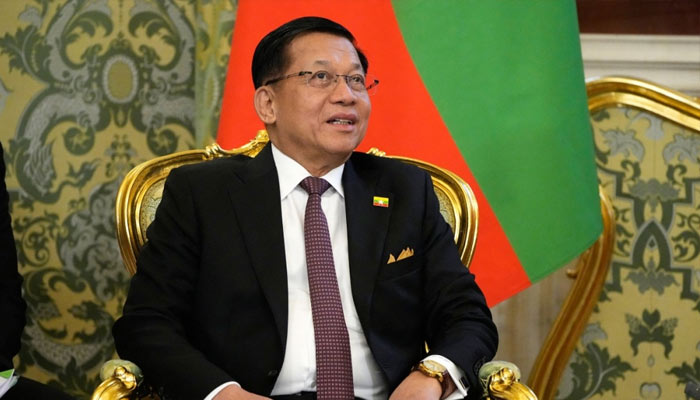
Myanmar President Min Aung Hlaing travelled to Malaysia on Wednesday for talks with Prime Minister Anwar Ibrahim.
As Kuala Lumpur faces growing criticism over its plan to return thousands of Myanmar nationals despite continuing conflict and instability in Myanmar. Min Aung Hlaing left Naypyitaw on Wednesday morning for the two-day visit, according to state-run MRTV. His schedule includes a meeting with Anwar and a business dialogue involving Malaysian Cabinet members.
The visit comes shortly after nearly 1,500 Myanmar nationals were sent back from Malaysia, bringing renewed attention to the safety and legality of the repatriation programme.
UN Raises Concerns Over Returns
Malaysia says about 5,000 Myanmar nationals have agreed to return in stages. The government has described the process as part of an effort to find a long-term solution to the presence of large numbers of Myanmar nationals in the country.
However, the United Nations refugee agency and rights organisations have raised concerns about the conditions awaiting returnees.
They have warned that parts of Myanmar remain affected by armed conflict and that people sent back could face persecution, insecurity or forced military recruitment. The UNHCR has also expressed concern about whether those being returned have been able to make genuinely voluntary and informed decisions.
As of the end of August, Malaysia’s Home Ministry said 11,804 Myanmar nationals were being held in immigration detention centres across the country.
Rohingya Question Remains Sensitive
It is not immediately clear whether any Rohingya were among those recently returned to Myanmar.
The issue is particularly sensitive because Rohingya Muslims have faced decades of persecution in Myanmar and many have been denied citizenship. Malaysia hosts one of Southeast Asia’s largest Rohingya refugee populations.
UNHCR records show that Malaysia has about 215,600 registered refugees and asylum seekers, including approximately 126,000 Rohingya. Malaysia, however, is not a signatory to the 1951 UN Refugee Convention and generally treats refugees as undocumented migrants.
The country’s government has defended its repatriation policy, with Anwar arguing that Malaysia cannot host refugees indefinitely and that Myanmar must ultimately take responsibility for its own citizens.
Min Aung Hlaing Seeks Closer ASEAN Engagement
The Malaysia trip also reflects Min Aung Hlaing’s efforts to strengthen relations with ASEAN members following the military takeover in February 2021.
Myanmar’s military-backed leadership has remained excluded from high-level ASEAN meetings, but several member states have continued diplomatic engagement with Naypyitaw.
Since becoming president in April, Min Aung Hlaing has increased his regional diplomatic activity. His Malaysia visit is his fifth trip to an ASEAN member state, after previous visits to Laos, Thailand, Vietnam and Cambodia.
Rights Groups Question Malaysia’s Approach
Activist and monitoring organisations have criticised the engagement, arguing that cooperation on repatriation should not come at the expense of refugee safety.
Armed Conflict Location and Event Data has warned that returning people to Myanmar while the country’s civil war continues could expose vulnerable groups to serious risks, particularly the Rohingya.
The organisation’s Asia-Pacific analyst Sindy Ajara said that without meaningful steps to address the conflict, repatriation could place returnees in immediate danger.
With Min Aung Hlaing and Anwar expected to discuss the issue during the visit, Malaysia’s repatriation programme is likely to remain a key test of how the country balances migration concerns, humanitarian obligations and its diplomatic engagement with Myanmar.
Comments are closed.