
Moscow Refinery Ablaze After Ukrainian Drone Attack, Thick Smoke Covers Skyline

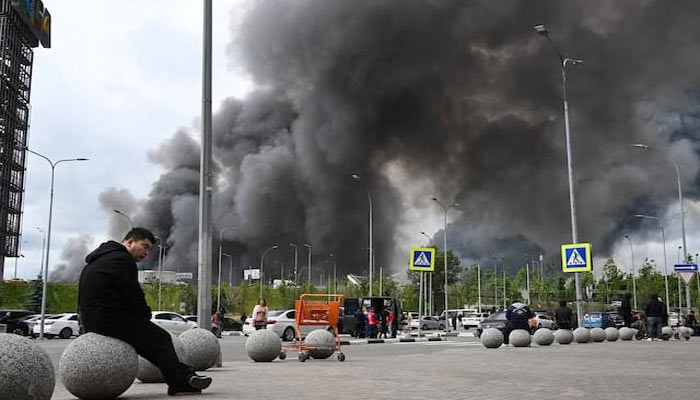
Black Smoke and ‘Oil Rain’: Moscow Residents Report Soot Fallout After Ukrainian Drone Strike on Refinery
A massive fire at a key Moscow oil refinery following a Ukrainian drone attack has left parts of the Russian capital shrouded in thick black smoke, with residents reporting oily stains on cars, roads and clothing amid fears of what many described as “black rain.”
The strike, reported to be one of the largest Ukrainian drone attacks on Moscow since the start of the war, targeted the Kapotnya oil refinery in the city’s southeast. The facility is considered strategically important, supplying more than a third of the fuel consumed across the Moscow region.
As flames engulfed sections of the refinery, towering plumes of dark smoke spread across the skyline, prompting health advisories and sparking concerns about air quality.
Residents Report Black Residue Across Moscow
In the hours following the attack, residents in several districts reported unusual black deposits appearing on vehicles, pavements and clothing after light rainfall.
People in Balashikha, Lyubertsy and parts of southeastern Moscow described a fine, oily residue settling on surfaces, with some comparing it to an “oil drizzle.”
Videos circulating on social media showed dense smoke clouds rising above the city as emergency crews worked to contain the blaze.
Although Moscow authorities rejected reports of widespread “oil rain,” officials urged residents in affected areas to keep windows shut and limit exposure to outdoor air.
Families with young children, elderly residents and individuals with respiratory illnesses were advised to temporarily relocate from the worst-affected zones as a precaution.
What Is ‘Black Rain’?
The phenomenon commonly referred to as black rain occurs when smoke, soot, ash and other airborne pollutants mix with moisture in the atmosphere before returning to the ground as precipitation.
Unlike ordinary rainwater, the droplets contain microscopic particles of carbon, hydrocarbons and other contaminants. When the water evaporates, it can leave dark stains on vehicles, buildings and clothing.
Such incidents have previously been reported after major industrial fires, wildfires and wartime bombardments that release large quantities of pollutants into the atmosphere.
Strategic Refinery Targeted
The Kapotnya refinery lies roughly 15 kilometres from the Kremlin and is regarded as one of Moscow’s most important fuel-processing facilities.
According to reports, the attack marked the second strike on the refinery within a week and formed part of a wider Ukrainian campaign targeting Russian energy infrastructure.
Kyiv has increasingly focused on oil depots, refineries and fuel storage facilities deep inside Russian territory, aiming to disrupt logistics, reduce energy revenues and demonstrate that the war’s impact is not confined to the battlefield.
- Airport Operations Disrupted
- The attack also affected air travel in and around Moscow.
Russian authorities temporarily suspended operations at four airports after waves of drones approached the capital. Officials said air-defence systems intercepted hundreds of incoming drones, though several targets were reportedly struck despite the interceptions.
The latest attack underscores Ukraine’s growing ability to launch long-range drone operations against strategic targets far from the front lines, while highlighting the vulnerability of critical infrastructure even in and around Russia’s capital.
As cleanup efforts continue, attention remains focused not only on the damage to the refinery but also on the environmental fallout from one of the largest fires Moscow has witnessed since the conflict began.
Comments are closed.