

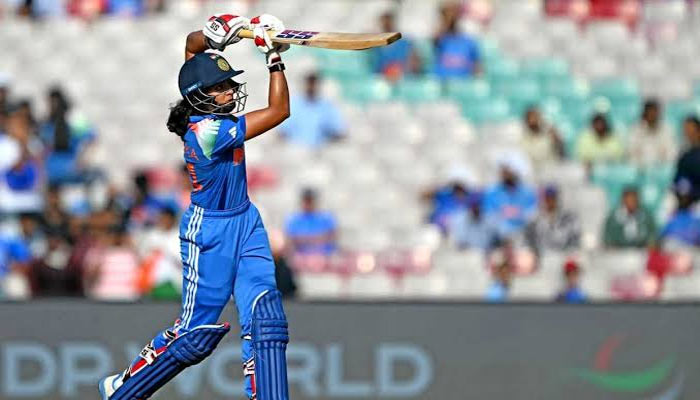
Pratika Rawal’s T20I Call-Up: India’s Selection Gamble Under the Spotlight
Jemimah Rodrigues’ injury has opened the door for Pratika Rawal, but her selection has also raised questions over India’s T20 strategy. Rawal has been named as Jemimah’s replacement for the Women’s Asia Cup and Asian Games squads, earning her maiden T20I call-up.
The decision is understandable given Rawal’s rapid rise in ODI cricket. She has become an important part of India’s 50-over side and played a significant role in the 2025 World Cup triumph. However, her T20 record raises a different question: has she done enough in the format to step into the role vacated by a player of Jemimah’s calibre?
Jemimah’s importance at No. 3 comes from her ability to rotate the strike, counter spin and accelerate after the powerplay. Rawal, by contrast, has predominantly operated as an opener. If India use her in the middle order, she will have to adapt to a role that is relatively unfamiliar.
The selectors appear to be betting on her ability to adapt rather than selecting her purely on the basis of her T20 numbers.
Rawal’s T20 Record
Rawal has played 24 T20s, scoring 574 runs at an average of 24.96 and a strike rate of 105.32. She has five fifties, with a best of 76.
Her strike rate is the most obvious concern. A No. 3 batter in modern T20 cricket is expected to maintain the tempo once the field restrictions end, and Rawal’s record does not yet suggest that she has consistently done so.
Her limited recent experience in the format adds another layer of uncertainty. She last played T20 cricket in 2024 before an injury interrupted her progress, while most of her cricket since then has come in ODIs.
That does not mean she cannot succeed. Her ODI performances have shown that she can cope with international-quality bowling and pressure. But T20 cricket demands faster decision-making, greater boundary production and the ability to change gears almost instantly.
Those are precisely the areas Rawal will now be expected to address.
The Alternatives
The selection becomes more intriguing when the other options are considered.
Niki Prasad was in impressive T20 form, scoring 331 runs in seven Maharani Trophy matches for Hubli Tigers at an average of 110.33 and a strike rate of 144.54. She also gained WPL experience with Delhi Capitals in 2026.
Vrinda Dinesh produced another strong domestic campaign, making 262 runs in seven matches at an average of 42.67 and a strike rate of 192.48.
Anushka Sharma also had a compelling case. She impressed for Gujarat Giants in the WPL and had already made her India T20I debut during the tour of South Africa earlier this year, giving the selectors some international evidence to assess.
Yastika Bhatia offers considerably greater experience in the format and has previously been part of India’s T20I plans. Her absence from both the Asia Cup and Asian Games squads makes her omission particularly noteworthy.
None of the alternatives was an obvious like-for-like replacement for Jemimah. However, several had stronger recent T20 exposure, which makes Rawal’s selection appear more like a long-term investment than a reward for current T20 form.
- A New Opportunity, But a New Challenge
- The timing of Rawal’s call-up adds another interesting dimension.
She had already signed for Warwickshire for the remainder of the Metro Bank One-Day Cup, a move that would have given her regular 50-over cricket in English conditions. After an injury-disrupted period, including missing the Lord’s Test, the county stint could have helped her regain rhythm and continue developing in the format where she has already established herself.
Instead, the India call-up has redirected her towards T20 cricket and potentially a new batting position.
That is hardly a bad problem to have. A maiden international T20I call-up represents a major opportunity. Yet from a developmental perspective, playing regular one-day cricket could also have offered Rawal valuable match practice and further exposure to English conditions.
India have instead accelerated her T20 education.
The selectors clearly believe her ODI success provides a strong enough foundation for that transition. The Asia Cup and Asian Games will offer the first major opportunity to test that judgement.
Rawal’s selection, therefore, cannot be assessed solely through her T20 statistics. She has not produced dominant numbers in the format, and she lacks the recent T20 exposure enjoyed by some of the other contenders.
What she does possess is an established international record in ODIs and the opportunity to demonstrate that her game can translate to the shortest format.
For now, Rawal’s selection looks less like a reward for what she has already accomplished in T20 cricket and more like a calculated bet on what she might offer India in the future.
The Asia Cup and Asian Games will reveal whether that gamble was worth taking.
Comments are closed.