
Rupee Under Pressure: RBI Tightens Currency Trading Rules, Opens Dollar Window for Oil Firms

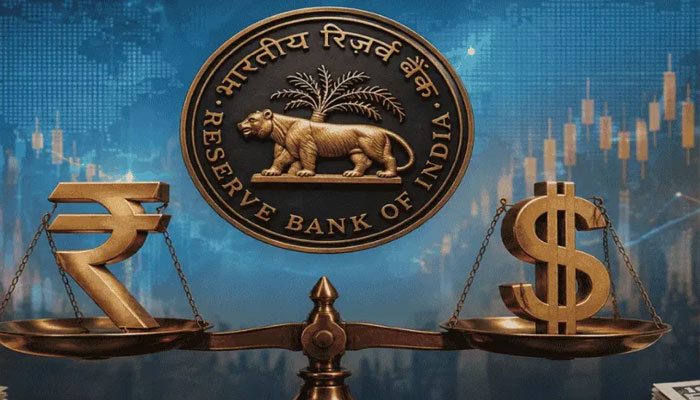
Rupee Slides Towards 97 Against Dollar; RBI Tightens Forex Derivatives Rules
The Indian rupee is approaching the 97-per-dollar level as crude oil prices remain above $100 a barrel, prompting the Reserve Bank of India (RBI) to tighten regulations governing the foreign exchange derivatives market. The central bank’s latest measures seek to curb speculative activity, strengthen compliance and ensure that currency transactions are backed by genuine economic requirements.
The regulatory changes include a steep reduction in the threshold for certain derivative transactions without proof of underlying exposure, restrictions on rebooking cancelled contracts, stricter documentation norms and the introduction of a Foreign Exchange Risk Reserve (FERR).
The measures are expected to reshape how banks, businesses and other market participants manage currency risks, potentially increasing compliance costs and limiting flexibility in some transactions.
The rupee’s weakness has coincided with a decline in India’s foreign exchange reserves. The country’s reserves dropped by $12.95 billion to $734.60 billion in the week ended October 2. The domestic currency has continued to face pressure despite inflows of more than $143 billion under the FCNR scheme.
Meanwhile, expensive crude oil is increasing concerns over imported inflation. Retail inflation is forecast to reach 5.2 per cent in FY27, while the RBI has raised the repo rate by 25 basis points to 5.50 per cent, as stated in the figures provided.
The central bank’s latest intervention aims to limit excessive risk-taking in the currency market and strengthen the connection between derivatives trading and actual foreign exchange requirements.
Threshold for Derivative Transactions Cut by 95%
The RBI has significantly reduced the limit for foreign exchange derivative transactions that can be undertaken without establishing an underlying exposure.
The threshold has been brought down from $100 million to $5 million equivalent across authorised dealers. The same reduction applies to exchange-traded rupee currency derivatives, with the limit now set at $5 million across all recognised stock exchanges combined.
The revision represents a 95 per cent reduction from the earlier threshold and restricts the ability of market participants to enter large qualifying positions without demonstrating an underlying foreign exchange exposure.
The change does not prohibit every derivative transaction above $5 million. Instead, it narrows the circumstances in which transactions can be conducted without establishing the exposure they are intended to cover.
The move is designed to discourage large positions that are not adequately linked to genuine commercial or financial needs.
RBI Restricts Rebooking of Cancelled Forex Contracts
The central bank has also introduced tighter controls on the rebooking of cancelled foreign exchange derivative contracts involving the rupee.
Under the new directions, authorised dealers cannot permit users to rebook a rupee-involving derivative contract, whether deliverable or non-deliverable, if it was cancelled with any authorised dealer after the directions were issued.
The restriction targets the rebooking of cancelled contracts rather than all fresh derivative transactions. Rolling over contracts at maturity will continue to be allowed, subject to the applicable regulatory conditions.
Repeated cancellation and rebooking can enable market participants to alter their positions in response to exchange-rate movements. By restricting this practice, the RBI intends to encourage more disciplined decision-making and reduce opportunities to exploit short-term market fluctuations.
For companies exposed to currency volatility, the new rules could limit the flexibility to revise hedging arrangements at short notice.
Banks to Strengthen Checks Against Double Hedging
The RBI has strengthened documentation requirements to prevent users from hedging the same underlying foreign exchange exposure through multiple authorised dealers.
Banks must obtain and retain an undertaking from customers entering into rupee-involving derivatives to hedge contracted exposures. The declaration must confirm that the same exposure has not been hedged through another authorised dealer.
This places greater responsibility on customers to provide accurate information and on banks to verify declarations and maintain appropriate records.
The measure is intended to improve transparency and prevent a single commercial exposure from being used to justify multiple derivative positions.
Businesses may have to introduce stronger internal controls and complete additional paperwork, while banks will need to enhance their compliance and verification procedures.
20% Foreign Exchange Risk Reserve Introduced
The introduction of the Foreign Exchange Risk Reserve is another major component of the RBI’s regulatory package.
For specified rupee-involving foreign exchange derivative contracts with a notional value exceeding $2 million equivalent, authorised dealers must maintain a cash reserve with the RBI equal to 20 per cent of the rupee equivalent of the contract’s notional amount.
The requirement applies to covered contracts used to hedge current-account exposures where the customer purchases foreign currency against the rupee.
Setting aside the prescribed amount could affect banks’ liquidity management and increase the cost of providing certain derivative products. Banks may factor these costs into pricing, potentially prompting businesses to review their hedging strategies.
However, the reserve is not a 20 per cent charge levied directly on customers. It is a cash reserve that authorised dealers must maintain for the specified transactions.
Why Is the RBI Acting Now?
The rupee has faced pressure amid unfavourable capital flows, currency hedging demand and uncertainty in global markets. On October 9, 2026, the currency closed at around 96.73 against the US dollar, close to its record low, according to the figures provided.
With crude oil prices elevated, India’s demand for dollars to finance energy imports could add to pressure on the domestic currency. Higher import costs can also contribute to inflationary pressures.
The RBI is now tightening oversight of the derivatives market, where positions taken in anticipation of further rupee depreciation can potentially add to demand for dollars and intensify volatility.
The new framework seeks to curb excessive speculative activity, discourage repeated cancellation and rebooking of contracts, prevent duplicate hedging and introduce a liquidity safeguard for specified transactions.
For banks and businesses, the changes will mean closer scrutiny, more documentation and potentially higher costs for certain hedging arrangements. The broader objective is to ensure that the foreign exchange derivatives market primarily serves legitimate economic needs while limiting opportunities for excessive risk-taking.
Comments are closed.