

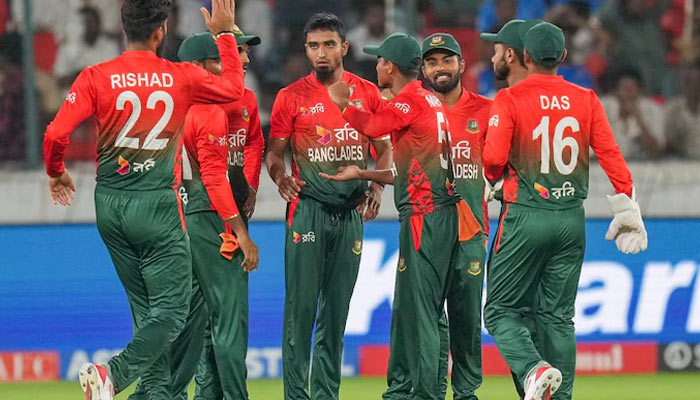
When a team skips cricket’s biggest and most lucrative global event, punishment is usually expected.
Fines, sanctions or long-term consequences are the norm. But in a move that has surprised many, Bangladesh has emerged rewarded, not punished, for pulling out of the 2026 ICC Men’s T20 World Cup.
Instead of disciplinary action, the International Cricket Council (ICC) chose a pragmatic, conciliatory path—one that reflects cricketing realpolitik more than rigid enforcement.
At the centre of the storm was the Bangladesh Cricket Board (BCB), which refused to send its team to India for scheduled T20 World Cup matches citing security concerns. Contrary to expectations, Bangladesh not only avoided sanctions but also secured assurances of future hosting rights—an outcome that has raised eyebrows across the cricketing world.
No sanctions, future hosting assured
The ICC confirmed that Bangladesh will face no financial, sporting or administrative penalties for skipping the tournament. The decision followed intense discussions involving the ICC, the Pakistan Cricket Board (PCB), and the BCB.
In its official communication, the ICC said the approach was guided by “principles of neutrality and fairness,” emphasising facilitation over punishment. Crucially, the ICC also preserved Bangladesh’s right to approach its Dispute Resolution Committee under existing regulations.
Beyond avoiding penalties, the BCB was promised hosting rights for another ICC global event before 2031, when Bangladesh is already scheduled to co-host the Men’s Cricket World Cup with India. While subject to standard selection processes, the assurance signals long-term goodwill and reinforces Bangladesh’s status as a “priority cricket ecosystem,” according to the ICC.
BCB president Aminul Islam Bulbul welcomed the outcome, highlighting continued cooperation with global cricketing bodies. Pakistan’s support for Bangladesh during negotiations came after Dhaka played a role in persuading Islamabad to reverse its boycott threat and agree to play India on February 15—a match with enormous financial implications.
How the standoff unfolded
The controversy began in early January when the BCB formally informed the ICC it would not travel to India due to security concerns. The decision followed the release of Bangladeshi pacer Mustafizur Rahman from IPL franchise KKR amid political backlash in India.
The ICC rejected Bangladesh’s request to relocate its matches to Sri Lanka, sticking to the original schedule. Scotland was subsequently drafted in as Bangladesh’s replacement, triggering wider instability.
Pakistan then announced a boycott of its marquee India match in solidarity with Bangladesh, threatening the February 15 India–Pakistan clash in Colombo—arguably the most valuable fixture in world cricket, capable of generating billions in broadcast revenue.
With tensions rising, a key meeting was convened in Lahore involving ICC officials and the PCB. Bulbul flew in from Dhaka for talks that were officially described as “constructive and congenial.” Ultimately, Pakistan executed a U-turn after receiving political clearance from Prime Minister Shehbaz Sharif and agreed to play India.
Why the ICC chose conciliation over punishment
The final ICC communiqué reaffirmed that Bangladesh would face no sanctions and retain its dispute resolution rights, along with assurances of future hosting opportunities.
ICC CEO Sanjog Gupta described the situation as “regrettable” but stressed it would not define Bangladesh’s long-term standing in world cricket. The council underlined the importance of respecting a Full Member and avoiding decisions that could cause lasting structural damage.
Behind the scenes, however, commercial realities played a decisive role. The ICC could not risk losing the India–Pakistan fixture, which alone underpins a significant portion of the tournament’s revenue. Any disruption would have impacted not just the ICC but also smaller boards heavily dependent on central funding.
Bangladesh, backed initially by Pakistan’s pressure tactics, recognised this leverage. By the time negotiations concluded in Lahore, the ICC had safeguarded its marquee match, Pakistan had returned to the fold, and Bangladesh had converted its withdrawal into future guarantees—without a single formal penalty.
What punishment could have meant
Had the ICC taken a punitive route, the fallout could have been severe. Bangladesh is among cricket’s largest markets, with a fan base exceeding 200 million. Alienating such a market would have carried long-term commercial and political costs.
Financial sanctions would have hit the BCB especially hard. According to a PTI report, Bangladesh was already set to lose around BDT 325 crore (approximately $27 million) in ICC revenue by skipping the tournament. Factoring in lost broadcast and sponsorship income, the board’s revenue for 2025–26 could have dropped by over 60%.
Former Bangladesh captain Tamim Iqbal had warned against decisions driven by emotion, cautioning that the consequences could stretch “10 years down the line.”
For the ICC, further penalties risked destabilising not just the BCB but the broader funding ecosystem that sustains most Full and Associate Members outside the sport’s wealthiest nations.
Seen through this lens, the ICC’s concessions were as much about damage control as they were about fairness. Bangladesh may have missed the T20 World Cup, but in the complex balance of power, politics and profit that governs world cricket, it walked away with rewards—not punishments.
Comments are closed.