
Stock market opens higher as Sensex gains 100 points, Nifty tops 23,400

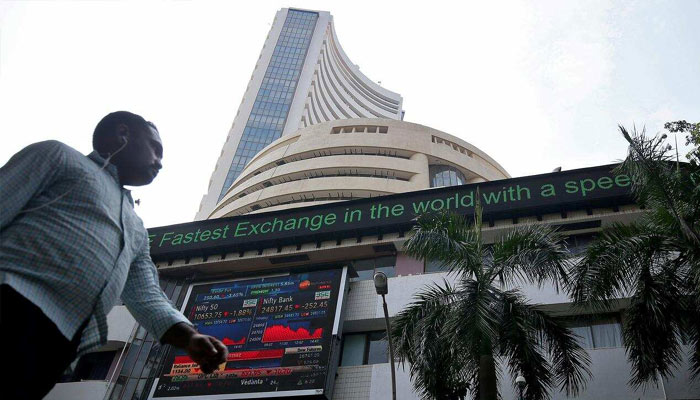
Indian benchmark indices traded lower on Wednesday despite opening on a firm note, as investors remained worried about rising crude oil prices and the continuing uncertainty surrounding the conflict in West Asia.
The decline also extended the cautious mood that has gripped markets over the past few sessions. The BSE Sensex fell 216.67 points to 74,342.57, while the Nifty 50 slipped 68.50 points to 23,311.05 at around 9:47 am after giving up most of their early gains.
Market experts said the earlier optimism around a quick easing of geopolitical tensions and softer crude prices is fading, leading to renewed pressure on Indian equities.
Dr. VK Vijayakumar, Chief Investment Strategist at Geojit Investments Limited, said the prolonged uncertainty in West Asia is beginning to weigh on India’s broader economic outlook. He pointed out that the rupee has weakened to a fresh low of 95.63 against the US dollar, increasing concerns over inflation as well as economic growth.
According to him, the current environment has effectively turned into a “live balance of payments stress test” for India, with higher oil prices posing risks for both inflation and the country’s external finances.
Among individual stocks, Asian Paints emerged as the top gainer on the Sensex, rising more than 3 per cent in early trade. Adani Ports and Special Economic Zone gained around 2 per cent, while Tata Steel moved higher by over 1 per cent. Shares of Bharat Electronics and Bharti Airtel also traded in positive territory.
On the other hand, Power Grid Corporation of India was among the biggest losers, falling more than 2 per cent. Titan Company, NTPC, Bajaj Finance and State Bank of India also traded lower during the morning session.
Vijayakumar further said foreign institutional investors are likely to continue selling Indian equities as global investors remain focused on the artificial intelligence-led rally in international markets. He added that derivatives data also indicate continued selling pressure from FIIs.
Given the uncertainty over oil prices and global developments, analysts believe investors may prefer defensive sectors such as pharmaceuticals in the near term. They also suggested that long-term investors could use market corrections to gradually accumulate fundamentally strong banking stocks.
Comments are closed.