
Stock Market Today: Sensex Falls 600 Points, Nifty Below 22,600 as Crude Hits $106

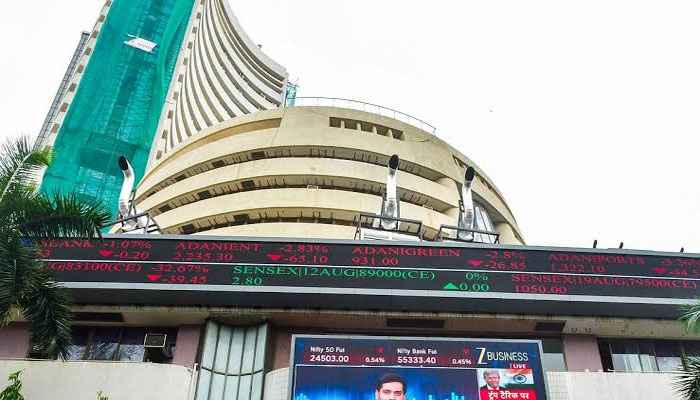
Indian equity markets remained under pressure in early trade on Tuesday, September 29, with the Sensex falling nearly 650 points and the Nifty slipping below the 22,600 level as broad-based selling continued.
At 10:37 am, the BSE Sensex was down 622.37 points, or 0.86%, at 72,147.13, compared with its previous close of 72,771.72. The NSE Nifty 50 declined 189.5 points, or 0.83%, to 22,591.87.
The weakness extended to the broader market. The Nifty Next 50 fell 1.05%, while the Nifty 100, Nifty 200 and Nifty 500 declined around 0.90%. The Nifty Smallcap 100 dropped 1.02%, and the Nifty Midcap 100 slipped 0.95%.
India VIX, a measure of expected market volatility, jumped 7.13% to 14.61, signalling increased uncertainty among investors.
Sectoral Indices Under Pressure
Most sectoral indices traded in negative territory. Nifty Media was the biggest laggard, falling 2.06%, followed by Nifty Oil & Gas, which declined 1.21%.
Nifty Private Bank and Nifty Financial Services fell 1.20% and 1.19%, respectively, while the Nifty Bank index was down 1.19% at 53,822.65. Pharma and healthcare stocks provided some support against the broader decline.
Geojit Investments chief investment strategist V K Vijayakumar attributed the pressure to elevated crude prices and US bond yields. He said Brent crude trading above $106 and the US 10-year Treasury yield at around 5.23% were creating an unfavourable global backdrop for equities.
According to Vijayakumar, higher crude prices could increase fiscal pressure on India if they remain elevated, with potential implications for GDP and corporate earnings growth in FY27.
Five Factors Weighing on Markets
1. Crude Oil Near $107
Brent crude futures rose around 1.5% to nearly $107 a barrel amid heightened US-Iran tensions and concerns over global supplies.
For India, which relies heavily on imported crude, sustained higher oil prices can increase the import bill, put pressure on the rupee and add to inflationary risks. Higher fuel and input costs could also affect sectors such as aviation, paints, chemicals and logistics.
2. Elevated US Treasury Yields
The US 10-year Treasury yield remained around 5.24%, keeping pressure on risk assets. Higher US yields can make dollar-denominated assets relatively more attractive and raise the return investors demand from equities, particularly in emerging markets.
3. Foreign Investor Outflows
Foreign institutional investors remained net sellers, offloading Indian equities worth ₹5,353.22 crore on Monday. Domestic institutional investors bought shares worth ₹5,189.02 crore, offering some support but not fully offsetting the foreign selling.
Continued foreign outflows, along with global uncertainty and pressure on the rupee, remain an overhang for domestic markets.
4. Weak Global Cues and Extended Losses
The latest decline followed another weak session on Monday, when the Nifty fell 1.56% to 22,780.25 and the Sensex dropped 1,124 points.
Asian markets were largely lower on Tuesday, while US equities also ended Monday’s session in negative territory. Continued concerns over crude prices, geopolitical tensions and global interest rates have added to investor caution.
5. Monthly Derivatives Expiry
The monthly derivatives expiry is also contributing to market volatility. With investors adjusting positions amid broad-based selling, movements in banking stocks and other heavily traded counters could add to intraday swings.
Comments are closed.