
Tamil Nadu Reaffirms Two-Language Policy After Supreme Court’s Remarks on Hindi

Tamil Nadu has once again made it clear that it has no plans to dilute its two-language policy, even as the Supreme Court has questioned the state’s resistance to Hindi in connection with the proposed establishment of Jawahar Navodaya Vidyalayas.
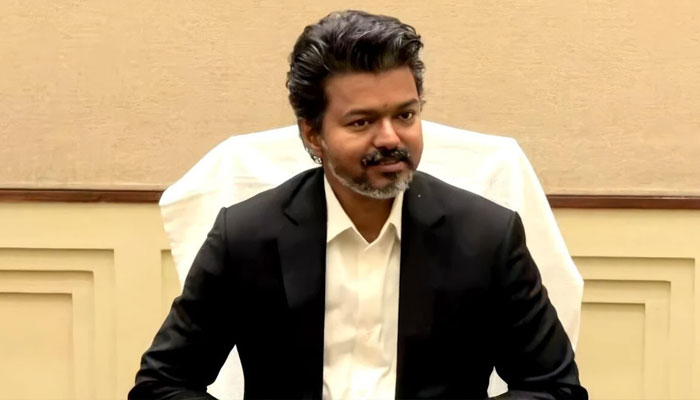
A day after the Supreme Court asked Tamil Nadu to “change its mindset” on Hindi, School Education Minister and TVK leader Rajmohan Arumugam said the state would continue to follow its existing language policy and would not provide land for Navodaya schools.
Rajmohan said Tamil Nadu’s two-language system had been followed for years and remained an important part of the state’s education policy. He stressed that the government’s position should not be viewed as opposition to Hindi or any other language.
“ We are not against Hindi or any other language. Tamil must be given importance on Tamil Nadu’s soil,” he said.
The minister also pointed out that the Supreme Court’s comments were made during the hearing and did not constitute a final judgment. According to him, the state would continue to defend its policy before the court.
Why Tamil Nadu Is Opposing Navodaya Schools
Jawahar Navodaya Vidyalayas are centrally funded residential schools operated by the Navodaya Vidyalaya Samiti under the Union Ministry of Education. The schools are co-educational and were introduced to provide quality education, particularly to talented students from rural areas.
The institutions follow a three-language framework in which Hindi has a significant role. The Centre has been seeking the establishment of Navodaya schools in Tamil Nadu as part of its national network.
Tamil Nadu’s objection is linked to its long-standing two-language formula, under which Tamil and English form the principal languages of instruction. The state has historically resisted policies that it believes could lead to the compulsory introduction of Hindi.
However, the current dispute is also centred on a practical issue — the availability of land.
The Tamil Nadu government has refused to allot land to the Navodaya Vidyalaya Samiti for setting up the proposed schools. The state has argued that it should not be required to facilitate a Central education programme whose language structure does not correspond with Tamil Nadu’s policy.
During the Supreme Court proceedings, the state also raised issues concerning its policy-making authority and the principles of cooperative federalism. Tamil Nadu’s argument has been that the Navodaya scheme is a Central initiative and that the state should not be compelled to facilitate it.
The Centre, meanwhile, has maintained that Tamil Nadu should identify suitable land for the schools, with the Union government taking responsibility for their establishment and funding.
Supreme Court Gives Tamil Nadu Three More Months
The Supreme Court’s latest observations came during the hearing of Tamil Nadu’s challenge concerning the establishment of Navodaya schools.
The Bench questioned the state’s position on Hindi and asked why Tamil Nadu should oppose the creation of additional educational institutions. Justice BV Nagarathna urged the state to “change its mindset” and observed that the state could not maintain that Hindi would not be taught on its territory.
The court also indicated that Navodaya schools could offer another educational opportunity to students without requiring Tamil Nadu to shut down or alter its existing school system.
At the same time, the comments made during the hearing have not finally settled the broader dispute over Tamil Nadu’s language policy. Rajmohan has relied on this distinction while defending the state’s position.
The court has also encouraged Tamil Nadu and the Centre to continue talks and resolve the matter through cooperative federalism.
Tamil Nadu has been given another three months to act on the earlier direction to identify suitable land for Navodaya schools in each district, keeping the dispute alive.
DMK and TVK Find Common Ground
The controversy has also resulted in an unusual political convergence in Tamil Nadu.
TVK chief and Chief Minister C Joseph Vijay and DMK leader Udhayanidhi Stalin have been political opponents since the emergence of the TVK as a major force in state politics. Despite their differences, the two sides have adopted similar positions on the Navodaya issue.
Udhayanidhi, who is the Leader of the Opposition, has backed the government’s decision to remain committed to the two-language policy. He has argued that Tamil Nadu already has model and residential schools that provide quality education to students, particularly those from disadvantaged sections.
He has also suggested that the state could convene a special Assembly session, if necessary, to pass a resolution opposing the establishment of centrally sponsored Navodaya schools.
Udhayanidhi has maintained that Tamil Nadu’s position should not be interpreted as hostility towards Hindi. Instead, he has framed the issue as opposition to compulsory language imposition and support for the state’s established language policy.
The Navodaya dispute has therefore developed into a wider debate involving language, education, Centre-state relations and the extent of state policy-making powers. For the moment, both the Tamil Nadu government and the opposition DMK appear aligned in defending the state’s two-language framework and resisting the proposed allocation of land for Navodaya schools.
Comments are closed.