
Tilak Varma Backs No. 3 Batting Spot, Says He Can Switch Between Attack and Anchor for India

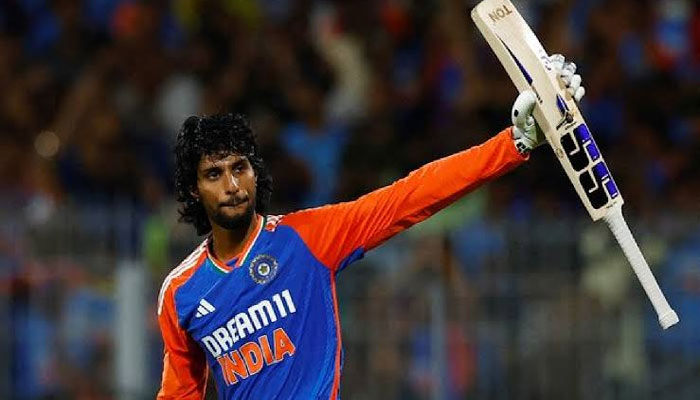
Tilak Varma Prioritises Team India’s Needs Over No. 3 Preference Ahead of West Indies T20I
Tilak Varma may prefer batting at No. 3, but the Indian vice-captain has made it clear that he is willing to embrace any role the team requires. Ahead of the fourth T20I against the West Indies in Hyderabad on Wednesday, the left-handed batter emphasised the importance of adapting his approach to match situations rather than focusing on an individual batting position.
No. 3 has been a particularly successful position for Tilak, who scored two centuries during India’s T20I series in South Africa in 2024. However, with India’s top order performing well, the 23-year-old has increasingly been deployed in the middle order, often coming in at No. 5 to guide the innings through the middle overs and accelerate towards the finish.
His responsibilities have expanded further with his appointment as vice-captain. Tilak believes that being prepared for different situations is essential to contributing consistently to the team’s success.
‘I Want to Step Up When the Team Needs Me’
Speaking to reporters at the pre-match press conference on Tuesday, Tilak acknowledged his preference for batting at No. 3 but stressed that personal choices would not take precedence over the team’s plans.
“I love batting at No. 3, and I have said that many times. But I’m someone who always wants that pressure when the team needs me. I want to step up and take that role,” he said.
Tilak explained that his approach would depend on the state of the innings. If India lose early wickets, he is prepared to spend time at the crease, rebuild the innings and ensure the team can bat through the difficult phase. If the top order bats deep into the innings, he intends to switch gears and attack from the outset.
“If we lose quick wickets, then I can slightly take my time and take the game deep. I can do that role,” he said.
“But if the openers or the top three batters bat until the 14th or 15th over, then I know how to change gears and get going from the first ball. I have been practising for that, especially with the mindset.”
Strong Numbers in Both Positions
Tilak’s performances demonstrate why he remains an important option for India across the batting order. In 13 T20I innings at No. 3, he has scored 443 runs at an average of 55.37 and a strike rate of 169.73, including two centuries.
His record in the middle order is also impressive. He has accumulated 1,140 runs in 43 innings at an average of 45.6 and a strike rate of 144.85, showing that he can contribute effectively outside his preferred position.
The batter believes mental preparation is crucial to switching between an innings-building role and an aggressive approach.
“It’s really important to be ready for both situations. When the team is under pressure, you should take the game deep, and when the team gets going from the first ball, you should go for it,” Tilak said.
He added that he had been working hard on developing the mindset required to handle both responsibilities.
His adaptability was evident in the Asian Games final against Pakistan, where he struck an unbeaten 51 off 34 balls, helping India recover alongside Shivam Dube. The innings highlighted his ability to handle pressure and adjust his approach according to the team’s needs.
Tilak also expressed his appreciation for India’s in-form openers, including Ishan Kishan, and said he was happy to support the existing batting combination.
“Right now, I’m enjoying this moment. When someone like Ishan and the other openers are batting, it’s really a treat to watch. I don’t want to disturb any role. Whatever the team needs, I want to do that,” he said.
Home Advantage for Hyderabad-Born Tilak
Wednesday’s match carries additional significance for Tilak, who grew up in Hyderabad and will play in front of his home crowd as India’s vice-captain.
India lead the five-match series 2-1 and have an opportunity to seal the contest with another victory. The West Indies, meanwhile, will look to win the fourth match and force a series decider.
The pitch at the Rajiv Gandhi International Stadium could play a key role in shaping the contest. The surface has been relaid with fresh soil, leaving uncertainty over how it will behave compared with the venue’s familiar conditions.
Tilak said the batters would need to assess the wicket quickly before deciding how aggressively to approach their innings.
“You cannot go all out from the first ball without assessing the conditions. In one-day cricket, you can take five or six balls to understand the wicket, but in T20 cricket, you have only one or two balls before you need to get going,” he said.
He added that the team would evaluate the surface before settling on its strategy.
For Tilak, the challenge is to combine his natural attacking instincts with the ability to build an innings when circumstances demand it. While No. 3 remains his preferred batting position, the young vice-captain is determined to contribute wherever India need him most.
Comments are closed.