
Trump Downplays Economic Concerns on Campaign Swing as Iran War Fuels Price Surge

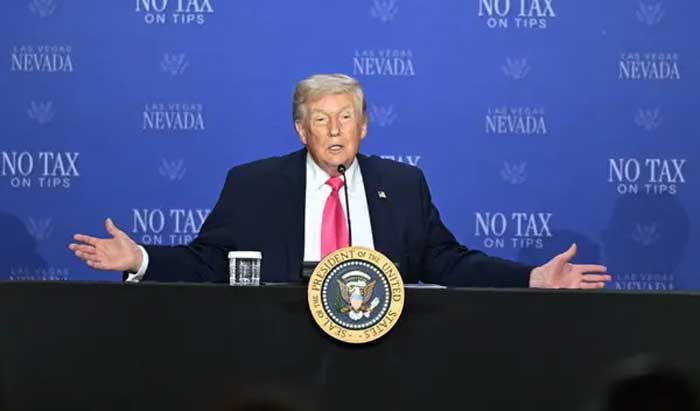
US President Donald Trump is seeking to shrug off mounting concerns over the economy and his party’s slipping political prospects during a campaign-style visit to key battleground states Nevada and Arizona this week, even as the conflict with Iran drives up fuel costs.
At a stop in Las Vegas on Thursday, Trump promoted his tax and immigration agenda, highlighting provisions aimed at appealing to hourly and hospitality workers. However, rising prices—from gasoline to groceries, housing, and insurance—are weighing on voters and complicating Republican efforts ahead of November’s midterm elections.
Several Republican strategists told Reuters they are concerned the White House has lost control of the affordability narrative, blunting the political benefits of Trump’s tax policies and a previously resilient economy.
“The cost of living is going to trump anything — no pun intended — over any small change in tax returns,” said David Damore, a political science professor at the University of Nevada, Las Vegas.
Still, some advisers remain optimistic, suggesting a potential deal with Iran to reopen the vital Strait of Hormuz could ease global energy pressures and calm economic anxieties before the midterms.
Addressing supporters, Trump defended his policies, saying Americans are seeing more money in their pockets due to Republican tax measures. He also warned that those benefits could be reversed if Republicans lose control in November.
Despite that message, persistently high fuel costs threaten to keep inflation elevated across sectors, posing a significant challenge for Republicans facing a difficult electoral map in both the House and Senate.
Democrats are currently favored to regain control of the House, while key Senate races in states like North Carolina, Georgia, Ohio, and even traditionally conservative Nebraska are becoming increasingly competitive.
Trump’s approval rating has also dipped, hitting 36% in a late-March Reuters/Ipsos poll—one of the lowest points of his second term.
During his West Coast swing, Trump also focused on a key campaign promise: eliminating federal taxes on tips. The policy, part of his broader tax law, allows eligible workers to deduct up to $25,000 in tip income from federal taxes, though payroll taxes still apply.
The administration has taken steps to curb rising energy prices, including releasing oil from strategic reserves and adjusting sanctions. However, with global oil prices hovering above $90 a barrel, options remain limited.
Trump has attempted to manage expectations, noting that midterm losses are common for the party in power, while insisting Republicans can defy that trend.
“We have to explain to the voters the great job that we’ve done,” he said, expressing confidence that the party can still retain support despite economic headwinds.
Comments are closed.