

Indonesia’s Wildfire Crisis Deepens as Borneo Braces for Peak Dry Season
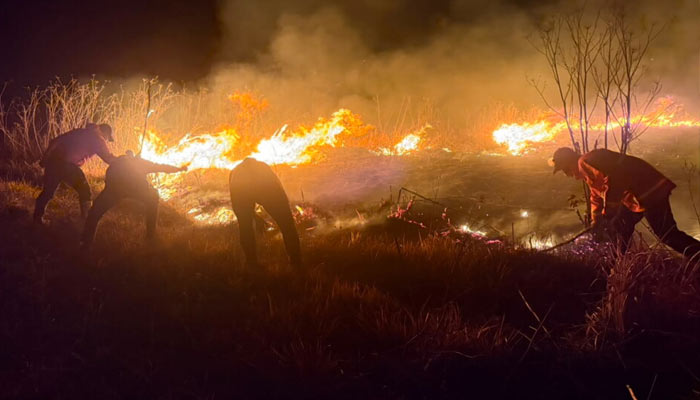
Indonesia is facing a worsening wildfire crisis, with thick smoke choking parts of Borneo as officials warn that the most difficult phase of the fire season is still ahead.
Nearly 95,000 hectares of land were burned across the country in July alone, according to government figures released this week. Fires fuelled by dry conditions linked to a strong El Niño weather pattern have sent heavy smog across parts of Central Kalimantan, including the provincial capital Palangkaraya.
Forestry ministry official Yudho Shekti Mustiko said firefighting efforts were stretching resources across Borneo, with all 767 ministry personnel in the region deployed to deal with the fires. “It is tough,” Yudho said, noting that no officials were being kept on standby in their offices as teams focused on the blazes.
More than 200,000 hectares have now burned across Indonesia since January, an area roughly three times the size of Jakarta. Officials, however, expect the situation to become more challenging in the coming months.
“We have to maintain our stamina. September, October will be very dry,” Yudho said.
Fires Surpass 2019, 2023 Levels
The area destroyed by fire so far this year has already exceeded the totals recorded during the El Niño seasons of 2019 and 2023. It remains below the catastrophic 2015 season, when millions of hectares burned and thick haze spread across much of Southeast Asia.
Experts say Indonesia’s wildfire problem is also rooted in long-term environmental damage. Decades of deforestation have degraded forests and landscapes, leaving them increasingly vulnerable to fires during prolonged dry spells.
David Gaveau, founder of deforestation monitoring platform Nusantara Atlas, said the current fires were partly a consequence of decades of forest loss. “The scale of the fires burning today is also the legacy of four decades of deforestation, which has turned vast landscapes into degraded tinderboxes,” Gaveau said.
He said rainfall was ultimately the most effective way to stop the fires but warned that significant rain may not arrive until November. With September and October expected to remain particularly dry, Indonesia is preparing for a potentially more severe wildfire and haze crisis before the weather begins to improve.
Comments are closed.