

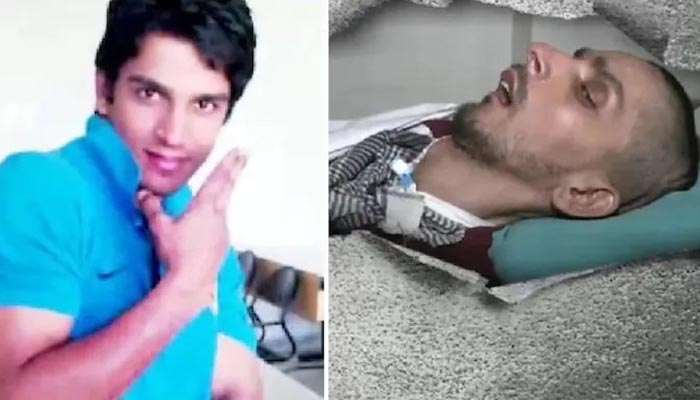
After spending 13 years in a vegetative state, 32-year-old Harish Rana was moved from Ghaziabad to All India Institute of Medical Sciences on Saturday after the Supreme Court of India allowed passive euthanasia in his case.
Doctors will gradually withdraw life-sustaining support under strict medical supervision, a process intended to end his prolonged suffering. An emotional video widely shared on social media shows Rana’s family bidding him farewell at their Ghaziabad home on Friday. In the clip, his sister, who is associated with the Brahma Kumaris, speaks to him tearfully, asking him to forgive everyone and find peace as the family prepares for the difficult transition.
“Forgive everyone, ask forgiveness from all, now it’s time to go. It’s okay,” she says in the video.
Rana’s parents, especially his father Ashok Rana, have cared for him continuously since the accident that left him in a coma. Residents of Rajnagar Extension and members of the local community have often spoken about the family’s dedication over the years, supported by their spiritual association with the Brahma Kumaris. On March 13, spiritual leader Sister Kumari Lovely Didi visited their home, offering prayers and performing a traditional tilak ritual.
The case is significant as it marks India’s first court-approved instance of passive euthanasia involving the withdrawal of not only ventilator support but also feeding tubes and other artificial medical assistance. The verdict was delivered by a bench comprising JB Pardiwala and KV Viswanathan, who ruled that life support could be withdrawn in a hospital setting so that Rana could die with dignity.
Rana, a former engineering student at Panjab University and a football enthusiast, suffered severe head injuries after falling from the fourth floor of his paying guest accommodation in 2013.
Speaking after the judgment, Ashok Rana said the decision would not lessen the family’s pain but could help others facing similar circumstances. He said the ruling may offer guidance for families struggling with the emotional and ethical challenges of prolonged and irreversible medical conditions.
Comments are closed.