

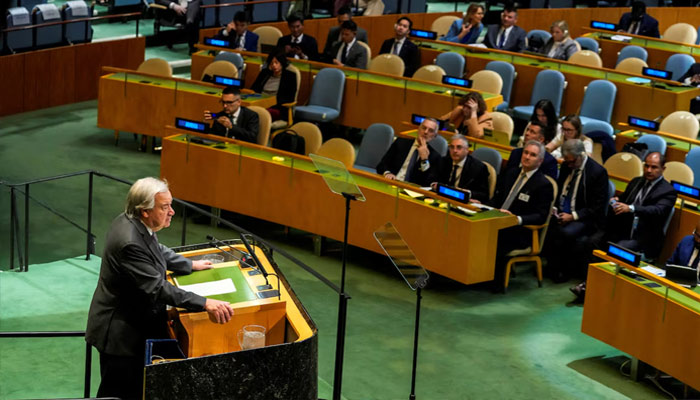
A sharp diplomatic confrontation erupted between the United States and Iran at the United Nations after Tehran was appointed to a key role at a conference reviewing the Non-Proliferation Treaty (NPT).
The 11th NPT review conference, being held in New York, opened with immediate friction as Iran was named among the vice presidents of the month-long meet, a move backed by the Non-Aligned group.
US objects strongly
Washington criticised the decision, with US official Christopher Yeaw calling Iran’s appointment an “affront” to the NPT. He accused Tehran of failing to uphold its non-proliferation obligations and not fully cooperating with the International Atomic Energy Agency over its nuclear activities.
The US argued that giving Iran a leadership role undermines the credibility of the conference.
Tehran rejects criticism
Iran responded sharply, dismissing the US remarks as politically driven. Reza Najafi, Tehran’s envoy to the IAEA, questioned Washington’s authority on nuclear compliance, pointing to its own nuclear arsenal and past actions.
He said the criticism was unjustified and reiterated that Iran remains committed to its rights under the treaty.
Broader tensions persist
The exchange comes against the backdrop of ongoing tensions over Iran’s nuclear programme. US President Donald Trump has repeatedly stated that Iran will not be allowed to develop nuclear weapons. Iran, however, maintains that its uranium enrichment is intended for peaceful purposes, while Western nations continue to raise concerns over potential military dimensions.
Talks and proposals
Even as tensions simmer, diplomatic channels remain active. Iranian sources indicated that Tehran has proposed deferring nuclear discussions until wider regional issues—including conflict and shipping concerns in the Gulf—are addressed.
At the same time, the White House reiterated that US red lines on Iran’s nuclear ambitions remain unchanged following high-level security discussions led by Trump. The latest clash at the UN highlights the deep divide between the two countries, with disagreements over nuclear policy continuing to dominate the global diplomatic agenda.
Comments are closed.