
French Woman in Critical Condition After Hantavirus Infection: How Deadly Is the Virus?

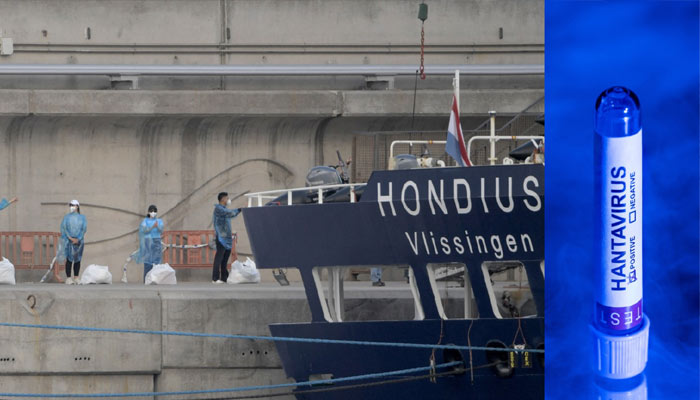
A French woman infected with hantavirus is reportedly in the “final stage of supportive care,” according to recent reports tied to a suspected outbreak among passengers on a cruise ship, raising fresh concern about the rare but serious disease.
The patient, one of several French nationals on board, was evacuated from Tenerife in Spain’s Canary Islands on 10 May after her condition deteriorated rapidly. She is now being treated at Hôpital Bichat-Claude-Bernard in Paris, where doctors are providing intensive life-support, including extracorporeal membrane oxygenation (ECMO), a technique that oxygenates blood outside the body when the lungs are failing. Her identity has not been disclosed.
Health officials suspect she may have contracted the Andes strain of hantavirus, a rare variant found in South America that is notable for its limited ability to spread between humans in close-contact situations. Authorities are reportedly conducting investigations and contact tracing across multiple countries as part of the ongoing response.
The phrase “final stage of supportive care” has triggered concern online, but in medical terms it refers to a critical phase of intensive care where treatment is fully reliant on life-support systems while doctors attempt to stabilize severe organ failure.
What is hantavirus?
Hantaviruses are a group of viruses typically transmitted from rodents to humans. Infection usually occurs when people inhale particles contaminated with urine, droppings, or saliva from infected rodents, often in enclosed or poorly ventilated spaces.
Most hantavirus strains do not spread between humans. The Andes virus is an exception, with rare documented cases of human-to-human transmission in close and prolonged contact settings.
Symptoms and progression
Early signs often resemble common flu-like illnesses, including fever, fatigue, muscle aches, headaches, nausea, and dizziness. In severe cases, the infection can progress quickly to respiratory failure.
How dangerous is it?
Hantavirus infections can be severe and potentially fatal. In cases of hantavirus pulmonary syndrome, reported mortality rates can be around 35%, and in some strains may rise even higher despite intensive medical care. Other strains found in Europe and Asia tend to cause hemorrhagic fever with renal syndrome, which carries a lower but still significant risk of death.
There is currently no specific antiviral treatment or approved vaccine. Care is entirely supportive, including oxygen therapy, mechanical ventilation, fluid management, and in critical cases, ECMO.
Should there be concern?
Health experts stress that hantavirus infections are rare, and most cases are linked to exposure to infected rodents rather than travel or public environments like cruise ships. While the suspected outbreak is being investigated, the overall risk to the general public remains considered low.
Comments are closed.