

Govt Reaches Out to Rahul Gandhi Amid Parliament Deadlock Over FCRA, Delimitation
Parliament has remained largely paralysed for nearly three weeks as the Opposition continued to disrupt proceedings over the NEET paper leak, the police action against protesters in New Delhi, and the alleged donation theft at the Ram Temple in Ayodhya. Opposition parties have demanded that Union Home Minister Amit Shah make a statement on the issues before normal business resumes.
Amid the ongoing stalemate, the Narendra Modi government has initiated talks with Leader of the Opposition Rahul Gandhi to seek support for two key legislative proposals — amendments to the Foreign Contribution (Regulation) Act (FCRA) and the proposed Constitution Amendment Bill linked to delimitation.
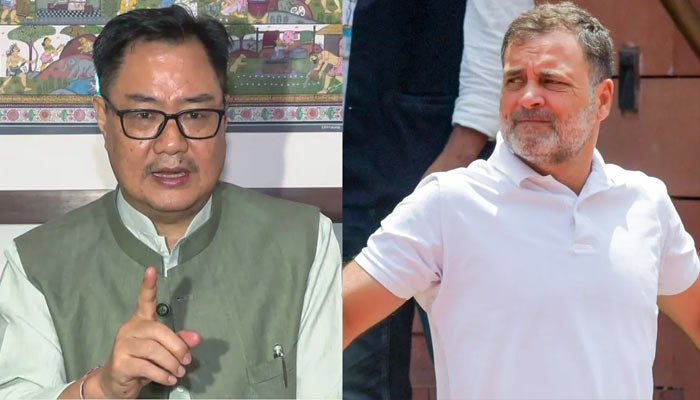
Union Parliamentary Affairs Minister Kiren Rijiju met Rahul Gandhi for around 50 minutes on Wednesday after speaking with him over the phone earlier. The meeting has sparked political speculation over whether the government is adopting a more conciliatory approach following weeks of protests, repeated disruptions in Parliament, and recent electoral setbacks in the Bankipur and Datia bypolls.
The Centre has also reached out to leaders of other Opposition parties, including the Samajwadi Party and the DMK, in an effort to build broader political consensus on the proposed legislations.
According to government sources, Rijiju again spoke with Rahul Gandhi over the phone on Thursday. During the conversation, the two discussed delimitation and the Women’s Reservation Bill. Rijiju reportedly argued that delimitation was necessary for implementing women’s reservation and cautioned that further delays could disappoint women awaiting its rollout.
Sources said Rahul Gandhi informed Rijiju that the Congress would first deliberate on the proposals within the party and with its INDIA bloc allies before conveying its stand to the government.
Despite the outreach, the deadlock remains unresolved. The Congress has maintained that Parliament can function only after Amit Shah addresses the House on the police action against protesters and a discussion is held on the alleged Ram Temple donation theft, according to PTI.
Centre Reaches Out to Opposition as Parliament Remains Gridlocked
After nearly three weeks of repeated disruptions in the Monsoon Session, the Narendra Modi government has initiated backchannel talks with the Congress in an attempt to build consensus on two key legislations—the proposed Foreign Contribution (Regulation) Amendment Bill, 2026, and the Constitution Amendment Bill linked to delimitation and the implementation of women’s reservation.
Parliamentary Affairs Minister Kiren Rijiju met Leader of the Opposition Rahul Gandhi for nearly 50 minutes in Parliament on Wednesday. It was their second meeting in 10 days and came a day after the two leaders spoke over the phone. Congress leaders Priyanka Gandhi Vadra, KC Venugopal and Gaurav Gogoi were also present during the discussions.
Describing the interaction as an effort to keep dialogue alive, Rijiju said political differences should not prevent conversations between the government and the Opposition. He later dismissed speculation about a special Parliament session after the Monsoon Session, saying no such proposal was under consideration.
No Breakthrough Yet
Despite the outreach, the deadlock in Parliament remains unresolved.
According to government and Congress sources cited by PTI and other reports, Rahul Gandhi reiterated that the Opposition would allow normal functioning of Parliament only after Union Home Minister Amit Shah makes a statement on the police action against student protesters in Delhi and a discussion is held on the alleged donation theft at the Ram Temple in Ayodhya.
The Congress has also maintained its reservations over the proposed delimitation exercise.
Government sources said Rijiju again spoke to Rahul Gandhi over the phone on Thursday, stressing that delimitation was necessary to facilitate the implementation of the Women’s Reservation Bill. Rahul Gandhi is learnt to have told the minister that the Congress would first consult its INDIA bloc partners before communicating its position.
Why Consensus Matters
The government’s outreach reflects political necessity as much as parliamentary strategy.
The proposed constitutional amendment linked to delimitation and women’s reservation requires a two-thirds majority in Parliament. While the NDA has strengthened its numbers in recent months, it is still expected to need support from sections of the Opposition to ensure the legislation is passed.
That arithmetic has made engagement with Opposition parties increasingly important.
A Shift in Political Approach?
The timing of the government’s outreach has drawn attention because it comes after weeks of legislative paralysis, sustained protests over the NEET controversy, and recent electoral setbacks for the BJP in the Bankipur and Datia bypolls.
Whether the outreach signals a broader shift in the government’s political strategy remains to be seen. For now, both sides remain firm on their core positions—the Centre is seeking cooperation on its legislative agenda, while the Congress insists its demands must be addressed before Parliament resumes normal business.
Even without a breakthrough, the reopening of dialogue marks the first serious attempt by both sides to resolve the impasse through negotiations rather than confrontation.
Comments are closed.