
Congo Ebola Outbreak Reaches 6th Province: Why Containing The Virus Is So Challenging

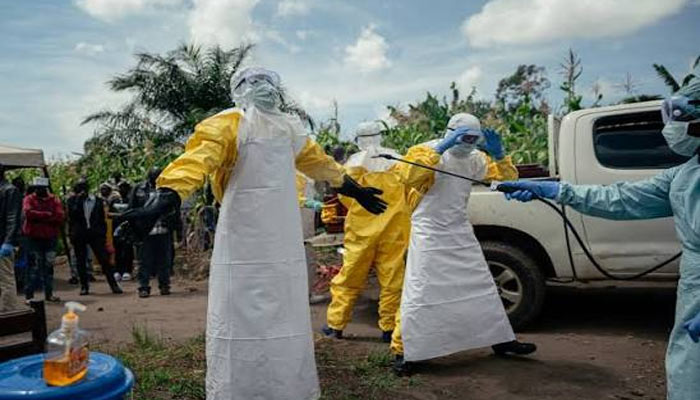
Congo’s Ebola Outbreak Reaches 6th Province: What’s Fueling The Rapid Spread?
The Democratic Republic of the Congo’s (DRC) latest Ebola outbreak has expanded to a sixth province after a death was reported in Bas-Uele, raising fresh concerns over the speed and scale of transmission.
Jean Kaseya, Director-General of the Africa Centres for Disease Control and Prevention (Africa CDC), said Thursday that a man died in Buta, the capital of Bas-Uele. He had reportedly travelled there from neighbouring Haut-Uele, where Ebola infections had already been identified.
The latest development comes as health authorities struggle to contain an outbreak that has spread across northeastern parts of the country. Kaseya warned that without urgent action, the outbreak could continue for more than a year and potentially become the largest Ebola outbreak ever recorded.
Government figures cited this week show 4,566 cases and 2,128 deaths. The outbreak started in Ituri and has since reached North Kivu, South Kivu, Haut-Uele, Tshopo and Bas-Uele.
WHO Director-General Tedros Adhanom Ghebreyesus has warned that the outbreak could potentially overtake the 2014-2016 West Africa epidemic—the deadliest Ebola outbreak on record, which killed more than 11,000 people—if transmission continues at its current pace.
Why Is This Ebola Outbreak So Difficult To Control?
The Virus Spreads Through Direct Contact
Ebola is not transmitted through the air like measles. It spreads mainly through contact with the blood or other bodily fluids of an infected person, contaminated objects or the remains of someone who has died.
This makes early detection critical. Authorities must quickly identify and isolate patients, trace their contacts, strengthen infection controls in healthcare facilities and ensure safe burials.
If an infected person moves to another location before being diagnosed, the virus can establish an entirely new transmission chain.
There Is No Licensed Vaccine For This Virus
The current outbreak is caused by Bundibugyo virus, one of the viruses that can cause Ebola disease.
Unlike outbreaks caused by Zaire ebolavirus, for which vaccines and specific treatments are licensed, there is currently no licensed vaccine or specific therapeutic approved for Bundibugyo virus disease, according to WHO.
Vaccine and treatment candidates are being studied, but for now, care largely focuses on early diagnosis and supportive treatment, including managing dehydration and other complications.
The absence of an approved vaccine is a major disadvantage because vaccination of contacts and high-risk groups has played an important role in containing some previous Ebola outbreaks.
The Virus Was Already Circulating Before Detection
The DRC declared the outbreak on May 15 after laboratory testing confirmed Bundibugyo virus. However, investigations indicate that transmission had already begun before the official announcement.
With Ebola, even a relatively short period of undetected transmission can make containment much harder. Health workers need to reconstruct chains of infection, locate contacts and monitor them for symptoms.
Insecurity and restrictions on movement have also made it difficult to reach and follow some potentially exposed people.
- Conflict Is Making Surveillance Harder
- Eastern DRC has experienced years of armed conflict, violence and displacement.
Insecurity can prevent healthcare workers from entering affected communities, disrupt surveillance and make it harder to transfer patients to treatment facilities.
Displacement adds another layer of difficulty. People who may have been exposed can move to other communities before health authorities identify them, allowing transmission chains to spread beyond the reach of response teams.
- Movement Between Provinces Is Spreading The Risk
- The Bas-Uele case shows how movement between provinces can introduce Ebola into new areas.
The patient had travelled from Haut-Uele to Buta, where he later died. Such movement makes it harder for authorities to contain the outbreak within known transmission zones.
Ituri, where the outbreak began, is also a major concern because of population and commercial movement. The province borders Uganda and South Sudan, creating additional risks of cross-border transmission.
The danger has already crossed national boundaries. Uganda reported imported Bundibugyo virus cases from the DRC soon after the outbreak was identified, prompting WHO to declare the situation a Public Health Emergency of International Concern in May.
- Weak Infrastructure Slows Down The Response
- Ebola containment depends on rapid testing, isolation, contact tracing and access to treatment.
But many affected areas face poor roads, limited communications and shortages or gaps in healthcare infrastructure. Remote communities can be difficult to reach, while insecurity can further delay the deployment of response teams.
As the outbreak expands geographically, health authorities also have to stretch laboratories, medical personnel, protective equipment and treatment facilities across a much larger area.
- Community Trust Remains Crucial
- Stopping Ebola requires more than hospitals and medical supplies.
Communities must be willing to report symptoms, cooperate with contact tracers, follow infection-prevention measures and seek medical care quickly.
WHO has repeatedly emphasised the importance of community engagement. Misinformation and mistrust can undermine response efforts, particularly in communities already dealing with conflict, displacement and humanitarian crises.
With Ebola now detected in six provinces, the biggest challenge for health authorities is to find hidden infections quickly, prevent further movement of the virus and maintain community cooperation before more transmission chains become established.
Comments are closed.