
Fresh Flood Scare In Nepal As Bhotekoshi River Rises, Toll Nears 800

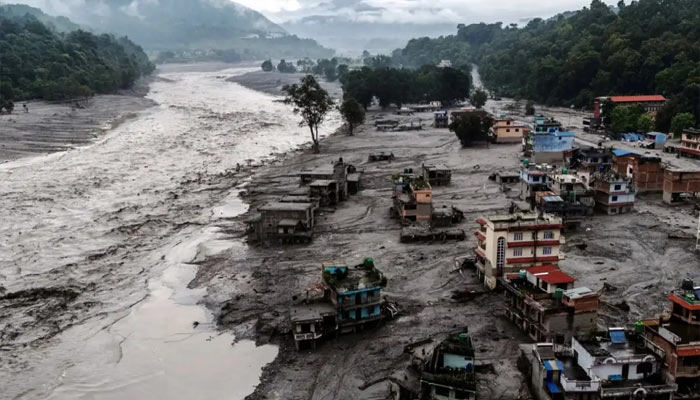
Nepal Issues Fresh Flood Warning As Bhotekoshi River Rises, Toll Reaches 788
Nepal issued fresh flood warnings on Sunday after water levels rose in the Bhotekoshi River, raising fears of another emergency in areas still reeling from the devastating floods of August 26.
Authorities urged people in flood-affected districts to remain alert as rescue teams continued clearing roads, assessing damage and searching for those still missing. Emergency warnings were also sent directly to residents’ mobile phones early Sunday.
Nepal’s disaster agency said the death toll from the floods had risen to 788, while 2,502 people remained missing. On the Chinese side of the border, authorities reported 16 deaths and 546 missing.
NEW FLOOD THREAT SPARKS FRESH ALERTS
The latest warnings followed reports from Chinese authorities of increased water flow upstream, according to Dharam Raj Uprety, chief executive of Nepal’s National Disaster Risk Reduction and Management Authority. China’s state news agency Xinhua reported that a lake formed high in the mountains after Wednesday’s disaster had largely drained. However, officials warned that the threat had not disappeared completely.
A crater about 5.6 kilometres upstream was still considered a potential risk. Authorities estimated that it contained around 1.4 million cubic metres of water and said it would need to be closely monitored. The renewed warnings have added to the anxiety of communities that have already been forced to evacuate repeatedly since the initial floods.
SURVIVORS RETURN TO WHAT REMAINS
In Dhading, among the hardest-hit areas, residents returned to their destroyed homes to search for possessions buried beneath mud and rubble. Walls had been swept away, while balconies and window frames were coated in thick sludge. People dug through the debris, recovering whatever they could and washing items before taking them away.
One man searching his property even found his chickens alive. He tied them up and placed them inside his truck. “Everything is finished. Nothing is left. Not even our home,” Dhading resident Sharmila Tamang told The Associated Press.
At a major power plant badly damaged by the floods, workers began assessing the destruction. The facility provides power to more than 20,000 people across four districts.
In Galchhi, residents moved towards higher ground as the swollen river roared past. Massive rocks carried by the earlier flood remained along the river, while people on a suspension bridge were warned away.
Entire villages remained covered in grey-brown sediment, with homes, vehicles and farm tractors partially buried. Sections of rice terraces along the river had also collapsed following landslides.
REPEATED WARNINGS LEAVE SURVIVORS EXHAUSTED
Electricity remained out in many areas, with twisted poles and tangled wires lying amid the mud.
Residents said the repeated emergency alerts were creating another layer of fear, as they had to prepare to flee to higher ground whenever another warning arrived. “Sometimes they say a flood is coming, then we have to run again to higher ground, even at night. There is also rain,” resident Govind Shreshta told AP.
Shreshta said the situation had left him exhausted, particularly because he had to carry his elderly parents to safety. “I have a 72-year-old father and 70-year-old mom. I must carry them, and I am exhausted,” he said.
Destroyed bridges have further complicated the rescue and recovery effort, cutting off communities from one another. “Those who are there are now stuck there. Those who are here are stuck here. It’s going to be very difficult,” said 47-year-old Sattan Singh Tamang, who was near a bridge when the floods struck.
HUNDREDS OF FOREIGNERS STILL MISSING
Among those missing are hundreds of foreign nationals who had travelled to the region for work, mountaineering and religious pilgrimages. Chinese state media reported that 261 foreigners were missing in Tibet, including more than 100 Nepalis and nationals of other countries.
The floods were triggered by a glacial collapse in the high Himalayan region. Scientists examining satellite imagery said bedrock beneath a glacier gave way, bringing part of the glacier down with it.
The massive rockfall was powerful enough to register as a magnitude 5.2 earthquake. Rocks and meltwater then surged into rivers below, sending torrents through valleys in Tibet and Nepal and destroying buildings, bridges and farmland.
NEPAL SEEKS STRONGER GLOBAL CLIMATE RESPONSE
Nepal’s Foreign Minister Shisir Khanal has called for stronger global action on climate change, saying the country is suffering heavily despite contributing only a tiny share of global emissions. “Despite having only 0.1 per cent contribution to global emissions, people of Nepal have become major victims of climate change,” Khanal said.
Scientists have cautioned that it is too early to directly attribute the latest catastrophe to global warming. However, they say rising temperatures caused by human activities such as burning fossil fuels can increase the risk of disasters in vulnerable mountain regions.
The Himalayas are warming considerably faster than many other parts of the world, raising concerns about the growing threat of glacial instability, floods and landslides.
With thousands still missing and large parts of the affected region cut off, rescue teams continue to work as authorities monitor rivers and upstream areas for signs of another surge.
Comments are closed.