
SIR: 3 in 10 Voters Dropped From Rolls in Muslim-Heavy Maharashtra Seats

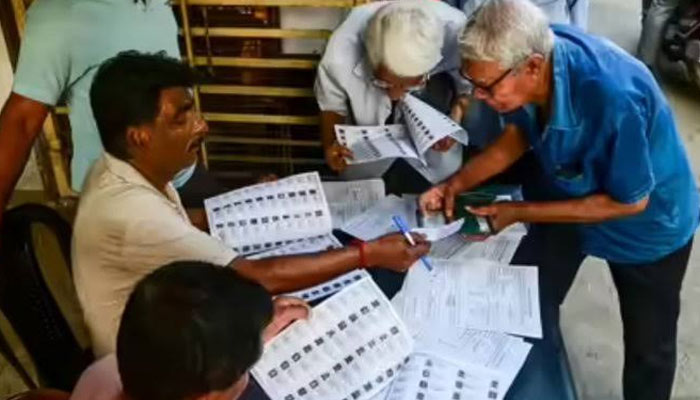
Nearly three in 10 voters in 38 Maharashtra Assembly constituencies with a Muslim population of more than 20 per cent have not been carried forward to the draft electoral rolls prepared under the Special Intensive Revision (SIR), according to an analysis of the draft roll data.
A total of 37.51 lakh voters, or 29.77 per cent of the electorate across these 38 constituencies, have been classified as “uncollectable”. The corresponding statewide figure is 21.14 per cent.
The highest rates were recorded in several densely populated constituencies in Mumbai and the Mumbai Metropolitan Region. Bhiwandi East reported the highest proportion, with 49.10 per cent of voters not carried forward. It was followed by Bhiwandi West at 44.72 per cent, Mumbra-Kalwa at 42.91 per cent and Mankhurd Shivaji Nagar at 42.31 per cent.
In Mumbai, Chandivali recorded an uncollectable rate of 41.44 per cent, while Muslims account for 27.6 per cent of its population. Sion-Koliwada and Pune Cantonment also recorded rates exceeding 40 per cent.
The figures, however, do not establish that Muslim voters were individually excluded. The SIR data does not identify voters by religion. The analysis instead covers constituencies where Muslims constitute more than one-fifth of the population.
The data also shows no direct correlation between a constituency’s Muslim population share and its uncollectable rate.
Malegaon Central, where Muslims constitute 78.4 per cent of the population, recorded an uncollectable rate of 23.46 per cent. By contrast, Mankhurd Shivaji Nagar, with a 53 per cent Muslim population, recorded a rate of 42.31 per cent. Bhiwandi East, where Muslims make up 51 per cent of the population, recorded the highest rate at 49.10 per cent.
At the other end of the spectrum, Malkapur recorded an uncollectable rate of just 7.68 per cent, despite having a Muslim population share of 20.4 per cent. The rates were 9.91 per cent in Raver, 11.91 per cent in Latur City and 11.71 per cent in Balapur.
Of the voters classified as uncollectable across the 38 constituencies, 42.05 per cent were listed as permanently shifted, while 35.59 per cent were marked untraceable or absent. Deceased voters accounted for 12.76 per cent and duplicate registrations for 8.33 per cent.
Community activist Irfan Aqeel said the SIR exercise had increased awareness about electoral documentation in Muslim-majority areas.
“The SIR exercise has prompted heightened awareness among people in Muslim-dominated localities. Over the past few months, several community groups and local organisations have stepped in to help people understand the documentation requirements and get their records in order,” he said.
Aqeel said the claims stage could give voters whose names were not carried forward an opportunity to regularise their records.
“Hopefully, those whose names have not been carried forward will also be encouraged to get their documentation in order during the claims stage. Community groups are working towards this,” he said.
Using 29.77 per cent — the combined uncollectable rate across the 38 Muslim-heavy constituencies — as the benchmark, 53 Maharashtra Assembly constituencies recorded rates at or above that level.
These included Colaba at 46.92 per cent, Khadakwasala at 46.53 per cent, Nalasopara at 46.35 per cent, Kothrud at 46.17 per cent and Kalyan Rural at 46.05 per cent.
Reserved constituencies recorded lower combined rates. The 29 SC-reserved seats had an aggregate uncollectable rate of 19.61 per cent, below both the 29.77 per cent rate in Muslim-heavy constituencies and the statewide figure of 21.14 per cent.
Only six SC-reserved constituencies crossed the 29.77 per cent benchmark, led by Ambarnath at 44.17 per cent and Pimpri at 41.22 per cent.
The 25 ST-reserved constituencies recorded a combined uncollectable rate of 13.21 per cent. Only Boisar crossed the 29.77 per cent benchmark, with a rate of 34.35 per cent.
Muslim Population Share vs. SIR 2026 Exclusion (Sorted by Muslim %)
| Constituency | Muslim population | SIR exclusion rate |
| Bhiwandi East | 51.0% | 49.10% |
| Bhiwandi West | 49.5% | 44.72% |
| Mumbra Kalwa | 43.7% | 42.91% |
| Mankhurd Shivaji Nagar | 53.0% | 42.31% |
| Chandivali | 27.6% | 41.44% |
| Sion Koliwada | 21.1% | 40.73% |
| Pune Cantonment | 20.7% | 40.36% |
| Malad West | 27.7% | 38.57% |
| Mumbadevi | 50.9% | 38.52% |
| Versova | 33.5% | 38.46% |
| Nagpur Central | 22.1% | 38.01% |
| Vandre West | 25.3% | 37.92% |
| Kurla | 30.7% | 36.37% |
| Andheri West | 27.1% | 36.37% |
| Anushakti Nagar | 28.8% | 36.14% |
| Byculla | 41.5% | 34.88% |
| Kalina | 24.4% | 34.80% |
| Dharavi | 33.4% | 34.55% |
| Vandre East | 33.1% | 34.44% |
| Solapur Central | 24.8% | 32.59% |
| Aurangabad Central | 38.5% | 31.34% |
| Akola West | 41.6% | 28.46% |
| Dhule | 21.7% | 27.88% |
| Jalna | 20.0% | 27.70% |
| Aurangabad West | 37.5% | 26.62% |
| Nanded North | 23.5% | 26.50% |
| Malegaon Central | 78.4% | 23.46% |
| Nanded South | 23.5% | 21.06% |
| Amravati | 46.5% | 20.19% |
| Beed | 20.0% | 19.50% |
| Parbhani | 25.2% | 18.29% |
| Washim | 20.5% | 16.46% |
| Akot | 26.2% | 13.51% |
| Karanja | 20.8% | 13.13% |
| Latur City | 20.4% | 11.91% |
| Balapur | 23.8% | 11.71% |
| Raver | 20.6% | 9.91% |
| Malkapur | 20.4% | 7.68% |
| Overall | — | 29.77% |
EXCLUSION
* / Muslim-heavy: 29.77%
SC RESERVED: 19.61%
ST RESERVED: 13.21%
Data source: CENSUS 2011 Maha SEC data
Comments are closed.