
Study Warns: Common Indian Bird Found Carrying Antibiotic-Resistant Bacteria

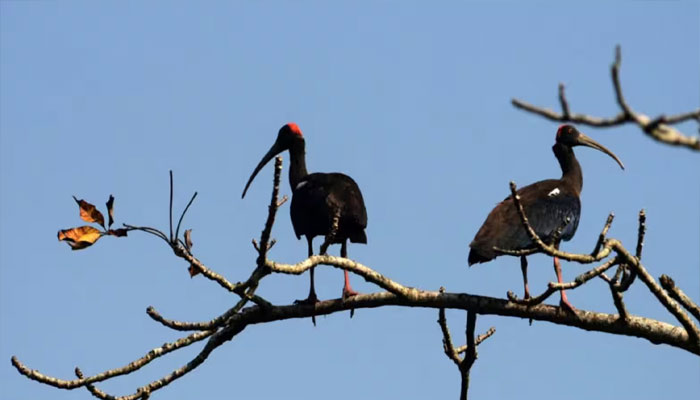
A bird commonly seen across India’s wetlands, farmlands and urban landscapes has been found carrying multidrug-resistant bacteria, according to a study conducted in Udaipur, Rajasthan.
Researchers studying red-naped ibises found that 40% of the bacterial isolates recovered from the birds were resistant to at least three classes of antibiotics. The finding has drawn attention to the role wildlife could play in the wider environmental spread of antimicrobial resistance.
The red-naped ibis, also called the Indian black ibis, is a resident species widely distributed across the Indian subcontinent. Unlike many birds restricted to specific habitats, it can adapt to agricultural fields, grasslands, villages, cities, wetlands and other human-influenced environments.
That wide-ranging behaviour makes the species useful for studying how bacteria move between wildlife and environments affected by human activity.
Bacteria Found In Red-Naped Ibis Samples
Scientists from Mohanlal Sukhadia University collected 45 faecal samples from free-ranging red-naped ibises in Udaipur between July 2022 and June 2023.
From those samples, researchers isolated 60 bacterial strains belonging to eight genera. E. coli was the most frequently detected, followed by Enterobacter and Klebsiella.
The researchers also identified four bacterial types that had not previously been recorded in this bird species.
Among them were Enterobacter mori and Enterobacter soli, which the researchers reported for the first time in red-naped ibises anywhere in the world.
Both are generally associated with soil and plants. Their presence could indicate that the birds acquire some bacteria while feeding or moving through wetlands, fields, soil and other environments.
Why Wildlife Matters In The Fight Against Drug Resistance
Antimicrobial resistance occurs when bacteria evolve mechanisms that allow them to survive medicines designed to kill or control them.
The problem becomes particularly serious when bacteria develop resistance to several classes of antibiotics, potentially making infections more difficult to treat.
Wild birds can encounter resistant bacteria through contaminated water, soil, food, waste and other environmental sources. Because many species move between different habitats, they may also carry microorganisms between locations.
However, researchers caution against drawing conclusions beyond what the study demonstrates.
Finding antibiotic-resistant bacteria in bird faecal samples does not prove that the birds are transmitting infections to humans. The study identifies a potential environmental reservoir and highlights the need for further research into how resistant bacteria circulate through ecosystems.
Does This Mean Birdwatching Is Unsafe?
For birdwatchers and wildlife enthusiasts, the findings do not indicate that simply seeing, photographing or being near a red-naped ibis poses an immediate health threat.
There is currently no evidence from the reported study establishing a direct transmission pathway from these birds to people.
Nevertheless, basic hygiene remains important when visiting wildlife habitats. People should avoid direct contact with bird droppings and should not handle sick or dead birds without suitable protection. Washing hands after visiting outdoor habitats is also advisable.
Visitors should additionally avoid eating or drinking in areas where animal waste may be present.
These precautions are part of normal wildlife hygiene and should not be interpreted as a reason to avoid wetlands, birdwatching sites or nature trails.
Instead, the study highlights a larger environmental issue: antimicrobial resistance does not remain confined to hospitals or human populations. Resistant bacteria can also be detected in wildlife and natural environments, making continued monitoring across the human-animal-environment interface increasingly important.
Comments are closed.