
100% Tariff on India in 4 Days? US Moves to Add Delhi to Russia Sanctions Bill

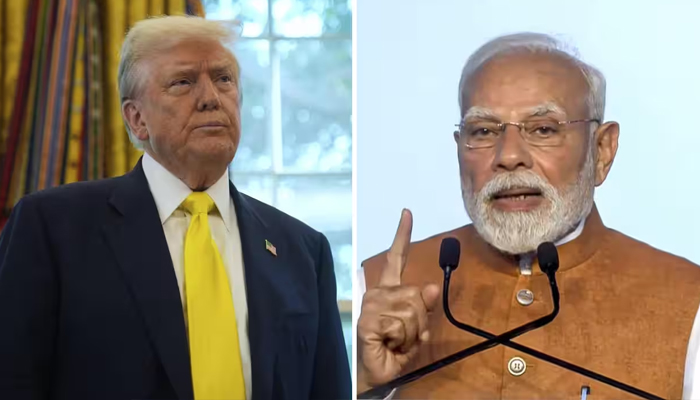
A fresh battle is unfolding in the US Congress over a Russia sanctions bill that could have serious consequences for India.
While one proposed amendment seeks to explicitly name India and other major Russian trading partners as potential targets of 100 per cent tariffs, another amendment seeks to eliminate the tariff provision entirely.
The developments come shortly after New Delhi hosted the BRICS Summit, where Russian President Vladimir Putin and Prime Minister Narendra Modi were seen together, highlighting the continuing strategic relationship between India and Russia. Moscow remains a major source of crude oil for India and an important partner in the country’s nuclear energy programme.
The latest amendments have added uncertainty over whether Washington will move ahead with sweeping secondary tariffs against countries that continue to purchase Russian energy.
What Is The Lindsey O. Graham Sanctioning Russia And Iran Act?
The Lindsey O. Graham Sanctioning Russia and Iran Act was passed by the US Senate last month with an 86-11 vote. The legislation proposes sanctions targeting Russia’s leadership, energy sector and the so-called “shadow fleet” of vessels accused of helping Moscow bypass restrictions on its oil trade.
One of the most significant provisions would empower President Donald Trump to impose tariffs of up to 100 per cent on major buyers of Russian oil and gas. The Senate version, passed on August 7, does not specifically identify countries such as India and China. Instead, it refers to the five largest importers of Russian oil and gas by volume.
The US has argued that revenues from Russia’s energy exports help finance the war in Ukraine. New Delhi, however, has consistently maintained that its purchase of Russian crude should not be linked to the continuation of the conflict.
External Affairs Minister S Jaishankar has argued that cutting India’s Russian oil imports would not end the war and that the conflict can ultimately be resolved only through dialogue, diplomacy and negotiations.
India, China, UAE On Proposed Tariff List
Democratic Congressman Steny Hoyer has proposed an amendment that would explicitly identify countries eligible for the 100 per cent tariff provision. The proposed list includes India, China, Türkiye, Azerbaijan, Hungary, the Slovak Republic, the UAE, Singapore, Kazakhstan and Kyrgyz Republic.
The amendment, if approved, could put additional pressure on New Delhi over its continued imports of Russian crude. However, a competing proposal could prevent those tariffs from being imposed.
Democratic Congressman Gregory Meeks has introduced an amendment seeking to completely remove Section 113 of the bill. The provision would give the President broad authority to impose secondary tariffs on Russia’s trading partners.
Meeks, who has opposed expanding Trump’s tariff powers, has three co-sponsors for the proposal.
The House Rules Committee released the amendments on Monday.
Other Amendments Proposed
Meeks has also proposed allowing the President to waive sanctions imposed on a foreign person for an initial period of 90 days if the move is considered vital to US national security. The waiver could subsequently be renewed for additional 90-day periods.
Another amendment from Meeks seeks to authorise $15 billion in direct loans to Ukraine to support the procurement of defence articles and services.
Why India Is Watching The Next Few Days Closely
The sanctions legislation must pass the US House of Representatives before it can be sent to the President for his signature. With the House expected to have only four working days before an early recess ahead of the November 3 midterm elections, the legislative window is extremely tight.
The issue is particularly sensitive for India because the country is already navigating disruptions in global energy supplies amid US sanctions on Iran and instability along traditional oil routes in the Middle East.
Russia has emerged as a crucial source of crude for New Delhi, making any attempt to penalise countries buying Russian oil a potentially serious economic challenge.
If the 100 per cent tariff provision survives the House process, India could face another major hurdle in maintaining its energy trade with Moscow. If Section 113 is removed, however, the immediate tariff threat could be significantly reduced.
The next few days are therefore likely to be closely watched in New Delhi as lawmakers decide the final shape of the Russia sanctions legislation.
Comments are closed.