
Jaishankar Calls for ‘Goldilocks’ US-China Rivalry, Says Tensions Need the ‘Right Temperature’

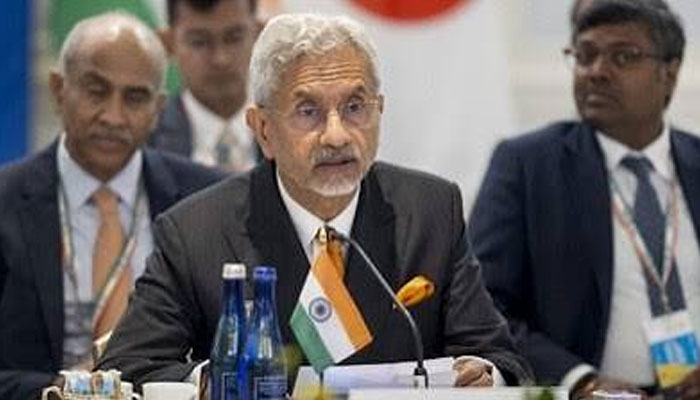
External Affairs Minister S Jaishankar on Sunday said the intensifying strategic competition between the United States and China could create a favourable opening for emerging and middle powers, as nations seek to spread their economic and security risks across multiple partners.
Speaking at the Munich Security Conference’s Munich Leaders Meeting in New Delhi, Jaishankar described the situation as a “Goldilocks scenario”, arguing that middle powers would benefit from a level of US-China competition that is neither excessively confrontational nor too close.
“You don’t want it to be too hot; you don’t want it to be too good. You want it somewhere in between, at the right temperature,” Jaishankar said.
He said countries were increasingly pursuing diversification and “de-risking” across their economic and strategic interests, including efforts to make supply chains more resilient.
According to the minister, this shift is prompting countries to create new partnerships and pursue cooperation around specific areas of shared interest rather than relying exclusively on established alliances.
Middle powers seek greater room to manoeuvre
Jaishankar’s remarks came as the Munich Security Conference placed greater emphasis on the role of middle and emerging powers in an evolving global order. A new Munich Security Brief, drawing on survey data from 11 middle-power societies across the Global West and Global South, examines both the potential for closer cooperation among these countries and the constraints they face.
The brief is being released ahead of discussions at the Munich Leaders Meeting in New Delhi, where the contribution of middle and emerging powers to tackling global challenges is expected to feature prominently.
US-China ties remain under pressure
Jaishankar’s comments came shortly after Chinese President Xi Jinping travelled to Washington for talks with US President Donald Trump. Relations between the world’s two largest economies remain shaped by disputes over trade, artificial intelligence, Taiwan and wider strategic competition.
The two countries had reached a temporary trade truce last year during a meeting in South Korea following a sharp escalation in tariffs. US duties on Chinese goods had at one stage climbed above 100%. As part of the understanding, Beijing agreed to increase purchases of US agricultural products, including soybeans, while also suspending certain restrictions on rare-earth exports for a year.
The arrangement was initially expected to expire in November. Washington and Beijing subsequently agreed to extend it until January 10.
With competition between the two major powers continuing, Jaishankar’s comments underline the growing emphasis among middle powers on diversification, resilient supply chains and flexible partnerships as they navigate the changing global balance.
Comments are closed.