
Gajab Raat Review: Manoj Bajpayee Leads a Gripping Thriller Set in Delhi’s Shadowy Bureaucratic World

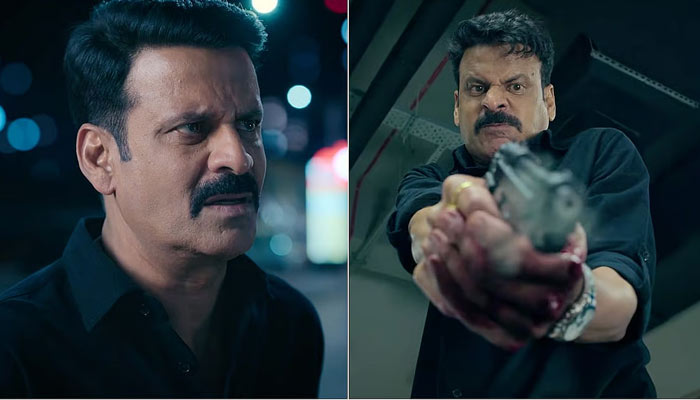
Gajab Raat Review: Manoj Bajpayee Elevates Ritesh Shah’s Intriguing Delhi-Based Thriller
Ritesh Shah’s Gajab Raat, backed by producer Neeraj Pandey, brings together crime, suspense, dark comedy and the murky workings of government institutions in a thriller set over a single night. Previously titled Ghooskhor Pandat, the film follows a corrupt police officer whose life takes an unexpected turn when an unidentified woman, severely injured, falls out of a moving car on the streets of Delhi. With Manoj Bajpayee leading a talented ensemble, the film delivers an entertaining mystery driven by shifting loyalties, hidden motives and moral dilemmas.
The narrative opens with a hotel raid in Connaught Place, where Ajay Nirvit, played by Bajpayee, leads the operation. Known as “Chameleon” within the Delhi Police, Nirvit has built a reputation for questionable conduct, corruption and repeated disciplinary setbacks. His career is far from exemplary, and his personal life is equally controversial. However, an unusual incident soon puts him at the centre of a case far more complicated than he initially expects.
Elsewhere, a sedated woman is travelling in a car with a man when she briefly regains consciousness and falls onto the road. Her condition is critical, and the sudden appearance of a crowd following a nearby movie screening draws immediate attention to the incident. People gather around the injured woman, recording videos and taking photographs. Within minutes, the footage begins circulating online, turning the incident into a public controversy and forcing the Delhi Police to act quickly.
Nirvit receives a call from his corrupt superior, who directs him to investigate the case. The assignment comes with an implied financial opportunity, as his boss suggests that the incident could help him raise money for a house he wants to buy in Surajkund. At the scene, Nirvit takes the woman to a hospital and begins trying to establish her identity.
The investigation soon attracts another interested party. Social worker Neha Prabhu, played by Shraddha Das, insists on becoming involved, while Naveen Madhok, portrayed by Akshay Oberoi, arrives claiming to represent the CBI. Madhok was sitting beside the woman in the car before she fell out. He identifies her as Natalia Wadogova, a Russian national allegedly linked to a drug lord, and demands that Nirvit transfer the investigation to him.
But Nirvit refuses to surrender the case. His distrust of Madhok sets the stage for a tense contest involving competing agencies, concealed information and powerful interests. As the investigation progresses, the officer must navigate a maze of deception while deciding whether his own ambitions matter more than uncovering the truth.
A gripping narrative with bureaucratic intrigue
One of the film’s biggest strengths is its ability to keep the story moving. The single-night setting creates urgency, while the steadily emerging details give the mystery room to develop. The narrative draws on familiar elements of investigative thrillers, including institutional rivalries, compromised officials and secret agendas, but combines them with humour and character-driven exchanges.
Ritesh Shah’s direction also reflects the storytelling style associated with Neeraj Pandey’s productions. The film features bureaucratic manoeuvring, morally complicated protagonists and a series of conversations in which characters rarely reveal everything they know. Despite these familiar influences, Shah gives the story its own identity and avoids making the film feel like a straightforward imitation.
The screenplay is particularly effective in the way it distributes information. Scenes move quickly, conversations frequently contain hidden implications, and new developments gradually alter the viewer’s understanding of the case. Although some narrative turns may be predictable for regular thriller audiences, the overall pace helps maintain interest.
Cinematography and dialogues add to the appeal
The film’s visual treatment deserves appreciation. Much of the action takes place at night, yet the cinematography maintains clarity without sacrificing the atmosphere. Rather than relying on excessive darkness to create suspense, the film uses its nocturnal setting to establish an appropriately tense mood while ensuring that important details remain visible.
The opening hotel raid is a notable example of the film’s visual approach. The camera moves through the location in a manner that draws the audience into the unfolding action. Such sequences add movement and energy to a story that otherwise depends heavily on dialogue and interactions between characters.
The dialogues are another highlight. Sharp, sarcastic and occasionally humorous, they prevent the mounting tension from becoming overwhelming. The lighter exchanges emerge naturally from the characters, providing moments of relief without weakening the central mystery.
Manoj Bajpayee leads a strong ensemble
Manoj Bajpayee delivers a compelling performance as Ajay Nirvit, bringing nuance to a character who is corrupt but not entirely devoid of conscience. Nirvit is neither a conventional hero nor a straightforward villain. His shifting motivations make him unpredictable, and Bajpayee captures these contradictions through subtle expressions, carefully measured pauses and changes in tone.
Nushrratt Bharuccha is entertaining as Rosie, an escort whom Nirvit encounters during the hotel raid. Although her character is not directly connected to the main investigation, her interactions with the officer provide some of the film’s lighter moments. Their exchanges are lively and irreverent, and Bharuccha brings an easy comic touch to the role.
Divya Dutta also makes an impression with her portrayal, while Shraddha Das, Meghna Agarwal, Akshay Oberoi and the supporting cast contribute to the film’s layered portrayal of people operating within and around the investigation. The ensemble helps create a convincing environment populated by officials, fixers and individuals pursuing their own interests.
Corruption is the film’s central concern
Beyond its mystery, Gajab Raat examines a system in which institutional reputation often takes precedence over accountability. Officials protect their positions, agencies compete for control, information becomes a bargaining tool and the possibility of scandal prompts efforts to contain the damage.
The film’s characters rarely fit neatly into categories of good and evil. Many are willing to manipulate rules and compromise their principles, yet the possibility of making the right choice remains present. Nirvit represents this conflict most clearly: a man who has repeatedly exploited the system is suddenly placed in a position where he must confront his own moral limits.
The film does not depend entirely on spectacular twists. Instead, it explores how corruption survives when several people have something to gain from keeping the truth hidden. This approach gives the story a cynical edge and lends weight to its examination of institutional dysfunction.
Final verdict
Gajab Raat is an engaging crime thriller that combines a compact mystery with bureaucratic intrigue, dark humour and a strong central performance. Ritesh Shah keeps the narrative moving through crisp dialogues, carefully paced revelations and an atmosphere that captures Delhi after dark. Manoj Bajpayee remains the film’s biggest asset, giving depth to a flawed police officer whose motivations are constantly in question.
While some twists may be familiar and a few developments predictable, the film largely succeeds in sustaining suspense and keeping its characters interesting. Its most compelling idea lies in the tension between personal greed and the possibility of redemption.
Ultimately, Gajab Raat suggests that corruption is not merely the work of a few dishonest individuals but a larger problem sustained by institutions and people protecting their own interests. In a world where almost everyone appears to have a price, the most important question is whether anyone is still willing to stand by what is right.
Comments are closed.