
Diwali 2026: Exploring Ayodhya’s Spectacular Deepotsav And The Sacred Land Of Lord Ram

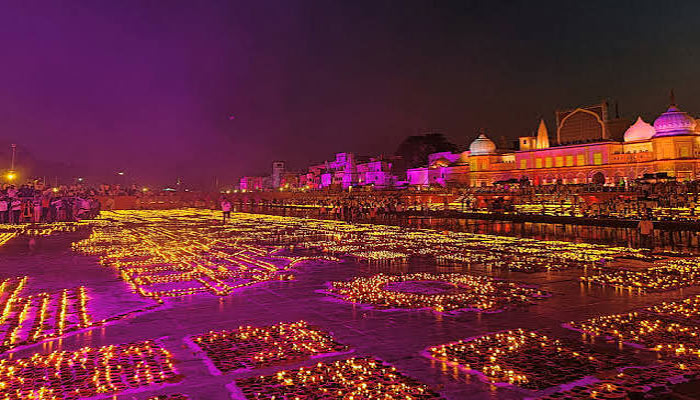
Diwali 2026: Experience Ayodhya’s Grand Deepotsav And Explore The Sacred Land Of Lord Ram
Ayodhya holds a special place in India’s Diwali celebrations, where the festival’s spiritual significance is closely connected with the story of Lord Ram’s return to his kingdom after 14 years of exile. The ancient city transforms into a vibrant celebration of faith, tradition and light, offering visitors an opportunity to experience Diwali beyond the usual festivities.
According to the Ramayana, the people of Ayodhya welcomed Lord Ram, Goddess Sita and Lakshman by lighting rows of earthen lamps after their return. This tradition remains central to the city’s identity and finds its grandest expression during Deepotsav, the annual festival that illuminates the banks of the Sarayu River.
In 2026, Ayodhya is preparing for the 10th edition of its state-organised Deepotsav. The celebrations are scheduled from November 5 to 8, with the principal lamp-lighting ceremony planned for November 7 and Diwali falling on November 8. Preparations announced by the authorities include large numbers of volunteers, an elaborate Sarayu Aarti, cultural performances and drone displays.
For travellers and devotees, the occasion offers an opportunity to witness the city’s religious heritage alongside one of India’s most prominent festive spectacles.
DEEPOTSAV: WHEN AYODHYA GLOWS WITH THOUSANDS OF DIYAS
Ram Ki Paidi, the series of steps and ghats along the Sarayu River, forms the centrepiece of Ayodhya’s Deepotsav celebrations. As dusk sets in, earthen lamps illuminate the riverfront, creating a striking setting for prayers and cultural performances.
The evening typically features devotional rituals and organised celebrations, with large-scale lighting arrangements and drone displays adding to the atmosphere, subject to the final programme.
Deepotsav has also gained recognition for its record-setting lamp-lighting events, attracting visitors from across the country. Those planning to attend should expect heavy crowds and follow official instructions regarding entry, viewing areas and traffic restrictions.
RAM JANMABHOOMI TEMPLE: THE SPIRITUAL HEART OF AYODHYA
A visit to Ayodhya is rarely complete without offering prayers at the Ram Janmabhoomi Temple, one of the city’s most significant religious landmarks. Dedicated to Lord Ram, the temple attracted nationwide attention following the consecration ceremony of Ram Lalla in January 2024.
During Diwali, the temple becomes an important destination for devotees seeking to connect with the story of Lord Ram’s return and the festival’s spiritual message. The surrounding areas also take on a festive atmosphere as the city prepares for the celebrations.
Visitors should check the latest temple timings, security arrangements and darshan guidelines before travelling, as special restrictions may apply during Deepotsav.
HANUMAN GARHI: SEEK BLESSINGS AT THE HILLTOP SHRINE
Situated on an elevated site in Ayodhya’s old city, Hanuman Garhi is among the region’s most prominent temples. Dedicated to Lord Hanuman, the shrine is associated with the belief that the deity protects the sacred city.
Visitors must climb a flight of steps to reach the temple complex, where devotees gather throughout the year to offer prayers. Many pilgrims include Hanuman Garhi in the same itinerary as the Ram Janmabhoomi Temple.
During the festive period, the shrine can become particularly crowded. Travellers should allow additional time for queues and movement through the surrounding streets.
KANAK BHAVAN: A TEMPLE CONNECTED TO RAM AND SITA
Kanak Bhavan offers a more intimate glimpse into Ayodhya’s devotional traditions. Dedicated to Lord Ram and Goddess Sita, the temple is associated with the traditional account of Kaikeyi gifting a golden palace to Sita after her marriage to Ram.
The shrine is known for its decorated interiors, religious significance and devotional atmosphere. It provides a meaningful stop for visitors interested in the many traditions associated with the Ramayana and the lives of Ram and Sita.
Adding Kanak Bhavan to a Deepotsav itinerary also allows travellers to explore another important part of Ayodhya’s religious heritage beyond the principal pilgrimage sites.
DASHRATH MAHAL: A GLIMPSE INTO AYODHYA’S RAMAYANA HERITAGE
Located in the old city, Dashrath Mahal is traditionally associated with King Dashrath, the father of Lord Ram, and the royal household in which Ram grew up.
The complex houses shrines associated with Ram, Sita and Lakshman. Its colourful façade, religious rituals and lively surroundings make it a familiar stop on Ayodhya’s pilgrimage circuit.
For visitors exploring the city during Diwali, the site adds another dimension to the broader narrative of Ram’s life and Ayodhya’s place in Hindu tradition.
GULAB BARI: DISCOVER THE REGION’S HISTORICAL SIDE
For a change of pace from the city’s major religious sites, travellers can visit Gulab Bari in Faizabad. The historic garden and mausoleum is associated with Nawab Shuja-ud-Daula, the third Nawab of Awadh.
The complex features gardens and architectural elements influenced by the region’s Mughal-era heritage. Its quieter surroundings offer a contrast to the crowds and devotional activity around Ayodhya’s principal temples.
A visit to Gulab Bari can help travellers appreciate the region’s wider historical and architectural legacy alongside its religious significance.
HOW TO REACH AYODHYA FOR DIWALI 2026
By air: Maharishi Valmiki International Airport, Ayodhya Dham, serves the city. Flight availability and direct connections depend on the departure destination. Travellers can also consider Chaudhary Charan Singh International Airport in Lucknow, followed by a road journey of approximately 125–150 km, depending on the route.
By train: Ayodhya Dham Junction and Ayodhya Cantt connect the city with several destinations across Uttar Pradesh and other parts of India. Booking tickets well in advance is advisable for the festive period.
By road: Ayodhya is connected to Lucknow, Varanasi, Prayagraj and Gorakhpur through road networks. Buses, taxis and private vehicles offer convenient travel options, although congestion can increase considerably during Deepotsav.
TRAVEL TIPS FOR A SMOOTH DEEPOTSAV EXPERIENCE
- Book early: Reserve accommodation and transport well in advance, as demand can rise sharply during the celebrations.
- Plan temple visits carefully: Check official darshan timings and security advisories before setting out.
- Reach Ram Ki Paidi early: Arriving well before the main evening programme can help you navigate crowds and find an appropriate viewing area.
- Check traffic updates: Temporary road closures, diversions and parking restrictions may be introduced during the festival.
- Carry essentials: Comfortable footwear, drinking water and a charged mobile phone can make a long day of sightseeing easier.
- Verify the final schedule: Confirm the latest Deepotsav programme through official announcements before travelling, particularly for the main lamp-lighting ceremony and drone displays.
Ayodhya during Diwali offers more than a spectacular display of lights. Its temples, riverfront rituals and historic landmarks bring together mythology, devotion and regional heritage in a distinctive festive setting. For travellers planning a Diwali getaway in 2026, Deepotsav presents an opportunity to experience the traditions associated with Lord Ram while exploring one of India’s most revered pilgrimage destinations.
Comments are closed.