

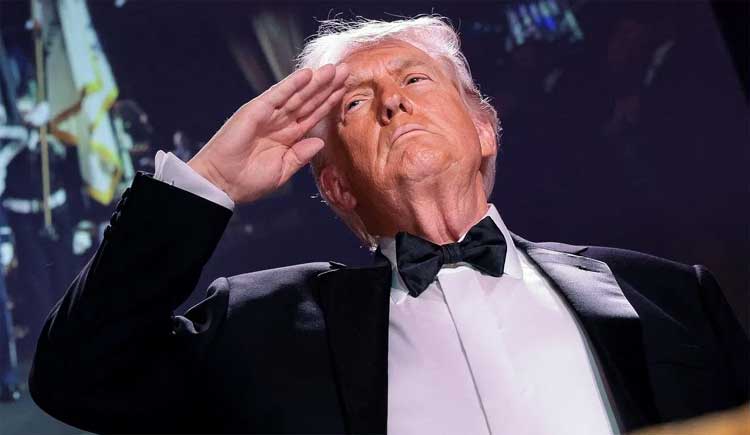
Donald Trump’s tuxedo still looked freshly pressed as he stepped to the White House podium late Saturday, barely an hour after what authorities described as the latest apparent attempt on his life.
“When you’re impactful, they go after you,” Trump told a room of top Washington journalists, many still in formal attire from the White House Correspondents’ Association dinner, which ended abruptly after an armed man breached security outside the venue. “When you’re not impactful, they leave you alone,” he added.
The incident sent panic through the gathering, with attendees diving for cover as the United States Secret Service rushed Trump and other dignitaries to safety. In the aftermath, the president leaned into a familiar narrative, portraying himself as resilient while advancing his political priorities.
Among them was his push for a controversial new White House ballroom, which he argued would offer greater security than the Washington Hilton—the site of the 1981 assassination attempt on Ronald Reagan.
Acting Attorney General Todd Blanche said the Justice Department would seek to dismiss a pending case delaying construction of the ballroom. Republican lawmakers, including Tim Sheehy and Randy Fine, signaled plans to introduce legislation supporting the project, echoing Trump’s claims that security officials favor it—though no evidence has been publicly presented.
Turning danger into political messaging
Trump, facing low approval ratings amid tensions linked to the US-Israeli conflict with Iran, has repeatedly turned moments of personal danger into political capital. During a 2024 campaign rally in Butler, Pennsylvania, a gunman wounded him, producing images of defiance that became central to his successful return to office.
A second incident followed months later at a golf course in Florida, where an armed suspect was arrested before reaching him.
“No one can turn danger into a political asset better than this president,” a White House official told Reuters on condition of anonymity.
Authorities said the suspect in Saturday’s incident had traveled from California, checked into the Hilton ahead of the dinner, and attempted to force his way toward the ballroom armed with multiple weapons. Security personnel exchanged fire before subduing him. Investigators say he carried a manifesto expressing intent to target Trump and senior officials.
A brief call for unity — then back to politics
In initial remarks, Trump struck a more measured tone. “In light of this evening’s events, I ask that all Americans recommit… to resolve our differences peacefully,” he said, referencing past unrest including the January 6 United States Capitol attack.
But he soon returned to familiar themes, praising his own leadership and comparing himself to Abraham Lincoln. He argued that policies such as tariffs and military expansion had made him a greater target.
“We’ve changed this country, and there are a lot of people that are not happy about that,” Trump said.
He again promoted his proposed $400 million ballroom, which he said would include advanced security features such as a bunker, “drone-proof” roofing, and bulletproof glass—though it would still be too small to host events like the correspondents’ dinner.
On social media Sunday, Trump insisted the attack would not have occurred if the facility were already built, and suggested it should accelerate political backing for his broader agenda, including immigration enforcement funding and national security measures.
For Trump, the episode became not just a security scare—but another moment to reinforce his narrative of strength, survival, and political momentum.
Comments are closed.