
Indian Markets Buck Global Tech Sell-Off; Sensex and Nifty Post Strong Rally

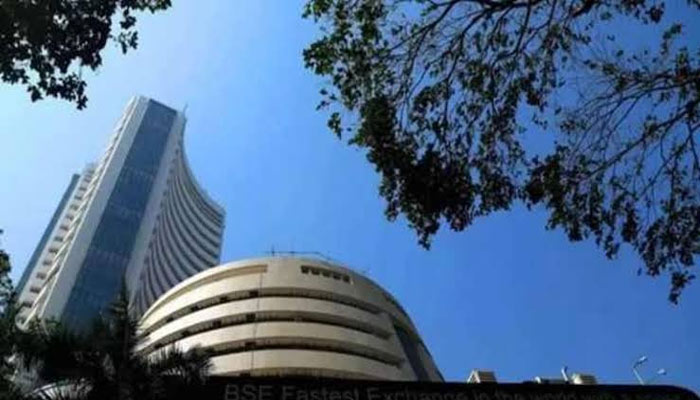
Sensex, Nifty Rally Nearly 9% in Best Weekly Performance Since 2021 as Oil Prices Fall
Indian stock markets recorded their strongest weekly gains in more than five years, heading into Diwali on a positive note as falling crude oil prices, renewed foreign investor buying and hopes of easing tensions between the US and Iran lifted market sentiment.
The benchmark indices, Sensex and Nifty, gained nearly 9% each during the week, marking their biggest weekly advances since February 2021. On Friday, November 6, the Nifty surged 2% to close at 25,030.35, while the BSE Sensex jumped 2.2% to settle at 81,028.
The rally came despite a technology-led sell-off across several international markets, highlighting the relative resilience of Indian equities amid global uncertainty.
WHY ARE INDIAN STOCK MARKETS RISING?
A sharp decline in international crude oil prices emerged as one of the biggest factors supporting the domestic market.
Brent crude slipped below $100 per barrel amid growing expectations of a possible de-escalation in the US-Iran conflict. The geopolitical outlook also became a focus after US President Donald Trump’s Republican Party suffered major setbacks in the November 3 midterm elections, losing control of both chambers of Congress.
Investors are assessing whether the election outcome could increase domestic political pressure on Trump to bring the Iran conflict to an end.
Lower oil prices are particularly beneficial for India, which relies heavily on imported crude. A sustained decline could reduce the country’s import expenditure, ease inflationary pressures and improve corporate profitability.
Renewed foreign portfolio investor (FPI) participation also contributed to the recovery.
FOREIGN INVESTORS RETURN TO DALAL STREET
Foreign portfolio investors purchased Indian equities worth a net ₹22,693 crore during the week, including investments through the primary market.
Their renewed buying provided support to benchmark stocks after a period of substantial overseas outflows.
Domestic institutional investors (DIIs), however, remained net sellers, offloading shares worth ₹18,227 crore during the same period. Their selling included a record single-day outflow of ₹10,444.5 crore on November 4.
Market observers believe domestic institutions have been raising cash after consistently investing in equities over recent quarters.
However, analysts have cautioned that one week of strong foreign buying does not necessarily indicate a sustained return of overseas investment.
WHICH SECTORS LED THE WEEKLY RALLY?
Buying was visible across all major sectoral indices, with companies linked to domestic consumption and economic growth attracting considerable investor interest.
The BSE Consumer Durables index led the gains, rising nearly 11% during the week. Realty and Financial Services advanced approximately 10% each.
Other major sectoral performances included:
- Auto: Up 9.2%
- Oil and Gas: Up around 9%
- Energy: Up around 9%
- Realty: Up approximately 10%
- Financial Services: Up approximately 10%
Analysts have identified banks, financial services, consumer companies and defence stocks as sectors that could benefit from domestic economic demand. Information technology and power stocks have also attracted attention for their longer-term potential.
INDIAN MARKETS OUTPERFORM GLOBAL PEERS
The performance of Indian equities stood in sharp contrast to several major international markets, where technology and semiconductor stocks faced heavy selling.
During the week, Taiwan’s Taiex declined 12.2%, South Korea’s Kospi dropped 11.7% and Japan’s Nikkei 225 fell 9.3%.
The US S&P 500 lost around 3%, while Brazil’s Ibovespa declined 1%.
In comparison, Hong Kong’s Hang Seng gained 5.1%, China’s CSI 300 advanced 1.7% and France’s CAC 40 rose 1.2%.
According to market analysts, India’s relatively limited exposure to the global artificial intelligence investment boom helped domestic equities avoid some of the pressure affecting overseas technology-heavy markets.
WALL STREET RECOVERS AS CHIP STOCKS BOUNCE BACK
Meanwhile, US markets attempted a recovery on Friday after technology stocks suffered their steepest losses in several months.
The Nasdaq Composite climbed 1.73% to 24,736.2, while the S&P 500 advanced 1% to 7,426.29. The Dow Jones Industrial Average remained largely unchanged at 51,530.05 in morning trading.
Nvidia shares rebounded 5.6%, while the broader semiconductor index gained 4.6% after falling more than 12% in the previous session. AMD, Intel and Micron Technology also recovered.
The earlier sell-off was driven partly by concerns that the Democrats’ midterm victories could lead to tighter regulation of artificial intelligence and potentially affect the expansion of data centres.
However, stronger-than-expected US employment figures introduced another concern for investors. October non-farm payrolls increased more than anticipated, while unemployment declined to 4.1%, raising speculation that the Federal Reserve could maintain a tighter monetary policy.
CAN THE MARKET RALLY SUSTAIN ITS MOMENTUM?
Despite the strong recovery, market experts remain divided over whether the latest gains represent a lasting turnaround or a temporary relief rally driven by expectations of geopolitical de-escalation.
Analysts believe Brent crude needs to remain below the $90–95-per-barrel range, foreign investor buying must continue for several weeks and corporate earnings expectations must improve for the rally to become sustainable.
A renewed escalation in West Asia, crude prices rising above $100 or higher US bond yields could again put pressure on Indian equities.
Investors will also monitor the movement of the rupee and the extent of domestic institutional selling in the coming sessions.
The strong weekly performance has nevertheless created a positive atmosphere ahead of Diwali’s special Muhurat trading session, which marks the beginning of the new Samvat year. However, analysts caution that festive optimism alone may not be sufficient to sustain the market’s upward momentum.
Comments are closed.