
Jantar Mantar Sees Massive Crowds; Here’s Why It’s Not About Wangchuk or Dipke

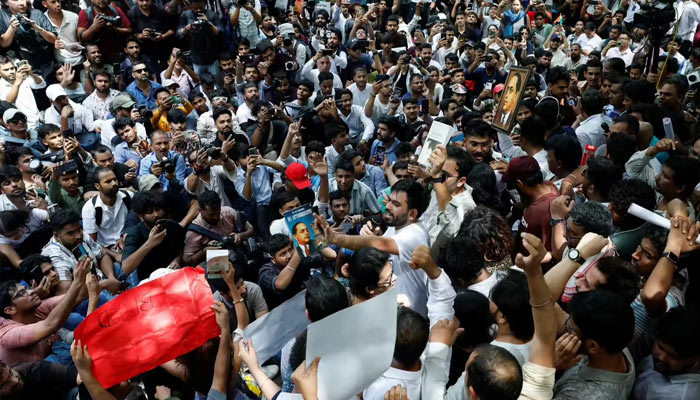
Jantar Mantar Crowds Swell After Police Crackdown, Protest Enters New Phase
The massive crowds now gathering at New Delhi’s Jantar Mantar are no longer being driven solely by the alleged NEET-UG paper leak or Ladakhi activist Sonam Wangchuk’s support for the movement. Protesters say the turning point came on July 20, when Delhi Police used lathi-charge and tear gas to disperse demonstrators marching towards Parliament.
What followed was a dramatic shift in the protest.
Videos of the police action spread rapidly across social media, prompting hundreds of students and young people from across the country to travel to Delhi in solidarity. By Wednesday, Jantar Mantar had transformed into one of the largest student protest sites in recent months, with fresh groups arriving throughout the day.
One of them was 26-year-old Aminul Hoque from Assam. Although he had followed the movement online since it began in June, he decided to join only after watching videos of the clashes. “I saw students being beaten for protesting peacefully. That’s when I booked my ticket,” he said, adding that the incident convinced him more people needed to stand with the protesters.
From Exam Row to Wider Movement
The agitation initially centred on allegations of irregularities in the NEET-UG examination and demands for accountability, including calls for Union Education Minister Dharmendra Pradhan’s resignation. For several weeks, participation remained limited to students, activists and civil society groups. However, protesters say the July 20 police action fundamentally altered the nature of the movement.
Many who had never attended a protest before said the images of students being chased, lathi-charged and dispersed with tear gas compelled them to join.
- Throughout Jantar Mantar, one sentiment was heard repeatedly:
- “Students should not have been beaten.”
For many, the issue has expanded beyond the examination controversy to questions surrounding the right to peaceful protest and democratic dissent.
- Police Stand by Their Action
- Delhi Police, however, has defended its response.
According to the force, more than 118 police personnel, including senior officers, were injured during the Parliament march, while around 70 protesters were detained.
Police alleged demonstrators ignored repeated warnings, attempted to break security barricades, attacked personnel with stones and damaged government vehicles and public property, making the use of force necessary to restore order.
Social Media Fuels Fresh Mobilisation
Despite the crackdown, or perhaps because of it, the movement appears to have gained momentum. Students arriving from Bihar, Uttar Pradesh, Assam and several other states said social media videos documenting the clashes convinced them to travel to Delhi.
Food stalls, volunteer groups and medical assistance points operated throughout the day as thousands gathered around the protest venue, with many carrying backpacks and luggage, indicating plans to stay for several days.
- A Movement Finds New Momentum
- The protest now reflects two competing narratives.
Authorities maintain they acted to control a violent demonstration, while protesters argue the police response has become the biggest catalyst for the movement’s expansion. What started as a campaign seeking accountability over alleged examination irregularities has evolved into a broader debate over students’ rights, civil liberties and the state’s handling of peaceful demonstrations.
For many at Jantar Mantar, the events of July 20 have become more than just another protest—they have become the reason a new wave of students has chosen to join the movement.
Comments are closed.