

The Centre’s decision to introduce a Merchant Discount Rate (MDR) on certain UPI transactions has sparked a political face-off.
With the Congress calling the move a “Modi tax” and the BJP accusing the opposition of spreading misinformation. Under the new framework, a 0.4% MDR will apply to eligible UPI payments made to merchants above ₹2,000. The charge will be capped at ₹300 for transactions of ₹75,000 and above.
The government has stressed that the new MDR is not a charge on consumers. It is a fee within the merchant payment ecosystem, while person-to-person UPI transfers will continue to remain free.
What Does the New UPI Framework Say?
The new system will apply only to specified merchant transactions.
According to the government:
- P2P UPI transfers between individuals will remain free.
- Merchant payments up to ₹2,000 will remain MDR-free.
- Eligible merchant transactions above ₹2,000 will attract 0.4% MDR.
- The MDR will be capped at ₹300 for transactions of ₹75,000 and above.
- Small merchants receiving up to ₹1 lakh a month through eligible UPI QR transactions will remain exempt.
- The government says around 96% of P2M UPI transactions are ₹2,000 or below and will therefore remain free of MDR.
The Finance Ministry has also clarified that customers will not be required to pay a separate UPI charge.
Congress Calls It ‘Modi Tax’
The Congress attacked the new framework shortly after it was announced.
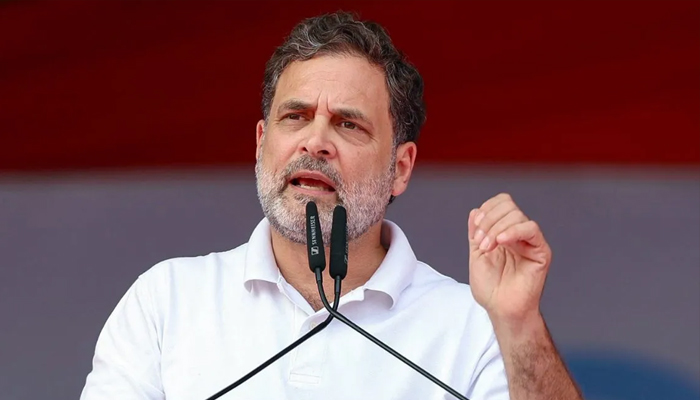
Congress leader Rahul Gandhi alleged that the government had opened the door to charges on UPI merchant transactions. He also questioned whether merchants could ultimately factor the additional cost into the prices paid by customers.
Congress communications general secretary Jairam Ramesh referred to earlier government statements on MDR and accused the Centre of changing its position.
Party leader Pawan Khera called the 0.4% MDR the “Modi Tax”, while Congress president Mallikarjun Kharge also criticised the decision and linked it to the government’s broader economic policies.
BJP Calls Congress a ‘Jhooth Ki Dukaan’
The BJP rejected the Congress’s allegations and said the new framework does not impose a fee on ordinary UPI users.
BJP spokesperson Pradeep Bhandari described the Congress as a “jhooth ki dukaan” and accused it of creating confusion over UPI charges.
The government has maintained that MDR is not a tax and is instead a charge within the merchant payment ecosystem. It has also said that the fee should not be passed on to customers.
Who Will Pay the MDR?
The MDR applies within the merchant payment ecosystem rather than being directly collected from customers making UPI payments.
The government has specifically stated that customers will not be required to pay an additional charge for such transactions. Individuals will also continue to have unlimited free access to UPI, without monthly transaction quotas or tiered limits.
The debate is therefore centred on the impact of the MDR on merchants and the payment ecosystem, rather than on a direct fee being imposed on consumers.
Why Has the Government Introduced MDR?
The government has said the new framework is intended to support the sustainability of the UPI ecosystem and provide resources for continued investment in payment infrastructure and related services.
The move ends nearly six years in which UPI merchant transactions operated without a broad MDR framework.
While most everyday UPI transactions will remain outside the new charge, the decision has opened a fresh political debate over the future cost structure of India’s rapidly expanding digital payments network.
Comments are closed.