
Nepal Government Under Pressure as Self-Immolation Sparks Gen-Z-Led Protests

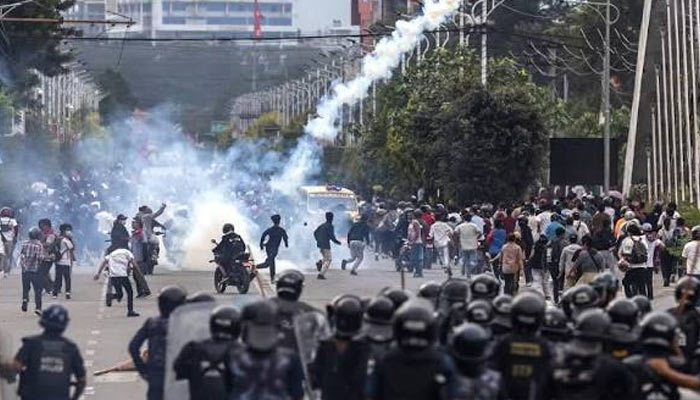
Nepal is witnessing a fresh wave of youth-led protests over the government’s eviction of squatters without a comprehensive rehabilitation plan, marking one of the biggest public challenges yet for Prime Minister Balen Shah’s administration.
The demonstrations have gained momentum following the self-immolation of a young protester, police action against activists and growing concerns over the condition of displaced families living in temporary shelters.
Protests gather pace in Kathmandu
Hundreds of people assembled outside a government office in Kathmandu on Saturday under the banner of the Joint National Squatters Front, demanding an end to forced evictions and permanent housing for landless families.
Many protesters—predominantly young people—carried placards reading “End atrocity against the poor,” “Respect human rights,” “Stop illegal arrests,” and “Provide shelter to squatters,” while accusing the government of treating displaced residents inhumanely.
The demonstrations began after authorities launched an eviction drive across Kathmandu Valley, relocating hundreds of families to temporary holding centres that activists say lack basic living conditions.
Self-immolation becomes a flashpoint
The protests intensified after 25-year-old Ganesh Nepali allegedly set himself on fire earlier this month after city police reportedly placed a wheel lock on his motorcycle.
The incident triggered widespread outrage among youth groups, who have since expanded their protests to highlight both the eviction drive and alleged police excesses.
Tensions escalated further after heavy flooding affected one of the temporary settlements housing displaced families. When activists visited the site to assess the situation, police reportedly used batons to disperse the crowd, leaving several people injured. One activist was hospitalised with facial injuries.
Arrests draw criticism
According to local reports, several activists, students and journalists have been arrested during the protests.
The police also detained 26 people in Koshi Province for demonstrating in support of the Kathmandu protesters.
Opposition leader Gagan Kumar Thapa, president of the Nepali Congress, criticised the arrests and called for the immediate release of those detained.
Thousands displaced
The government’s eviction campaign, which began in April, has resulted in the demolition of structures belonging to more than 2,600 families, affecting nearly 15,000 people.
Around 325 families have been staying in temporary holding centres in Kathmandu. On July 2, the government directed them to vacate the shelters by July 6, but at least 60 families refused, saying they had nowhere else to go.
Political test for Balen Shah
The unrest is emerging as a significant challenge for Prime Minister Balen Shah, who rose to prominence with strong backing from young voters and was widely seen as a symbol of political change.
As protests continue to grow, the government now faces mounting pressure to balance urban development with rehabilitation, while addressing allegations of heavy-handed policing and protecting the rights of displaced communities.
Comments are closed.