
India to Let Private Companies Manufacture Missiles in Major Defence Shift

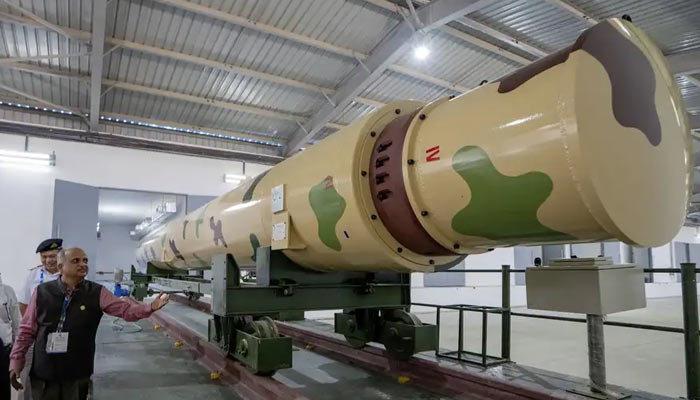
Centre Set to Open Missile Manufacturing to Private Firms in Landmark Defence Push
The Centre is preparing to allow private Indian companies to manufacture advanced missiles, marking a major shift in the country’s defence production policy. The move is aimed at boosting indigenous manufacturing, expanding production capacity and meeting the growing demand for homegrown missile systems from both the Indian armed forces and overseas buyers.
The decision comes amid rising international interest in India’s missile technology, with Indonesia among the countries exploring the acquisition of the DRDO-developed Astra missile. By bringing private industry into missile production, the government hopes to strengthen the country’s defence industrial base and support its export ambitions.
Astra Mk-2 to Be First Missile Under New Policy
According to reports, the Defence Ministry is set to issue a Request for Proposal (RFP) inviting private companies to manufacture the Astra Mk-2, India’s next-generation beyond-visual-range (BVR) air-to-air missile.
Major defence manufacturers such as Adani Defence, Bharat Forge, Tata Group, Mahindra Group and ICOMM are expected to participate in the bidding process.
Developed by the Defence Research and Development Organisation (DRDO), the Astra Mk-2 has a strike range of 180-200 km and is designed to engage enemy aircraft at long distances. It is expected to be integrated with Tejas Mk-1A, MiG-29, Su-30MKI and Rafale Marine fighter jets.
The government believes private participation will help bridge the gap between rising demand and the production capacity of existing public-sector facilities.
Pralay Missile Could Follow
Officials are also considering opening the Pralay tactical ballistic missile programme to the private sector in the next phase.
With a range of 500 km and speeds of up to Mach 6, Pralay is a key component of India’s evolving long-range strike capability. It complements other advanced systems such as the Long-Range Land Attack Cruise Missile (LRLACM), the next-generation BrahMos missile, and the extended-range Pinaka rocket system.
Defence Modernisation Gets a Boost
The policy shift is part of the government’s broader effort to accelerate defence modernisation and reduce dependence on imports through greater private-sector participation.
In recent years, private companies have entered several strategic sectors, including drones, artillery, aerospace, naval platforms and armoured systems. Opening missile manufacturing represents one of the biggest reforms yet under India’s defence self-reliance initiative.
The push has gathered pace following Operation Sindoor, which underscored the growing importance of precision-guided missiles and long-range stand-off weapons in modern conflicts.
Strengthening India’s Air Defence
Alongside expanding missile production, India is also enhancing its air defence capabilities.
The country is collaborating with Israel on advanced long-range air defence systems while developing a multi-layered shield against drones, cruise missiles and ballistic missile threats. India is also expected to receive its fifth S-400 air defence system later this year, further strengthening its defensive capabilities.
By opening missile manufacturing to private industry, the government aims to accelerate production, encourage technological innovation and position India as a leading exporter of advanced defence systems while ensuring the armed forces have quicker access to critical military equipment.
The government also plans to approve the procurement of five additional S-400 systems from Russia to further strengthen protection against incoming enemy missiles.
According to the report, the S-400 systems will themselves be protected by Russia’s Pantsir air defence system against kamikaze drones and rocket attacks.
Comments are closed.