

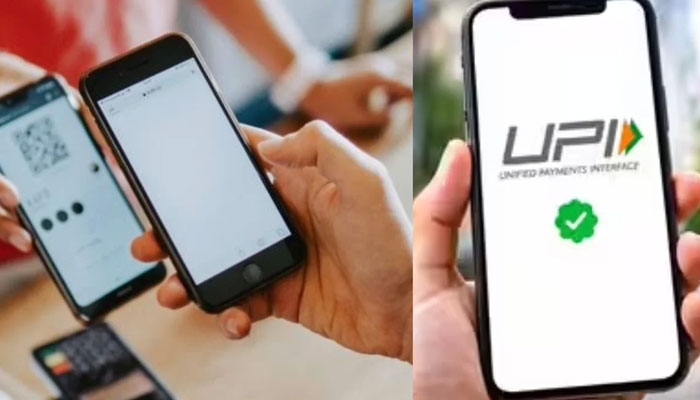
UPI MDR: Noida Traders Weigh Extra Costs as New Charges Near.
With merchant discount rate (MDR) charges set to apply to certain UPI transactions from October 15, businesses in Noida are taking different approaches to the additional cost. While some traders are concerned about the impact on already-thin profit margins, others say they will continue accepting UPI and absorb the charges rather than pass them on to customers.
Shopkeepers in Nithari Market in Sector 31 and electronic goods retailers in Sector 18 shared their views on how they expect to deal with the new system.
Under the new arrangement, a 0.4% MDR will be charged on person-to-merchant UPI payments above Rs 2,000. The charge will be borne by merchants rather than customers and will be capped at Rs 300 for transactions of Rs 75,000 or more. Person-to-person UPI transfers and most merchant transactions below the threshold will remain free.
Electronic retailers ready to bear the cost
For some electronic goods sellers, absorbing MDR is preferable to adding another charge for customers.
Harpreet Kohli of Kay Dee Electronics said merchants should bear the cost instead of transferring it to buyers.
“We will not pass it on to the customer. We will absorb it politely. Anyway, we had to incur a whole array of MDR charges, but it is not fair to pass it on to the customer, since it is a merchant discount rate. It is something that we will bear,” Kohli.
Harish Gupta, who runs Ankur Electricals in Sector 18, said his business already pays MDR on several other payment methods.
“We have four modes of payment: credit card, debit card, Razorpay link and RTGS/NEFT. In each of these, we were already paying around 0.85% to 1.2% in MDR costs,” Gupta said.
According to Gupta, UPI had significantly changed the way customers paid for purchases. He said introducing MDR could put further pressure on retailers’ margins.
“UPI was the game changer for us. Now, if UPI also comes under MDR, it will affect our profit margins,” he said.
However, Gupta said the intense competition from e-commerce platforms leaves physical retailers with little room to impose additional charges on customers.
“At most, we can ask customers to pay in cash. Otherwise, if they want to pay by UPI or any other mode, we will have to honour that,” he added.
- Fish sellers worry about shrinking margins
- The issue looks different for small businesses operating on tight margins.
At Nithari Fish Market in Sector 31, customers continued to make UPI payments as vendors went about their daily business. Fish seller Gautam Haldar said the additional deduction could make a difference to businesses where profits are already limited.
“How much fish do we even sell and even on top of this if merchants are charged, what profit will remain,” he said.
Haldar said he could consider removing some of the QR codes displayed at his shop.
“Will remove some of these QR codes,” he said, pointing towards several QR codes on the wall.
Another fish seller, Niranjan Haldar, said merchants could not simply recover the MDR from customers.
Gautam Haldar said asking customers to pay in cash was theoretically possible, but there was a practical hurdle: many shoppers no longer carry enough cash.
- “Not many people carry cash,” he said.
- Kirana stores assess the cumulative impact
For smaller grocery stores, the Rs 2,000 threshold means many individual purchases will not attract MDR.
Kirana store owner Ajit Sarkar said the charge was therefore not an immediate concern for most of his transactions. However, he also noted that the deductions could add up over a large number of payments and eventually affect overall margins.
The responses from Noida’s traders show that there is no single approach to the upcoming UPI MDR. Larger retailers with existing payment-related costs may continue to absorb the charge, while smaller businesses with tighter margins could consider reducing their reliance on UPI for higher-value transactions.
For customers, the key change is that the MDR is structured as a merchant-side charge rather than a direct fee on the buyer. How businesses ultimately respond — by absorbing the cost, encouraging cash payments or limiting certain UPI transactions — will become clearer after the new charges take effect.
Comments are closed.