
The Night Indian Women’s Cricket Created History with a Stunning World Cup Triumph

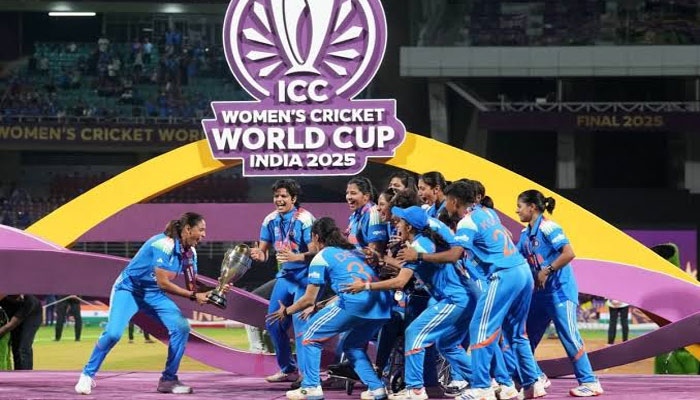
The Night Indian Women’s Cricket Made History: A World Cup Triumph That Changed Everything
Twelve months have passed since Indian women’s cricket experienced its greatest moment, but the memories of that historic night remain vivid. It was an emotional culmination of years of hard work, sacrifices, disappointments and dreams that had waited far too long to become reality.
India’s maiden ODI World Cup triumph was about much more than lifting a trophy. It marked a turning point for women’s cricket in the country and inspired countless young girls to believe that representing India on the international stage was an achievable dream. The victory sent out a powerful message: talent and determination can overcome barriers, and no dream is too ambitious to pursue.
The final against South Africa at Navi Mumbai’s DY Patil Stadium kept millions of fans awake late into the night. When captain Harmanpreet Kaur completed the catch to dismiss Nadine de Klerk, India’s long-awaited moment of glory finally arrived. The stadium erupted, while celebrations swept across the country. Among the most touching sights was an injured Pratika Rawal celebrating alongside her teammates from a wheelchair, her happiness reflecting the emotions of an entire nation.
For journalists covering the historic occasion at India Today, the experience was no less extraordinary. Although they were not present inside the stadium, the excitement was impossible to contain. The newsroom remained alive well beyond midnight as reporters worked tirelessly to capture every defining moment of a final that would be remembered for generations.
Exhaustion took a backseat as keyboards continued clicking and stories took shape. It was one of those rare sporting occasions when nobody wanted the night to end.
Shafali Verma’s Moment of Redemption
Among the many heroes of India’s memorable triumph, Shafali Verma emerged as one of the biggest surprises. Her contribution proved decisive in a final where India needed extraordinary performances to avoid another painful World Cup disappointment.
Interestingly, Shafali was not part of the original squad. She was not even the first option considered after Yastika Bhatia was ruled out due to injury. Her ODI record, which included an average of around 22 and an extended period without a half-century, had raised questions about her selection.
She eventually received her opportunity following Pratika Rawal’s injury. However, her campaign did not begin particularly well. A disappointing performance against Australia in the semi-final added to the doubts surrounding her inclusion.
The final, however, completely changed the narrative.
On November 2, 2025, Shafali produced an outstanding innings of 87 runs, giving India the strong foundation required to post a competitive total. She subsequently demonstrated her value with the ball, dismissing Marizanne Kapp at a crucial stage and helping India gain control of the contest.
Her performance was a reminder of the immense potential she had displayed since making her international debut.
India Today colleague Amar Sunil Panicker, who remained in the newsroom late into the night, was particularly impressed by Shafali’s all-round contribution.
“The potential Shafali possessed with the bat has been evident since her debut, so that knock wasn’t entirely surprising. But her bowling? That came as a complete surprise. It could have gone either way, but India knew the talent they had on their hands. That day, the world got to see just how special Shafali Verma truly is,” Amar said.
Deepti Sharma Delivers When India Need Her Most
If Shafali provided India with a spectacular start, Deepti Sharma ensured that the team had the finishing power required to claim the championship.
The experienced all-rounder scored an important 58 runs before producing a remarkable five-wicket haul. Her contribution with both bat and ball became one of the defining features of the final.
However, Deepti’s journey throughout the tournament had not been particularly easy. She faced criticism over her batting performances, especially during India’s disappointing group-stage defeats against Australia and South Africa in Visakhapatnam.
Against Australia, she managed only one run from six deliveries. Her performance against South Africa was similarly disappointing, as she scored four runs from 14 balls.
India Today journalist Saurabh Kumar, who covered those matches in Visakhapatnam, recalled the concerns surrounding Deepti’s performances.
“I think the frustration around Deepti was understandable during that campaign. In Visakhapatnam, Australia chased down 331, while South Africa chased a target of 252. These were games where India needed contributions across the batting order, and Deepti’s inability to score at a brisk pace, particularly against Australia when she made just one off six balls, did invite questions,” Saurabh said.
But the all-rounder’s response in the final demonstrated why experience and composure matter so much in major tournaments.
Her 58-run contribution was valuable, while her bowling performance completely changed the complexion of the match. South Africa struggled to counter her deliveries as Deepti picked up five wickets and brought India closer to the trophy.
Saurabh believed the magnitude of her performance exceeded expectations.
“Before the final, I don’t think many of us expected her to have the kind of impact she eventually did. We knew she could play an important role, but what followed was something special.
“Having covered the campaign, what stays with me is the contrast. There had been questions about her batting for much of the tournament, but she produced her finest performance when India needed it most. I expected Deepti to contribute. I didn’t expect her to take charge of a World Cup final the way she did,” he added.
Deepti transformed criticism into motivation and delivered one of the most memorable performances of her career when the stakes were highest.
Amanjot Kaur’s Unforgettable Catch
Despite India’s impressive batting and bowling efforts, one major challenge remained: South African captain Laura Wolvaardt.
Known for her excellent timing, elegant strokeplay and remarkable ability to control an innings, Wolvaardt was determined to take her team across the finish line.
She entered the final after scoring a magnificent 169 against England in the semi-final and continued her impressive form in the title clash. Her century put South Africa in a strong position and threatened to derail India’s hopes of winning the championship.
Wolvaardt also achieved a rare milestone by scoring centuries in both the semi-final and final of a Women’s World Cup. Before her, Alyssa Healy had accomplished the feat in 2022.
India desperately needed a breakthrough, and Amanjot Kaur delivered a moment that would become an unforgettable part of the country’s cricketing history.
Batting on 101, Wolvaardt attempted an aggressive shot against Deepti Sharma but failed to connect cleanly. The ball went high into the air, giving Amanjot an opportunity to complete the catch.
What followed was a moment of extreme tension.
The ball slipped through Amanjot’s hands twice, briefly raising fears that India might miss a crucial opportunity. However, she maintained her concentration, recovered brilliantly and finally secured the catch.
As she fell to the ground with the ball firmly in her hands, her teammates rushed towards her in celebration. Radha Yadav was among the first to embrace her.
The dismissal was a turning point because Wolvaardt had been South Africa’s biggest hope of completing a successful chase.
India Today colleague Kingshuk Kusari remembered the dramatic sequence.
“I think it was Wolvaardt’s wicket. Till she was there, batting in that form, South Africa had a reason to believe. I had to hold my breath when Amanjot fumbled the ball and then held on to the catch with her dear life,” Kingshuk said.
“The fact that our best fielder nearly fumbled and ended up taking a match-winning catch made it the most memorable moment for me.”
It was a moment that demonstrated the importance of persistence and composure. Amanjot’s determination ensured that a potentially costly fielding error became one of the defining moments of India’s World Cup victory.
Harmanpreet Kaur Ensures There Is No Repeat of Heartbreak
Even after Wolvaardt’s dismissal, India could not afford to relax. South Africa still had Nadine de Klerk at the crease, a player who had already caused considerable damage to India’s campaign.
During the group-stage encounter in Visakhapatnam, de Klerk had produced an unbeaten 84 to guide South Africa to a memorable victory.
Her ability to change the course of a match made her a significant threat in the final as well.
With South Africa requiring 90 runs from 63 deliveries and four wickets remaining, India appeared to have a firm grip on the contest. However, de Klerk’s three boundaries brought back memories of the earlier defeat.
The Indian team knew that allowing her to settle could create another difficult situation.
Even when South Africa had only one wicket remaining, celebrations were kept on hold. De Klerk had already demonstrated that she possessed the ability to make difficult targets achievable.
Eventually, the decisive moment arrived when Harmanpreet Kaur settled underneath a delivery and completed the catch to dismiss the South African batter.
That was it. India had finally become world champions.
India Today journalist Alan John, who watched the final from the office, recalled the tension surrounding de Klerk’s wicket.
“Even as Wolvaardt departed, Nadine de Klerk was the big wicket. Her heroics in the league-stage match were enough reason not to feel safe even at that point when India were on top,” Alan said.
“She had the ability to change the game, so it felt like the final was going to hinge on her dismissal. Funnily enough, she was the last to fall and it felt like a full-circle moment for the side. Claiming the wicket of de Klerk was the best way to cap off the tournament after the damage she did, and it was nice to see captain Harmanpreet take the catch,” he added.
The final dismissal carried special significance. The same player who had previously delivered heartbreak for India became the last obstacle to fall before Harmanpreet and her teammates could celebrate their historic achievement.
India’s Incredible Comeback: From Doubters to World Champions
India’s World Cup journey was far from straightforward. In fact, there was a stage when their chances of lifting the trophy appeared increasingly uncertain.
After opening the tournament with victories over Pakistan and Sri Lanka, India suffered three consecutive defeats against Australia, South Africa and England.
Those results exposed several weaknesses in the team, particularly concerns surrounding the bowling combination and the absence of a dependable sixth bowling option.
Although India remained in contention for a semi-final place, their ability to challenge the strongest teams in the competition had become a major question.
Saurabh Kumar, who witnessed India’s defeats against Australia and South Africa, admitted that he had begun doubting the team’s chances.
“Honestly, after the Vizag leg, I had serious doubts. Three successive defeats against Australia, England and South Africa had exposed India’s vulnerabilities, particularly the lack of a convincing sixth bowling option. The 330-run total against Australia, which still wasn’t enough, summed up India’s problems,” he said.
The victory against New Zealand marked the beginning of India’s remarkable turnaround. It restored confidence within the dressing room and helped the team rediscover its rhythm before the knockout stages.
However, the semi-final presented another enormous challenge: Australia.
The Australian team had earlier chased down 331 runs against India, registering what was then the highest successful run chase in Women’s ODI history.
This time, India produced a response that will be remembered for years.
Chasing a challenging target of 339, India were guided by Jemimah Rodrigues, who played an extraordinary unbeaten innings of 127 runs. Her performance helped India overcome Australia and secure a place in the final.
The emotional celebrations that followed reflected the importance of the victory. Jemimah broke down in tears after completing the remarkable chase, as years of expectations and pressure finally gave way to relief.
The final against South Africa then provided the perfect conclusion to India’s comeback story. Having suffered a painful defeat against the same opponents during the group stage, India returned with renewed determination and delivered when it mattered most.
Saurabh also highlighted the role played by head coach Amol Muzumdar throughout the campaign.
“Amid all the noise and scrutiny, Amol Muzumdar’s calmness in press conferences stood out. He never seemed rattled or appeared to lose faith. Looking back, that composure was striking. India eventually found their answers, and what followed was one of the most memorable turnarounds in World Cup history,” he added.
India’s campaign had moved from uncertainty and criticism to an unforgettable championship celebration. It was a comeback built on resilience, belief and the ability to perform under pressure.
World Cup Glory Changes the Commercial Landscape
India’s World Cup victory transformed the standing of women’s cricket beyond the boundary ropes.
Before the triumph, several leading Indian women cricketers were still fighting for the recognition and commercial opportunities enjoyed by their male counterparts. The historic achievement changed that equation considerably.
Within months, leading players began attracting greater attention from major brands, with endorsement opportunities and commercial valuations witnessing significant growth.
According to industry estimates reported by The Economic Times in November 2025, endorsement values of prominent Indian women cricketers increased by approximately 25 to 100 per cent.
Jemimah Rodrigues experienced one of the biggest jumps. Her endorsement value reportedly increased from around Rs 60 lakh to more than Rs 1.5 crore.
Shafali Verma also witnessed substantial growth, with her valuation rising from approximately Rs 40 lakh to over Rs 1 crore.
Smriti Mandhana, who was already among the most recognisable faces in Indian women’s sport, experienced an additional boost in brand demand. With more than 14 million Instagram followers at the time, she had established herself as a major sporting personality.
Harmanpreet Kaur, Harleen Deol and several other members of the victorious squad also benefited from the increased commercial attention.
Harleen, in particular, secured a skincare endorsement, demonstrating how the growing popularity of women cricketers was creating opportunities across different industries.
Brands from sectors such as automobiles, banking, fintech and consumer technology also began showing greater interest in female sporting personalities.
The transformation was significant because it extended beyond cricket-related sponsorships. Women players were increasingly being recognised as influential personalities capable of connecting with wider audiences.
The World Cup victory had therefore delivered more than sporting success. It strengthened the commercial value, public visibility and professional opportunities available to India’s women cricketers.
India’s Next Mission: Building an Era of Dominance
Winning the ODI World Cup was a historic achievement, but maintaining that success presents an entirely different challenge.
India had finally reached the summit of women’s cricket. The next objective was to establish themselves as a consistently dominant force rather than a team remembered for one extraordinary tournament.
The 2026 Women’s T20 World Cup provided a reminder that significant challenges remain.
India failed to qualify for the semi-finals after losing their decisive group-stage encounter against Australia. Australia, meanwhile, entered the knockout stage unbeaten and eventually secured their seventh title.
The result underlined the importance of consistency, squad depth and the ability to perform across different formats.
India are still searching for their first major Women’s T20I World Cup title. Their ODI success demonstrated that they possess the talent and determination required to defeat the strongest teams, but replicating that achievement in T20 cricket remains an important objective.
Developing a stronger bench, improving consistency and ensuring that the team can compete even without its established stars will be crucial to India’s long-term ambitions.
Head coach Amol Muzumdar has also spoken about his desire to see India dominate international cricket over the coming years. He recently indicated that he would be happy if the team began establishing such dominance within two years.
For Indian women’s cricket, the World Cup victory was the culmination of generations of effort. It gave young girls across the country a reason to dream bigger and showed that the sport could offer opportunities far beyond what many had previously imagined.
But the next generation deserves more than a single historic celebration. It deserves a team capable of competing for every major trophy and challenging every opponent consistently.
India have already conquered their first major mountain. The challenge now is to remain at the top, build a winning culture and create a legacy that lasts for years.
The dream that once seemed distant has finally become reality. Now, Indian women’s cricket must turn that historic night into the beginning of a new era.
Comments are closed.