

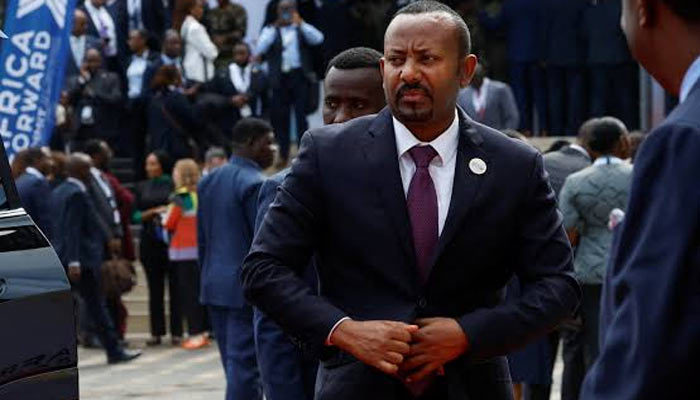
Ethiopia’s Ruling Prosperity Party Secures Landslide Election Victory
Ethiopian Prime Minister Abiy Ahmed’s ruling Prosperity Party (PP) has secured a commanding victory in the country’s legislative elections, winning nearly 90 percent of the seats contested in the June 1 polls, according to official results announced by the National Election Board of Ethiopia (NEBE).
The Prosperity Party won 438 of the 486 parliamentary seats for which results have been declared, reinforcing Abiy’s political dominance ahead of the formation of a new government. Elections were held in 501 of Ethiopia’s 547 constituencies, with around 40 million citizens casting their votes from a voter base of 54 million registered electors.
Abiy, who has been in power since 2018, initially earned international acclaim for introducing political reforms and restoring ties with neighboring Eritrea, a move that won him the 2019 Nobel Peace Prize. However, his administration has increasingly faced criticism from opposition groups and rights organizations over concerns about democratic freedoms and governance.
The election was widely viewed as favoring the ruling party. Although more than 40 opposition parties participated, many lacked the organizational strength and resources to mount a nationwide challenge. The Prosperity Party ran unopposed in dozens of constituencies, while its nearest challenger, the Ethiopian Citizens for Social Justice (Ezema), fielded significantly fewer candidates.
Under Ethiopia’s parliamentary system, voters elect members of the House of Peoples’ Representatives, who later choose the prime minister from among themselves. The parliamentary vote to formally select the country’s next prime minister is expected between late September and October.
Security Challenges Mar Polls
The election took place amid significant security concerns in several parts of the country. Voting was not conducted in all constituencies, with authorities citing instability and conflict in certain regions.
The northern Tigray region, still recovering from the devastating 2020-2022 civil war that killed hundreds of thousands of people, did not participate in the election. Rising tensions between regional leaders and the federal government have renewed fears of fresh conflict in the area.
In the Amhara region, where federal forces continue to battle Fano militias, polling was suspended in several constituencies. Conflict monitoring groups reported numerous clashes between armed groups and security forces during the election period.
Oromia, Ethiopia’s most populous region, also witnessed violence linked to the Oromo Liberation Army (OLA). Reports indicated attacks and security incidents that disrupted voting in parts of the region and resulted in civilian casualties.
The African Union had earlier noted that the elections were being conducted under difficult security conditions, particularly in Amhara, Oromia and Tigray.
Economic Progress and Persistent Challenges
Despite political and security challenges, Ethiopia has recorded significant economic growth under Abiy’s leadership, driven by infrastructure development, construction projects and rising export revenues, particularly from coffee.
However, major economic challenges remain. International financial institutions continue to highlight Ethiopia’s dependence on external assistance, while poverty remains widespread across the country. According to World Bank estimates, a substantial portion of the population continues to live below the poverty line despite recent growth.
The latest election result strengthens Abiy Ahmed’s hold on power, but the government will continue to face pressure to address security concerns, economic hardship and demands for greater political inclusion in one of Africa’s most populous nations.
Comments are closed.