
Trump’s Warm Words for Kim Jong-un Fuel Tensions Over North Korea’s Nuclear Threat

The annual US-South Korea military exercises are taking place this year against a more challenging security backdrop.
With North Korea expanding its nuclear capabilities and gaining combat experience through its military cooperation with Russia in the Ukraine war. But instead of reinforcing the drills, US President Donald Trump has criticised them and ordered the exercises to be substantially reduced. His remarks have sparked fresh concerns in Seoul about the future of the US-South Korea alliance.
The development comes as the two countries are already navigating disagreements over trade, defence spending and Trump’s longstanding complaints about the cost of maintaining US forces in South Korea.
Trump Calls North Korea ‘Unthreatening’
North Korea has continued to expand its nuclear and missile capabilities and has hardened its rhetoric towards South Korea, which Pyongyang now labels its “most hostile enemy.” Its growing partnership with Russia has added another concern for Washington and Seoul. North Korea has supplied troops and weapons to support Moscow’s war in Ukraine under a mutual defence agreement, giving its military valuable experience with modern combat.
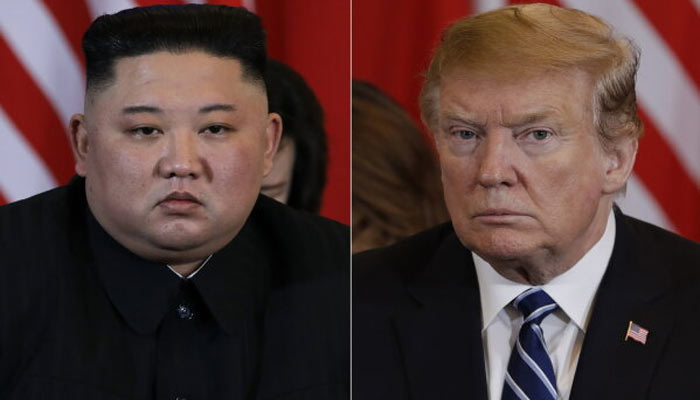
Yet Trump recently described North Korea as “unthreatening and respectful” while praising his relationship with Kim Jong-un. He also argued that joint US-South Korean exercises are costly and hostile towards Pyongyang, directing Secretary of War Pete Hegseth to substantially reduce them.
The order could become Trump’s first significant military gesture towards North Korea during his second term, although it remains unclear whether Kim will respond.
Why the Drills Matter
The 11-day Ulchi Freedom Shield exercises are designed to test the allies’ ability to respond quickly to a range of military threats.
The training has increasingly incorporated lessons from recent conflicts, including the war in Ukraine. North Korea’s experience with drones and battlefield technology through its cooperation with Russia has made the exercises particularly relevant.
For US and South Korean commanders, maintaining realistic joint training is considered essential to ensuring that the two militaries can operate together effectively during a crisis.
Seoul Worries About a Weaker Alliance
South Korea has confirmed that the exercises began as scheduled but has avoided directly responding to Trump’s criticism. The bigger concern in Seoul is what repeated reductions could mean for military readiness. Some analysts warn that continued pressure to scale back exercises could gradually weaken the practical foundations of the alliance.
Trump has raised similar objections before. During his first term, he cancelled or reduced major exercises, describing them as expensive and provocative. Those decisions contributed to the atmosphere that led to his three meetings with Kim, but North Korea ultimately retained its nuclear arsenal.
Lee and Trump Could Find Common Ground
Trump’s position may nevertheless overlap with one aspect of South Korean President Lee Jae Myung’s approach. Lee has supported reducing tensions on the Korean Peninsula and encouraged direct dialogue between Trump and Kim. Pyongyang has repeatedly condemned the US-South Korean drills as preparations for war.
A reduction in military exercises could therefore support Seoul’s preference for easing tensions, even though Washington and Seoul may have different strategic reasons for pursuing it. Trump has also indicated that he wants to revive his personal relationship with Kim. Sharing a photograph of the two leaders at the inter-Korean border, Trump recently wrote that he and Kim “get along GREAT.”
But Renewed Talks Face New Obstacles
Any attempt to restart Trump-Kim diplomacy could be more difficult than the 2018-19 talks. North Korea’s nuclear programme has advanced considerably, while its closer ties with Russia and China have strengthened Kim’s strategic position. Pyongyang also appears less willing to negotiate over the future of its nuclear arsenal.
Kim has spoken positively about his memories of Trump but has made clear that North Korea is unlikely to return to negotiations if Washington continues to demand denuclearisation.
Trump’s latest stance could therefore create an opening for renewed diplomacy while simultaneously creating uncertainty for South Korea. For Seoul, the central challenge will be maintaining credible deterrence against an increasingly capable North Korea without closing the door to dialogue.
Comments are closed.