

India-Uzbekistan Ties Get Major Upgrade, Uranium Supply Deal In The Works
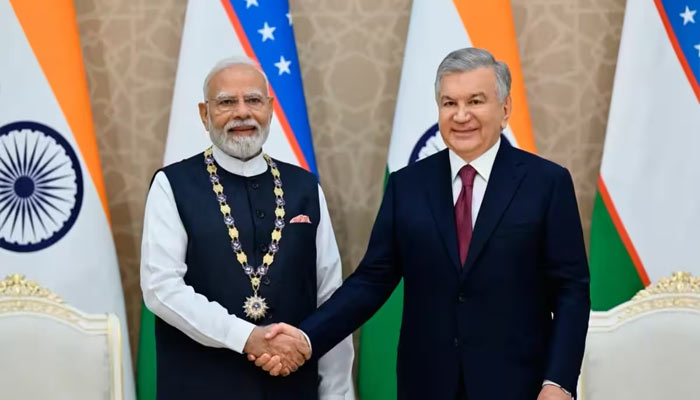
India and Uzbekistan have decided to take their relationship to a higher strategic level, upgrading bilateral ties to a Comprehensive Strategic Partnership and moving towards a long-term uranium supply arrangement. Prime Minister Narendra Modi made the announcement following talks with Uzbek President Shavkat Mirziyoyev on Sunday, during his two-day visit to Uzbekistan. The decision also marks 15 years of the existing India-Uzbekistan strategic partnership.
Modi said the new framework would focus on setting clear and concrete targets across areas of mutual interest.
NEW COUNCIL TO STEER PARTNERSHIP
A Coordination Council led by the two foreign ministers will be created to oversee and coordinate bilateral cooperation. The existing joint commission between the countries will also be upgraded from the secretary level to the ministerial level, giving greater political weight to economic and strategic discussions.
Calling Uzbekistan a key partner at the heart of Central Asia, Modi said India would continue to strengthen its engagement with the region through its partnership with Tashkent.
DEFENCE COOPERATION TO GO DEEPER
Defence ties are expected to become an increasingly important part of the relationship.
Modi said India and Uzbekistan would seek stronger direct connections between their defence industries, including opportunities for co-production and co-development.
Both sides also reaffirmed their opposition to terrorism, extremism and separatism, with Modi stressing that the two countries share a zero-tolerance approach towards such threats.
$5 BILLION TRADE AMBITION
India and Uzbekistan are also looking to dramatically increase bilateral commerce.
Trade between the two countries has crossed $1 billion, and the new target is to reach $5 billion by 2030.
To get there, both sides will work on improving market access, transportation links, banking cooperation and payment mechanisms. They will also organise a joint business summit and identify infrastructure projects that can create opportunities for businesses in both countries.
Cooperation is set to expand into high-growth and strategic sectors, including AI, digital public infrastructure, critical minerals, space and nuclear energy.
URANIUM SUPPLY TO INDIA
One of the most significant developments is the plan to establish a long-term uranium supply arrangement between the two countries.
Uzbekistan is a major uranium producer, while India needs dependable supplies of nuclear fuel to support its civilian nuclear energy programme.
The proposed arrangement could therefore strengthen cooperation in the energy and nuclear sectors as India expands its clean-energy ambitions.
FROM CAPITAL-TO-CAPITAL TO STATE-TO-STATE
Modi also emphasised the need to broaden bilateral engagement beyond New Delhi and Tashkent.
The two countries will encourage partnerships between their cities and states, allowing cooperation to develop at a more local and people-centric level.
Modi pointed to shared priorities between New Uzbekistan and Viksit Bharat 2047, particularly their focus on young people, innovation, inclusive growth and technology-driven development.
“There is a deep similarity between the aspirations and thinking of India and Uzbekistan,” Modi said.
UZBEKISTAN HONOURS MODI
During the visit, Mirziyoyev conferred Uzbekistan’s highest state honour, the Order of “Oliy Darajali Dustlik”, on Modi.
The award marks the 36th international honour received by the Prime Minister.
Modi said he accepted the distinction with pride and dedicated it to the longstanding friendship between the people of India and Uzbekistan.
He also highlighted the meaning of “Dostlik” — friendship — saying the word reflected the spirit of the relationship between the two countries.
The honour, Modi said, should be viewed as a recognition of the friendship between India and Uzbekistan and not merely as a personal award.
Comments are closed.