
Gabbard Claims Former Biden Health Official Backed Wuhan Lab at Center of COVID Debate

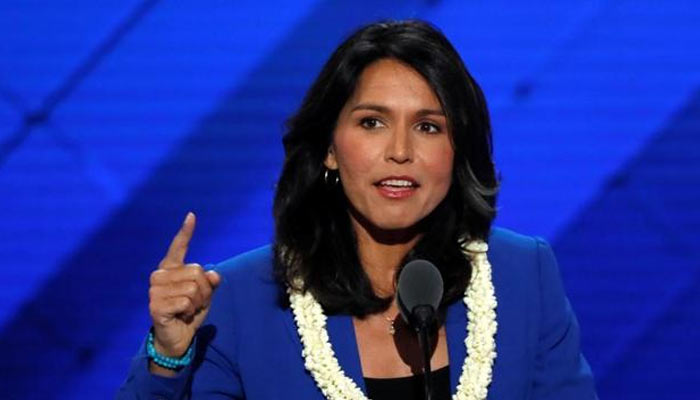
Tulsi Gabbard Accuses Anthony Fauci of Funding Wuhan Research, Revives COVID Origins Debate
Outgoing US Director of National Intelligence (DNI) Tulsi Gabbard has reignited the debate over the origins of COVID-19 by accusing former White House Chief Medical Adviser Anthony Fauci of funding research at China’s Wuhan Institute of Virology and concealing information about its potential links to the pandemic.
The allegations were made as Gabbard declassified and released a series of documents and communications on her final day in office. She claimed the material reveals efforts by intelligence officials and public health authorities to downplay the possibility that COVID-19 originated from a laboratory accident.
“It’s time you know the truth,” Gabbard wrote on X while announcing the release.
What Are the Allegations?
According to a statement issued by the Office of the Director of National Intelligence (ODNI), Fauci’s National Institute of Allergy and Infectious Diseases (NIAID) provided funding for research involving bat coronaviruses at the Wuhan Institute of Virology (WIV).
The statement further alleged that intelligence analysts who supported the lab-leak theory faced professional pressure and that information suggesting a possible laboratory origin of the virus was not given due consideration.
The ODNI release also referred to a whistleblower who allegedly approached the intelligence community before later losing their contract position.
Gabbard has argued that the newly released material raises serious questions about the handling of intelligence assessments related to the pandemic and the role of US-funded research conducted in Wuhan.
What Is Gain-of-Function Research?
A central element of Gabbard’s allegations concerns so-called “gain-of-function” research.
The term refers to scientific experiments in which researchers modify viruses or other organisms to better understand how they evolve, spread or become more infectious. Such studies are often conducted to improve disease surveillance, vaccine development and pandemic preparedness.
Critics argue that these experiments carry risks if enhanced pathogens escape containment. Supporters contend that the research is important for understanding future public health threats and is conducted under strict safety protocols.
Whether specific coronavirus studies conducted in Wuhan qualify as gain-of-function research has been a matter of scientific and political debate for several years.
The Wuhan Lab and COVID Origins
The Wuhan Institute of Virology has remained at the centre of competing theories about how the COVID-19 pandemic began.
One theory suggests the virus emerged naturally through animal-to-human transmission, potentially linked to wildlife sold at markets in Wuhan. Another proposes that the virus may have accidentally leaked from a laboratory conducting coronavirus research.
To date, there is no definitive public evidence proving either theory.
Many scientists continue to consider natural spillover a plausible explanation, while several intelligence assessments in the United States have stated that both natural and laboratory-related origins remain possible.
What Role Did Fauci’s Agency Play?
As director of NIAID, Fauci oversaw one of the world’s largest public health research funding agencies.
NIAID routinely provides grants and research support to universities, laboratories and scientific institutions across the world working on infectious diseases.
The agency has previously acknowledged that some US-funded research was conducted through international partners, including projects involving coronavirus studies. However, Fauci has repeatedly denied funding research that would have directly created the virus responsible for COVID-19.
The latest documents released by Gabbard do not, by themselves, establish that COVID-19 originated from the Wuhan laboratory or that Fauci knowingly funded research that caused the pandemic.
Why the Issue Remains Controversial
More than six years after COVID-19 emerged, the question of the virus’s origin remains one of the most contentious issues in global public health and geopolitics.
Gabbard’s allegations are likely to intensify calls for further scrutiny of pandemic-era decisions, intelligence assessments and international research collaborations.
At the same time, many scientists and public health experts continue to caution against drawing definitive conclusions in the absence of conclusive evidence linking the pandemic to either a laboratory accident or a natural spillover event.
The release of the documents ensures that the debate over COVID-19’s origins—and the role of US-funded research in Wuhan—will remain firmly in the spotlight.
Comments are closed.