
Sports Ministry Sends Stern Message Ahead of Asiad: No Excuses on Funding, Only Results

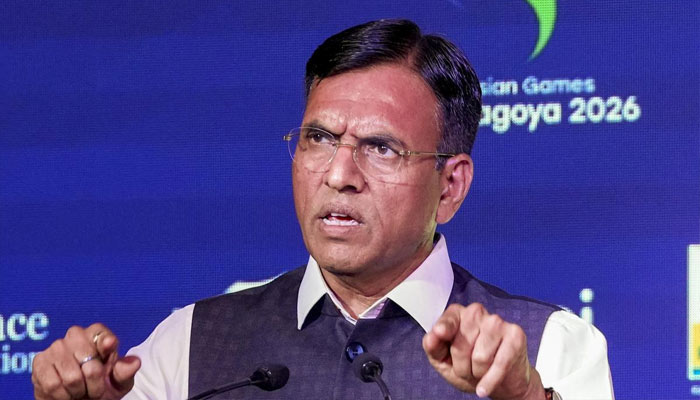
No More Funding Excuses: Sports Minister Mandaviya Demands Results After India’s Asian Games Setback
The Sports Ministry has issued a firm warning to national sports federations following India’s disappointing medal tally at the Aichi-Nagoya Asian Games, making it clear that the government expects tangible results in return for substantial financial investment. Sports Minister Mansukh Mandaviya has told federations to move beyond presentations and promises and demonstrate measurable progress on the field.
The message was delivered during a review meeting held on Thursday to assess India’s performance at the continental sporting event and discuss preparations for future competitions, particularly the 2028 Los Angeles Olympics.
The meeting was attended by Minister of State for Sports Raksha Khadse, Indian Olympic Association (IOA) President P.T. Usha, Sports Secretary Hari Ranjan Rao, Target Olympic Podium Scheme (TOPS) CEO N.S. Johal and representatives of National Sports Federations (NSFs).
India finished the Games with 85 medals, including 21 gold, falling well short of its previous tally of 106 medals at the Hangzhou Asian Games. The decline in athletics and badminton, two disciplines where India had hoped for stronger returns, featured prominently in the assessment.
A senior official who attended the meeting told PTI that Mandaviya made it clear that financial constraints could no longer be used to explain underperformance.
“The Minister was very clear that there is no dearth of resources and the NSFs can no longer complain about financial support. The federations have to deliver. They have to not just make presentations but deliver on the ground,” the official said.
While federations presented their assessments, the meeting also focused on identifying shortcomings and planning for upcoming international competitions.
Injuries Raise Questions Over Athlete Preparation
The management of injured athletes emerged as one of the concerns during the review. IOA President P.T. Usha reportedly raised questions about the fitness of hurdler Jyothi Yarraji and triple jumper Praveen Chithravel after their injury issues came to light during the Games.
Athletics Federation of India adviser Adille Sumariwalla was presenting his assessment when the issue was raised. Mandaviya subsequently emphasised the importance of evaluating overall performance rather than concentrating on individual cases, according to the official.
Distance runner Avinash Sable’s fitness also came under scrutiny after he failed to start the 5,000m race following a fourth-place finish in the 3,000m steeplechase. Sable had won gold in the steeplechase and silver in the 5,000m at the previous Asian Games.
Athletics recorded a sharp decline in Aichi-Nagoya, with its gold medal count dropping from six in Hangzhou to just one. The overall tally in the discipline fell to 24 medals, five fewer than in the previous edition.
‘We Need 10 More Mirabai Chanus’
Mandaviya also stressed the need to build a stronger pipeline of young athletes instead of relying on a few established champions.
Referring to weightlifter Mirabai Chanu, who won silver at the Games, the minister called on every federation to take greater responsibility for discovering and developing future medal winners.
“How long will Mirabai Chanu alone keep winning medals for us? We need to produce 10 more Mirabai Chanus. Every federation must take this responsibility seriously,” he said.
The minister underlined the importance of identifying talent at an early stage, providing specialised training and creating an environment in which athletes can progress to the highest levels of international competition.
He also called for greater investment in sports psychology, sports science and mental conditioning. According to the ministry, athletes need stronger psychological support to handle pressure and maintain focus at major international events.
Mandaviya further urged federations to organise more competitions, improve preparation programmes and undertake honest assessments of weaknesses in both performance and administration.
Boxing Shines, Shooting and Badminton Disappoint
India’s performance varied significantly across disciplines. Boxing delivered a landmark result, with the country winning an unprecedented three gold medals. The Boxing Federation of India said continued institutional support could help the team achieve further success.
However, the federation is facing an internal power struggle between president Ajay Singh and secretary Pramod Kumar, who have suspended each other amid allegations of violations. The dispute was not reportedly discussed during the review meeting.
Shooting, particularly the pistol events, produced disappointing results. Double Olympic medallist Manu Bhaker finished the competition without a medal, raising concerns over India’s performance in a discipline that has traditionally been a major source of success.
Badminton also fell short of expectations, with India managing just one bronze medal in the men’s team event. Defending men’s doubles champions Satwiksairaj Rankireddy and Chirag Shetty suffered an early first-round exit.
A demanding schedule was cited as a possible factor affecting badminton players, some of whom had to compete in multiple matches within less than 24 hours.
Archery, boxing, hockey and women’s golf were among India’s strongest performers. Both the men’s and women’s hockey teams contributed to the campaign, while 11 of India’s 21 gold medals came in the final two days of the Games.
Over Rs 700 Crore Invested in Asian Games Preparation
Before the competition, the Sports Ministry had stated that more than Rs 700 crore had been spent on preparing Indian athletes over a three-year cycle. India sent a 501-member athlete contingent to the Games.
The investment has increased expectations that federations must improve planning, athlete fitness management and the quality of competitive preparation. The ministry’s latest message indicates that future assessments will place greater emphasis on performance and accountability.
India Sets Sights on Top Three at 2030 Asian Games
Sports Secretary Hari Ranjan Rao said India should aim to finish among the top three nations at the 2030 Asian Games in Doha.
He also stressed that the 2030 Commonwealth Games, which India is scheduled to host in Ahmedabad, must be treated as a major national priority, with preparations beginning well ahead of the event.
“Since we are hosting the Games, every NSF must take the competition seriously and prepare accordingly. We must treat this as a challenge and work towards it from now,” Rao said.
With the Los Angeles Olympics in 2028 and the 2030 Asian and Commonwealth Games approaching, the ministry wants national federations to focus on long-term athlete development, stronger support systems and improved international results.
The message from the review is clear: government funding must translate into performance, and federations will be expected to demonstrate progress rather than rely on explanations for disappointing results.
Comments are closed.