
Developed Countries Falling Behind on 2030 Climate Targets, Report Finds

A new report has warned that several major developed economies are likely to miss.
Their climate commitments for both 2030 and 2035, as negotiators from around the world gather in Bonn, Germany, for a key round of UN climate talks ahead of COP31.
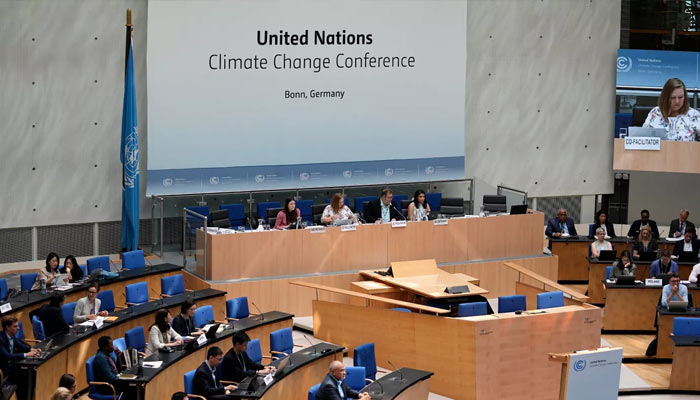
The findings were released as delegates convened for the 64th Sessions of the Subsidiary Bodies (SB64) under the United Nations Framework Convention on Climate Change (UNFCCC), a ten-day meeting that helps shape negotiations and draft decisions for the annual UN climate summit scheduled to be held in Antalya, Türkiye, later this year.
The study, conducted independently by the New Delhi-based Council on Energy, Environment and Water (CEEW), found that major developed-country groupings, including the Umbrella Group, the European Union (EU) and the Environmental Integrity Group (EIG), are collectively off track to meet their emissions reduction commitments.
According to the report, these blocs are projected to emit around 9 per cent more greenhouse gases than their combined 2030 Nationally Determined Contribution (NDC) targets. The gap is expected to widen further by 2035, when emissions could exceed target levels by as much as 19 per cent.
The analysis covers countries such as Australia, Canada, Japan, the United States, the United Kingdom, Switzerland and South Korea, among others.
Climate experts say the findings raise fresh questions about accountability nearly a decade after the adoption of the Paris Agreement. Ravi S. Prasad, Distinguished Fellow at CEEW and former chief climate negotiator for India, said climate leadership can no longer be measured solely by announcements and long-term promises.
He argued that while many countries in the Global South are attempting to balance economic development with climate action, developed nations must accelerate emissions reductions and ensure adequate carbon space remains available for countries still addressing basic developmental challenges.
The report highlighted the scale of the challenge facing several advanced economies. The European Union would need to significantly accelerate its pace of emissions reductions after 2022, while the United Kingdom would have to more than double its annual reduction rate. The United States and Canada would also need to sharply increase the speed at which they cut emissions to stay aligned with their stated goals.
In contrast, the report found that most members of the BASIC grouping — Brazil, South Africa, India and China — are progressing more consistently towards their climate commitments despite having lower historical responsibility for global emissions and greater developmental constraints.
India has already achieved its target of sourcing 50 per cent of installed electricity capacity from non-fossil fuel sources ahead of schedule and has made substantial progress in reducing emissions intensity and expanding carbon sinks. China has met several renewable energy and forestry targets ahead of its 2030 timeline, while South Africa’s latest emissions levels already fall within its projected target range.
The report’s co-author, Sumit Prasad, said the first transparency cycle under the Paris Agreement provides a clearer picture of implementation efforts and underscores the need for countries that are lagging behind to strengthen action before 2030 rather than postponing emissions reductions into the future.
The Bonn meetings, which began on June 9 and run until June 18, have brought together more than 7,000 participants, including government negotiators, civil society representatives, business leaders and climate experts.
Opening the conference, UN Climate Change Executive Secretary Simon Stiell called for stronger action, warning that climate-related disasters, extreme heat and economic disruptions linked to fossil fuel dependence continue to intensify across the globe.
The discussions in Bonn are expected to play a crucial role in determining the agenda and ambitions that countries will bring to COP31 later this year, at a time when global climate cooperation is increasingly being tested by geopolitical tensions and competing economic priorities.
Comments are closed.