

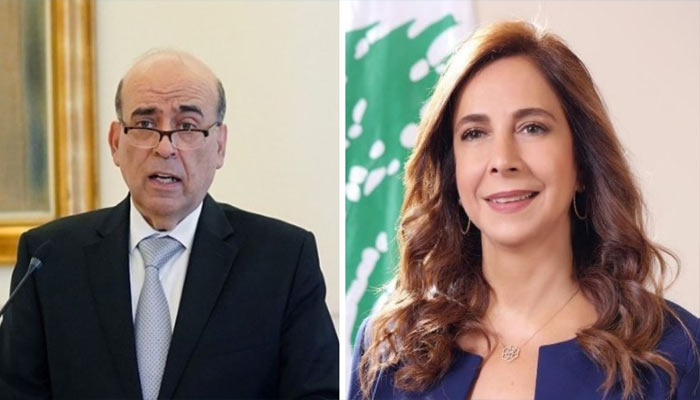
As tensions between Israel and Iran continue to reverberate across the Middle East, former Lebanese Deputy Prime Minister and Defence Minister Zeina Akar Adra has warned.
That Hezbollah remains beyond the full control of the Lebanese state, highlighting one of the country’s most enduring security challenges.
In an interview with CNN-News18, Akar said Lebanon’s ability to exert authority over Hezbollah has historically been limited, reflecting the complex political and military realities that have shaped the country for decades.
Her remarks come amid renewed violence in southern Lebanon following recent Israeli strikes and retaliatory actions by Iran, developments that have raised concerns about a broader regional conflict and further weakened an already fragile ceasefire.
Asked whether Lebanon is currently at war or operating under a ceasefire, Akar said that while no formal declaration of war exists, the situation on the ground tells a different story.
According to her, repeated military operations and continued attacks in southern Lebanon have eroded confidence in the ceasefire arrangement. She noted that many residents of the region increasingly view the situation as an ongoing conflict rather than a period of stability.
Akar pointed to the extensive destruction suffered by communities in southern Lebanon and the impact on civilians, including women, children, students, humanitarian workers, emergency responders and members of the Lebanese Armed Forces.
Discussing the prospects for diplomatic efforts, Akar said the future of truce negotiations remains uncertain because the conflict is closely linked to wider regional tensions involving the United States, Israel and Iran.
She described Washington as the most influential external actor because of its political, diplomatic and military leverage in the region. However, she stressed that any lasting solution would also require consideration of Iran’s role and influence.
At the same time, she noted that Israel’s actions on the ground would remain critical in determining whether any agreement succeeds or fails. In her view, a durable settlement will require a degree of understanding among Washington, Tehran and Tel Aviv, despite their competing interests.
Akar also reflected a broader sentiment present in parts of Lebanon that the United States is not widely perceived as a neutral mediator in the conflict, with many believing Washington’s position has increasingly aligned with Israel.
Speaking about India, she described New Delhi as a respected international actor and suggested it could play a constructive role by supporting efforts aimed at protecting civilians, preserving Lebanon’s sovereignty and strengthening the implementation of ceasefire agreements.
Her comments underscore the challenges facing regional diplomacy as violence continues to threaten stability across Lebanon and the wider Middle East.
Comments are closed.