
Paris Fairytale: Maja Chwalinska Turns Years of Struggle into French Open Glory

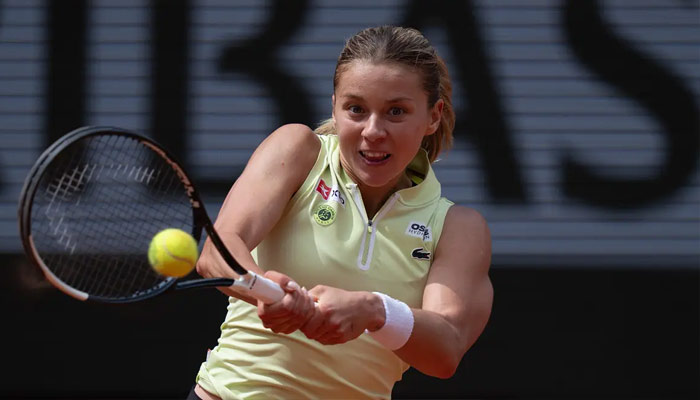
From the Brink to the Biggest Stage: Maja Chwalinska’s French Open Fairytale
Before the French Open began, the thought of Maja Chwalinska reaching a Grand Slam final would have seemed almost impossible. The Polish left-hander arrived in Paris as a qualifier ranked outside the world’s top 100, with limited experience at the highest level and little reason, at least on paper, to be considered a title contender.
Yet two weeks later, Chwalinska finds herself one match away from achieving what few players in tennis history have managed.
If she wins the title, she will become only the second qualifier in the Open Era after Emma Raducanu to capture a Grand Slam singles crown. For a player who has spent much of her career battling injuries, financial uncertainty and mental health struggles, it would be a triumph that transcends tennis.
Her story is not simply about an unexpected run. It is about resilience, recovery and the refusal to give up when the sport she once loved became a source of pain.
A Journey Few Saw Coming
Chwalinska entered Roland Garros carrying more questions than expectations. Before this tournament, she had won just two tour-level matches on clay and remained largely unknown to casual tennis fans.
For years, she had been part of the vast group of players fighting away from the spotlight, travelling across the ITF and Challenger circuits in search of ranking points and opportunities. While Poland celebrated the achievements of Iga Swiatek, Chwalinska was quietly trying to build a career of her own.
In fact, during the United Cup earlier this year, she was seen helping Swiatek courtside, a reminder of how far removed she was from tennis’ biggest stages.
Paris has changed that completely.
Nine consecutive victories, including three in qualifying, have transformed her from an outsider into one of the stories of the tournament. What began as a bid to simply enter the main draw has become a remarkable charge to the final.
The Financial Reality of Life Outside the Elite
The scale of Chwalinska’s breakthrough becomes even clearer when viewed through the lens of her career earnings.
Before arriving in Paris, she had earned approximately $861,000 in prize money across her professional career. Years of competing outside the top tier had brought modest rewards despite countless hours spent travelling, training and competing.
Her run to the French Open final has changed that reality overnight.
The prize money secured in Paris will exceed $1.4 million, more than doubling her career earnings from a single tournament. It is the kind of financial leap that can alter a player’s entire future.
Her situation also highlighted a lesser-known aspect of professional tennis. Prize money is paid only after a tournament concludes, meaning players often have to cover accommodation and travel expenses during the event themselves. During her run, reports emerged that Polish company OSHEE stepped in to help with hotel costs, allowing her to focus solely on her matches.
The Battle Away From the Court
Long before she became the surprise name of the French Open, Chwalinska was fighting a much more personal battle.
Around 2019, the pressure of professional tennis began taking a serious toll on her mental health. The game that had once brought her joy gradually became associated with stress, anxiety and emotional exhaustion.
The situation reached a breaking point in 2021.
Following Wimbledon qualifying, Chwalinska stepped away from tennis without knowing whether she would ever return. She later revealed that depression had left her struggling with even the simplest aspects of daily life.
“In 2019 I started to feel bad. First on the court, but after I also started to feel bad off the court, and it led me to depression. Something I enjoyed the most suddenly became a source of suffering. I associated tennis with pressure, stress and crying,” she said.
The struggles extended far beyond tennis.
“I didn’t know that I would come back, to be honest, because things were not fine. There were dark thoughts. It was tough to even leave the house. I didn’t have any desire for anything.”
For many athletes, such moments mark the end of a career. For Chwalinska, they became the starting point of a slow and difficult rebuild.
There were no shortcuts. No instant return to success. Instead, she gradually worked her way back through lower-level tournaments, rediscovering confidence and reconnecting with the sport on her own terms.
How Paris Became Her Stage
The French Open has showcased a version of Chwalinska that few had seen before.
Her campaign exploded into life in the first round when she stunned Olympic champion Zheng Qinwen. Against one of the tournament’s most dangerous players, Chwalinska produced fearless tennis and closed the match by winning the final eight games.
The victory set the tone for everything that followed.
Before Roland Garros, she had never defeated a top-50 player in a Grand Slam main draw. In Paris, she has done it four times, proving that her run has been built on quality rather than fortune.
Her semifinal win over Diana Shnaider perhaps summed up her tournament best. While Shnaider possessed greater power, Chwalinska repeatedly found solutions through consistency, intelligence and mental toughness. She absorbed pressure, stayed composed in critical moments and ultimately outlasted her opponent.
Now only Mirra Andreeva stands between her and one of the most improbable titles in modern tennis.
Regardless of the result, Chwalinska has already produced a story that will be remembered long after the tournament ends. From depression and self-doubt to the brink of Grand Slam glory, her journey is a reminder that careers are rarely defined by their lowest moments.
Sometimes, the most remarkable chapters begin when everything appears lost.
And in Paris, Maja Chwalinska has written exactly that kind of story.
Comments are closed.