

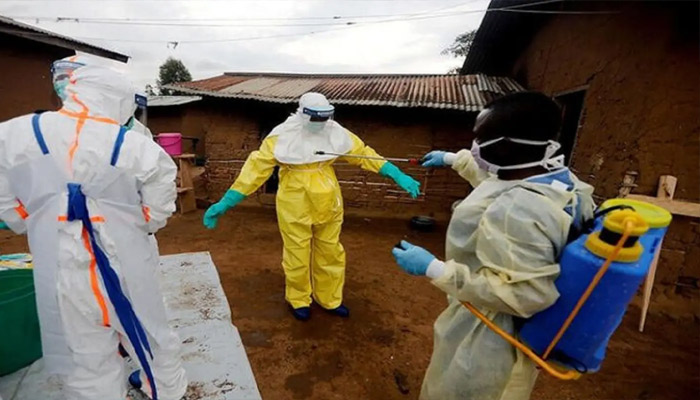
DR Congo Battles Growing Ebola Crisis as MSF Warns Outbreak May Be Far Larger Than Known
Health authorities and aid organisations are scrambling to contain a rapidly expanding Ebola outbreak in the Democratic Republic of Congo (DRC), with medical charity Médecins Sans Frontières (MSF) warning that the real scale of the emergency remains uncertain.
The outbreak, declared earlier this month in Ituri province by the World Health Organization (WHO), has already triggered growing concern among global health officials. MSF says the pace at which cases are being detected is unlike anything seen in the early stages of previous Ebola outbreaks.
‘Nobody Knows the True Scale’
MSF deputy director Dr Alan Gonzales said response teams are facing significant challenges as suspected infections continue to rise across affected communities. According to the organisation, delays in testing and limited surveillance capacity mean many potential cases have yet to be confirmed.
Gonzales warned that hundreds of samples remain unprocessed, while new suspected infections are being reported every day. As a result, health workers are struggling to establish the true extent of the outbreak and break chains of transmission.
The aid group described the situation as “deeply alarming”, noting that the number of cases recorded so soon after the outbreak declaration is unprecedented.
WHO Calls for Urgent Global Support
Amid mounting concerns, WHO Director-General Tedros Adhanom Ghebreyesus visited the outbreak zone in Ituri province on Saturday. He said international partners were supporting Congo’s response efforts but emphasised that additional funding, stronger coordination and community engagement would be essential to contain the virus.
According to official figures, more than 1,000 suspected Ebola cases and at least 246 deaths have been reported in DR Congo. The outbreak has also crossed borders, with Uganda confirming several infections, including one death.
Conflict and Limited Resources Complicate Response
Health officials say the response is being hindered by weak healthcare infrastructure, insufficient laboratory capacity and ongoing security challenges in eastern Congo. Many of the affected areas have experienced years of armed conflict and displacement, making it difficult for medical teams to reach vulnerable populations.
The WHO has cautioned that transmission may have begun well before the outbreak was detected, raising the possibility that official figures do not fully reflect the spread of the disease.
Race to Contain a Deadly Virus
Ebola is a highly infectious viral disease that spreads through direct contact with infected bodily fluids and contaminated surfaces. The illness can cause severe fever, internal bleeding and organ failure, and has been responsible for thousands of deaths across Africa since it was first identified in 1976.
With infections continuing to emerge, health agencies are intensifying testing, contact tracing and vaccination efforts in a bid to prevent the outbreak from developing into a wider regional health emergency
Comments are closed.